Iran Presses Iraq Against Disarming Armed Groups, Sources Say
Iranian officials reportedly urged Baghdad not to disarm allied factions as Iraq shifts toward integrating armed groups into the state-recognized PMF.
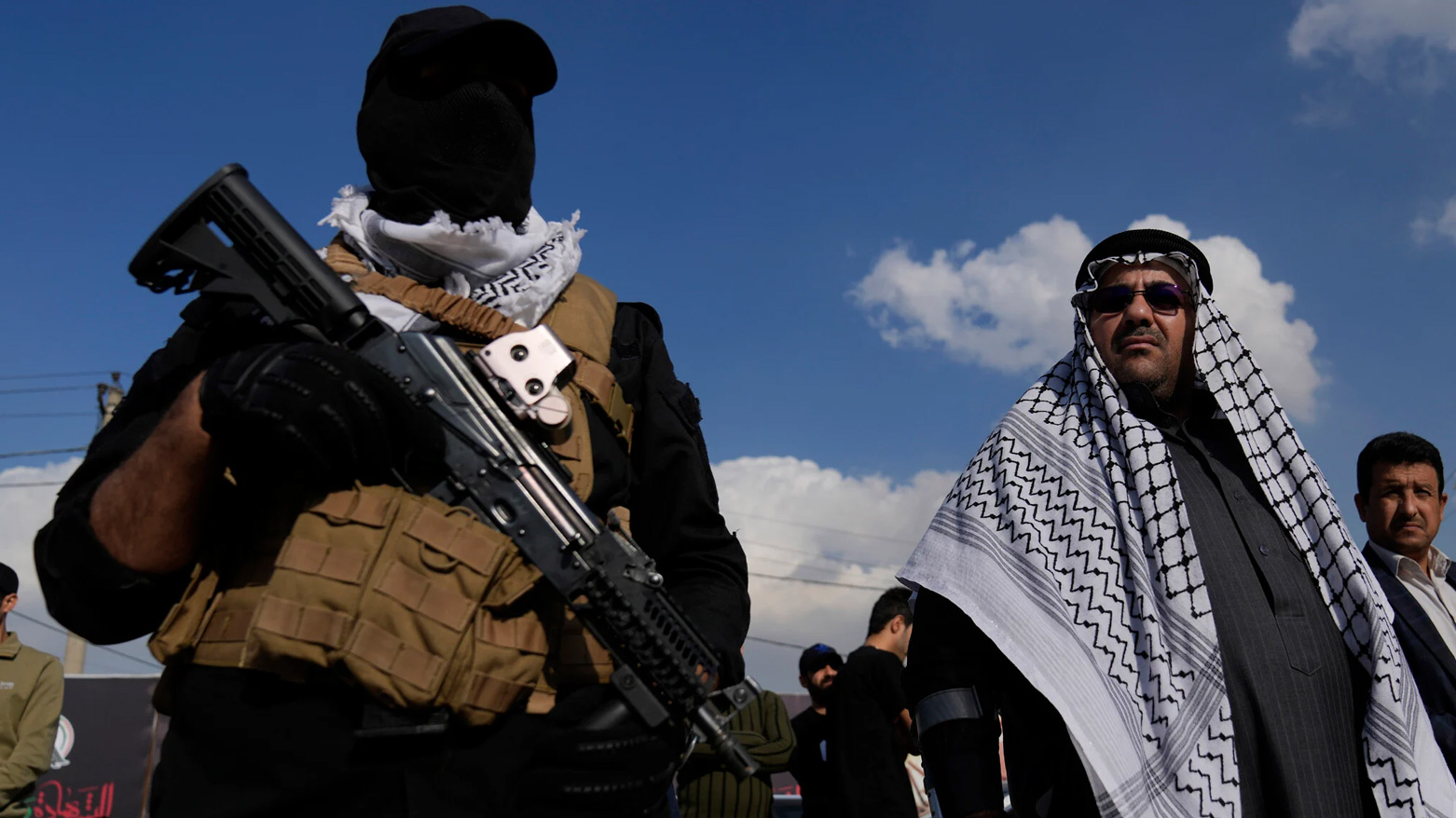
ERBIL (Kurdistan24) - Senior Iranian officials have privately urged Iraqi leaders not to disarm armed factions aligned with Tehran, according to information obtained by Kurdistan24, as Baghdad appears to be shifting toward a less confrontational formula centered on ending factional affiliation and integrating fighters into the state-recognized Popular Mobilization Forces.
During a recent visit to Iraq, Islamic Revolutionary Guard Corps Quds Force Commander Esmail Qaani told Iraqi officials that Tehran opposed stripping what Iran calls the "resistance front" of its weapons.
"We oppose disarming the resistance front. We do not want the experiences of Lebanon and Syria to be repeated in Iraq," Qaani said, according to information obtained by Kurdistan24.
Iranian Parliament Speaker Mohammad Baqer Qalibaf later delivered a similar message during a separate visit, according to the same reporting.
"Do not discuss disarming the resistance front, because we are in no way in favor of that," Qalibaf was quoted as telling Iraqi officials. "Dialogue must be held to reach an agreement."
The reported interventions place Tehran directly against the language Baghdad has increasingly used to describe its objective: ensuring that weapons and decisions over their use remain exclusively under Iraqi state authority.
They also come as Iraqi politicians signal that the terminology, and potentially the mechanism, of the process is changing.
From disarmament to integration
Iraqi lawmaker Kazim al-Shammari said the government and armed factions had agreed to stop describing the process as the "disarmament of armed groups."
Instead, he said, discussions would focus on ending fighters' affiliation with independent factions and integrating them into the Popular Mobilization Forces, which are formally part of Iraq's security apparatus.
Al-Shammari said Prime Minister Ali Zaidi had met representatives of all the relevant armed groups except Kataib Hezbollah and had reached what he described as a strong understanding with them.
He added that the factions had also met a committee formed by the Shiite Coordination Framework to manage the weapons issue.
According to al-Shammari, there is growing optimism that armed groups will cease independent activities and enter the PMF structure, with the issue potentially settled by the end of September.
That formula could provide Baghdad with a political route around the word "disarmament," which has generated strong resistance from Iran-aligned factions and warnings of possible internal conflict.
It would not, however, automatically settle the central issue facing the Iraqi state: whether integrated forces would operate under a single chain of command and whether political organizations would retain independent authority over weapons and military decisions.
Baghdad insists war and peace belong to state
The reported Iranian pressure emerged only a day after Qasim al-Araji, national security adviser to the Iraqi prime minister, publicly reaffirmed that control over armed force is a strategic state decision.
"The decision for war and peace lies solely with the state," al-Araji said Sunday.
He stressed that all actors must operate under government authority and respect Iraq's sovereignty.
Al-Araji also clarified an important point regarding Sept. 30, which has become central to the debate.
"Sept. 30 is the deadline for the withdrawal of international coalition forces, not the deadline for handing over weapons," he said.
The weapons process, he added, would proceed gradually and without provocation.
Al-Araji described confrontation with the factions as a "red line" and said the government must protect their rights once weapons are transferred into state control.
"The groups are not enemies of the state; they are part of the state," he said.
His formulation suggests Baghdad is attempting to reconcile two objectives that have increasingly appeared in tension: establishing state authority over weapons while avoiding an armed confrontation with factions that possess significant military and political power.
Iraqi lawmaker Sherwan al-Dubardani separately told Kurdistan24 that Prime Minister Zaidi's position had softened.
"Iraqi Prime Minister Ali Zaidi's position on disarming the armed groups has now softened and is no longer as firm as it was before," al-Dubardani said.
That assessment reflects the changing language surrounding the issue, though it remains the lawmaker's characterization of the prime minister's position rather than an official declaration by Zaidi himself.
Tehran adds pressure to a difficult settlement
Iran's reported intervention further complicates a process already marked by sharp differences among Iraqi factions.
Kurdistan24 previously reported that Baghdad was negotiating with Harakat al-Nujaba, Kataib Sayyid al-Shuhada, Kataib Hezbollah, Saraya Awliya al-Dam and Ashab al-Kahf over the future of their weapons.
Several groups have previously resisted surrendering their arms or tied any agreement to the departure of US forces and improvements in Iraq's military capabilities.
The Badr Organization has warned that forced disarmament could trigger internal conflict.
Other factions have moved closer to Baghdad's position. Iraqi officials have said Saraya al-Salam, Asa'ib Ahl al-Haq and Kataib Imam Ali have already surrendered weapons and shifted toward civilian or state-regulated activity.
The dispute is particularly sensitive because many armed factions operate within or alongside the PMF while maintaining distinct political identities and relationships with Iran.
That overlap has created a central question for Baghdad: whether formal incorporation into a state institution is sufficient if factions retain autonomous command structures or the ability to make independent military decisions.
The government's emerging integration formula may reduce the immediate risk of confrontation, but its effectiveness will depend on how much operational independence armed factions ultimately surrender.
Iran's reported messages from Qaani and Qalibaf show that Tehran also has a direct stake in the outcome.
For Baghdad, the challenge is therefore no longer merely how to collect weapons. It is whether Iraq can establish a system in which political factions may participate in public life and former armed formations may enter state institutions, while the final authority over weapons, war and peace rests with the Iraqi government alone.