KRG Presents Two-Track Plan to Address Fuel Crisis, Hostani Says
BREAKING: The Kurdistan Regional Government’s Natural Resources Ministry submitted two proposals to Baghdad to address the fuel crisis, including a conditional plan to cut gasoline to 450 dinars per liter, Ghazal Hostani said.
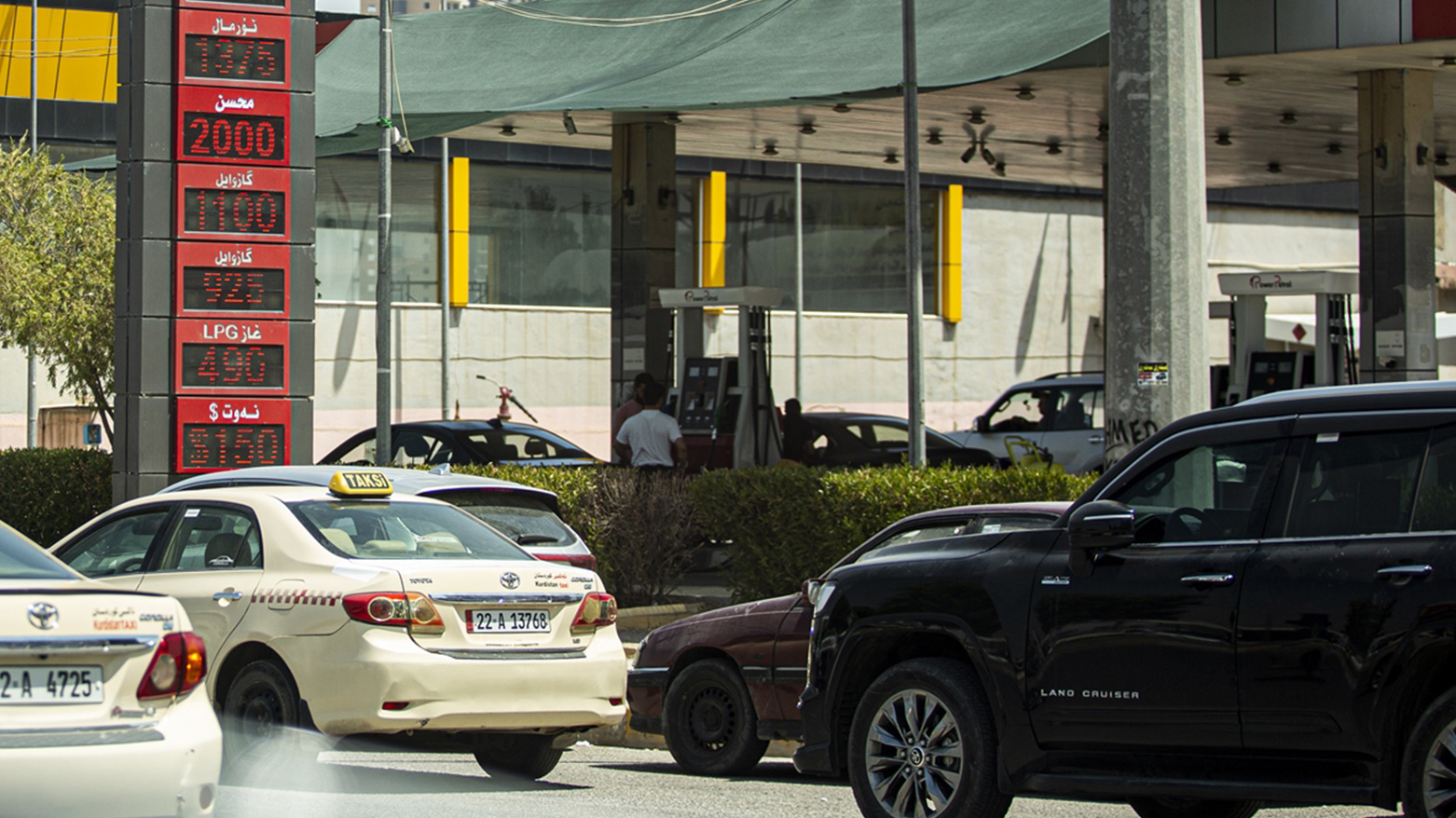
ERBIL (Kurdistan24) - The Kurdistan Regional Government has formally submitted two proposals to Baghdad aimed at resolving the Region's gasoline crisis, including an immediate mechanism that officials say could reduce the price of standard gasoline to 450 Iraqi dinars per liter as early as the following day if the federal government covers refining and transportation costs.
Dr. Ghazal Hostani, director-general of contracts at the KRG Ministry of Natural Resources, outlined the proposals Thursday as a senior ministry delegation held meetings in Baghdad over fuel supplies, pricing and the Kurdistan Region's share of federal subsidies.
"We submitted two proposals to Baghdad to resolve the gasoline crisis," Hostani said at a press conference.
The first proposal concerns 50,000 barrels of crude oil currently available to the Kurdistan Region.
"Our first proposal was that, if we want to reduce the price of one liter of gasoline to 450 dinars quickly, the production and transportation costs for the 50,000 barrels at our disposal must be covered," Hostani said.
She put that cost at $16 per barrel.
"If that is provided, we can reduce the price of one liter of gasoline to 450 dinars as early as tomorrow," she said.
The second proposal addresses what the KRG describes as the structural cause of the problem: unequal access to federal fuel subsidies.
"To resolve this problem fundamentally and over the long term, fairness must be ensured," Hostani said. "The Iraqi government has a subsidy budget, and it must also provide us with our share."
Oil-for-gasoline offer
Deputy Natural Resources Minister Ahmed Mufti provided further details Thursday, saying the KRG was prepared to deliver the 50,000 barrels of oil to Baghdad in exchange for gasoline sold in the Kurdistan Region at 450 dinars per liter.
Mufti said the current distribution of gasoline priced at 750 dinars per liter would continue in the meantime.
The proposal therefore gives Baghdad a potential exchange mechanism: crude oil from the Kurdistan Region in return for access to federally subsidized gasoline at the same lower price available elsewhere in Iraq.
The KRG delegation also raised the supply of kerosene ahead of winter, requesting what Mufti described as fair distribution to residents of the Kurdistan Region.
Hostani said daily gasoline requirements across the Region were between six million and seven million liters, which she equated to an oil requirement of about 140,000 barrels per day.
She argued that the Kurdistan Region should receive a proportionate share of federal support based on population.
"Under the Constitution and the law, the Kurdistan Region's population constitutes 14% of Iraq's total population. This is our right," Hostani said.
"We submitted these proposals in writing to the supporting subcommittee. God willing, the outcome will be positive and come quickly."
The delegation in Baghdad includes Mufti, Hostani, senior ministry adviser Dr. Barozh Sindi, administrative office director-general Rebin Zangana and the ministry's auditing director.
They met Farhad Atrushi, deputy speaker of the Iraqi Parliament, as well as Parliament's interim Oil and Gas Committee.
During the meeting, the KRG officials presented data explaining how the 50,000 barrels allocated to the Kurdistan Region could be refined and laid out figures concerning the Region's actual gasoline demand.
A detailed report is expected to be submitted to the Iraqi prime minister and federal oil minister, who would ultimately have to decide whether the proposed arrangement can proceed.
Baghdad earlier rejected supply request
The new proposals follow Baghdad's rejection of an earlier KRG request for 15,000 barrels of gasoline per day at Iraq's subsidized domestic price.
Kurdistan Democratic Party lawmaker Sipan Sherwani said Thursday that the federal Oil Ministry had formally responded to the request.
According to the document cited by Sherwani, the KRG had sought gasoline for Kurdistan Region residents at the same subsidized price applied in Iraq's other provinces.
The Oil Ministry rejected the request, attributing the decision to geopolitical developments, disruption in fuel supply chains, high summer consumption and declining strategic reserves.
Baghdad said those conditions left it unable to provide additional gasoline to the Kurdistan Region.
That rejection has made Thursday's negotiations particularly significant.
Instead of requesting an additional direct federal allocation alone, the KRG is now offering crude oil in exchange for lower-priced gasoline while separately pressing for inclusion in the federal subsidy system over the longer term.
The distinction reflects the two levels of the crisis described by Hostani: an immediate price and supply problem that could potentially be addressed through the 50,000-barrel arrangement, and a deeper dispute over how federally subsidized petroleum products are distributed between Iraq and the Kurdistan Region.
Pressure on households
Residents across the Kurdistan Region have faced high gasoline prices and supply pressure, increasing the urgency of an agreement as transportation costs affect household budgets and wider commercial activity.
Iraq itself continues to face structural challenges in balancing crude-oil wealth with sufficient domestic refining capacity.
Federal petroleum-product statistics released Thursday showed the scale of fuel consumption across Iraq, while the federal Oil Ministry has previously acknowledged continued reliance on imported gasoline because domestic production does not fully cover demand.
For the Kurdistan Region, however, the immediate argument presented in Baghdad is one of access and parity.
KRG officials say that if the federal government assumes the $16-per-barrel processing and transport cost associated with the available crude, gasoline could quickly be sold for 450 dinars per liter.
The longer-term proposal would seek to remove the need for repeated emergency negotiations by providing the Kurdistan Region with what its officials describe as its population-based share of federal fuel subsidies.
No final agreement had been announced Thursday.
But with the proposals now formally submitted and a report heading to Iraq's prime minister and oil minister, the fuel crisis has moved from competing public positions toward a specific set of financial and supply mechanisms for Baghdad to consider.
For consumers in the Kurdistan Region, the central question is now whether the federal government accepts either formula, and whether that decision can translate quickly into lower prices at the pump.
This artilce was updated on Thursday, Aug. 27, 2026, at 03:37.