Iraqi FM Announces Baghdad Initiative for Talks Between Iran and Gulf States
“We have put forward the '6+1' meeting initiative, and we are working to organize a meeting in Baghdad between the six Gulf countries and the Islamic Republic of Iran,” Hussein said.
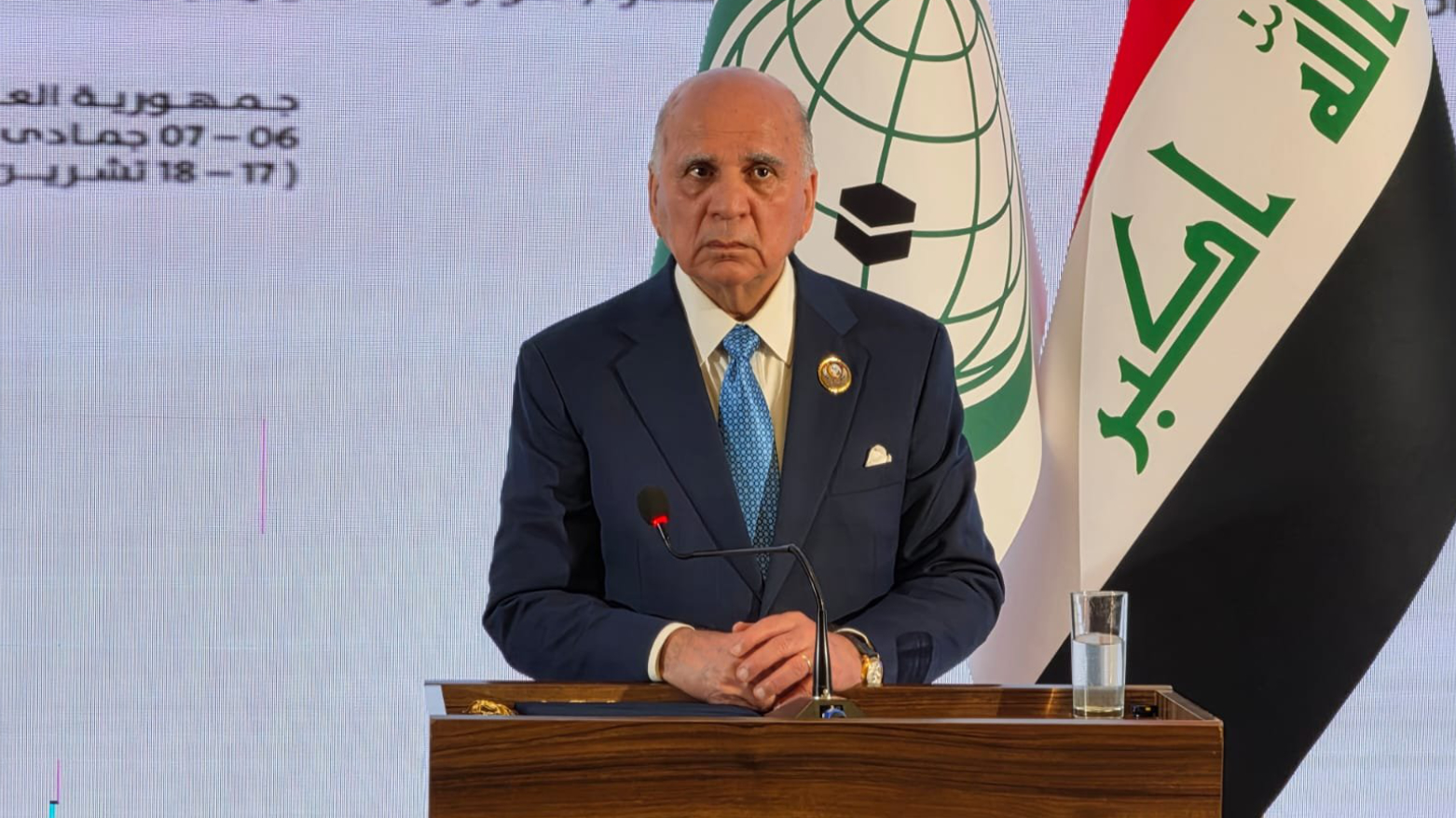
ERBIL (Kurdistan24) – Iraqi Foreign Minister Fuad Hussein announced on Sunday the conclusion of the 52nd session of the Organization of Islamic Cooperation (OIC) Council of Foreign Ministers and the adoption of the Baghdad Declaration, revealing that Iraq is working to organize a joint meeting between Iran and the six Gulf states in Baghdad.
Speaking at a press conference following the session's conclusion, Hussein said Baghdad had hosted delegations from 55 OIC member states over two days. Twenty-two foreign ministers attended the meetings, which were covered by 180 media organizations.
He also announced that Iraq had assumed the council's presidency from Türkiye.
Hussein said the Palestinian cause and Jerusalem had been at the forefront of the conference's agenda, with discussions focusing on delivering humanitarian aid to Palestinians, reconstruction efforts, and protecting Jerusalem's holy sites. Regional crises, developments in Islamic countries, and efforts to combat terrorism were also discussed.
Addressing Iraq's diplomatic efforts to ease regional tensions, Hussein said Baghdad had proposed a “6+1” initiative aimed at bringing Iran and the six Gulf states together for talks.
“We have put forward the '6+1' meeting initiative, and we are working to organize a meeting in Baghdad between the six Gulf countries and the Islamic Republic of Iran,” Hussein said.
He stressed that countries in the region should take the lead in resolving regional tensions, given their direct stake in the outcome. Baghdad is maintaining contact with the relevant countries in coordination with the OIC General Secretariat to help achieve an acceptable outcome, he added.
Hussein said hosting the meetings had sent important messages both inside Iraq and to the international community. Domestically, he said, the event demonstrated that Baghdad was secure, stable, and open to all parties.
Internationally, he described the session as evidence of Iraq's growing diplomatic standing, noting that the country had previously held the presidency of the Arab Summit and was now leading the OIC Council of Foreign Ministers.