Saudi Defense Minister Meets UAE Leaders as Gulf Allies Seek Closer Regional Coordination
Prince Khalid bin Salman holds talks with Sheikh Mansour and President Sheikh Mohamed bin Zayed in Abu Dhabi amid escalating Houthi attacks and efforts to ease Saudi-UAE tensions
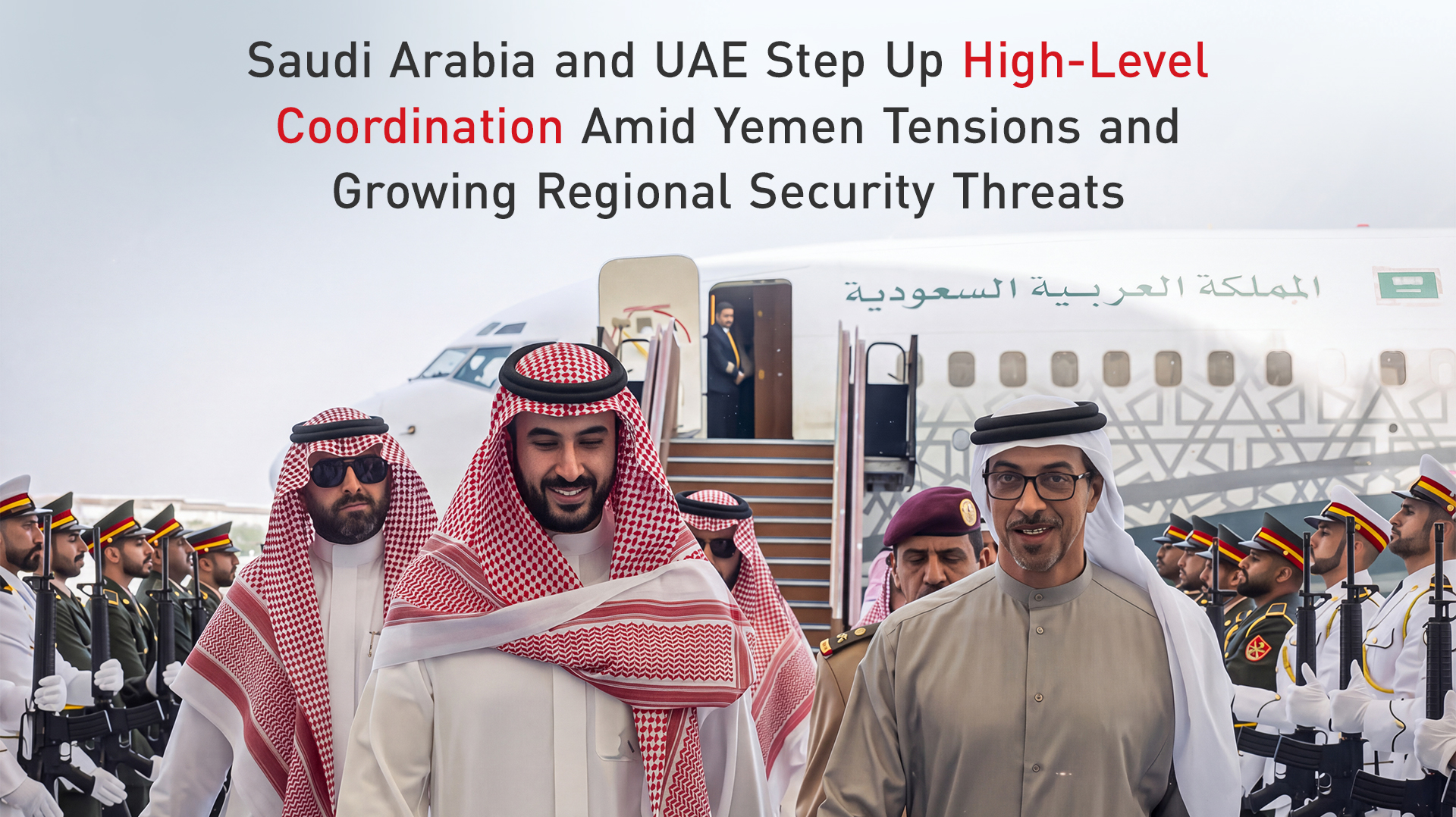
ERBIL (Kurdistan24) — Saudi Defense Minister Prince Khalid bin Salman met senior Emirati leaders in Abu Dhabi on Sunday to discuss bilateral relations, strengthening cooperation and the latest regional developments, as Saudi Arabia and the United Arab Emirates pursue closer coordination amid escalating security threats across the Gulf.
Prince Khalid was received by UAE Vice President, Deputy Prime Minister and Chairman of the Presidential Court Sheikh Mansour bin Zayed Al Nahyan upon arriving at Al Bateen Executive Airport, before the two officials held talks on ways to strengthen cooperation and coordination across various sectors.
The Saudi defense minister also met UAE President Sheikh Mohamed bin Zayed Al Nahyan, with the discussions focusing on bilateral relations, shared interests and regional developments.
The two sides emphasized the importance of strengthening cooperation to support regional security, stability and lasting peace.
According to the UAE's state news agency, Prince Khalid conveyed greetings from Saudi King Salman bin Abdulaziz Al Saud and Crown Prince and Prime Minister Mohammed bin Salman to the Emirati president. Sheikh Mohamed reciprocated with greetings for the Saudi king and crown prince.
The meetings were attended by senior Emirati officials, including Sheikh Tahnoon bin Zayed Al Nahyan, deputy ruler of Abu Dhabi and national security adviser; Sheikh Shakhbout bin Nahyan Al Nahyan, minister of state; Ali bin Hammad Al Shamsi, secretary-general of the Supreme Council for National Security; and Ali Saeed Al Neyadi, chairman of the National Emergency, Crisis and Disaster Management Authority.
Saudi intelligence affairs adviser Hisham bin Abdulaziz bin Saif also attended the meeting between Prince Khalid and Sheikh Mansour.
The official statements did not announce a new military agreement or specify particular regional conflicts discussed during Sunday's meetings.
Renewed diplomatic engagement after Saudi-UAE tensions
The Abu Dhabi meetings follow renewed high-level diplomatic contacts between Riyadh and Abu Dhabi after tensions between the two Gulf powers over Yemen strained their relationship.
On Sept. 29, Sheikh Mansour visited Riyadh and met Crown Prince Mohammed bin Salman and Prince Khalid. The discussions focused on bilateral relations and regional developments, marking an important step in renewed engagement between the two countries following their dispute over Yemen.
Saudi Arabia and the UAE have historically cooperated on regional security and economic issues, but their interests have diverged over the future of Yemen, where they have supported different local actors.
The disagreement intensified after Saudi forces confronted the UAE-aligned Southern Transitional Council (STC), a separatist movement seeking an independent southern Yemen.
The developments contributed to the UAE's withdrawal of its remaining forces from Yemen, while raising questions about coordination between the two countries in countering the Houthis.
The renewed diplomatic contacts suggest both governments have an interest in maintaining communication despite their differences. However, neither side has publicly announced a comprehensive resolution of the disputes surrounding Yemen.
Houthi attacks heighten regional security concerns
The diplomatic outreach comes as Saudi Arabia faces an escalation in attacks by Yemen's Iran-aligned Houthi movement, raising concerns about the security of critical infrastructure, airports and maritime routes.
Egypt has offered Saudi Arabia the necessary support amid escalating Houthi attacks, including strikes on Riyadh's international airport and Saudi Aramco facilities, following the breakdown of a truce in Yemen.
Egyptian President Abdel Fattah al-Sisi called for an urgent parliamentary session to authorize potential military assistance if requested by Riyadh.
The Houthis have expanded their operations amid the wider regional conflict involving Iran, the United States and their respective allies. Their ability to threaten Saudi territory and strategic maritime routes has increased pressure on regional governments to coordinate their security responses.
The Bab al-Mandab Strait, which connects the Red Sea to the Gulf of Aden, remains particularly important for international shipping and energy transportation.
Houthi control over territory near the strait has added to concerns about the potential effects of the conflict on regional trade and global supply chains.
Saudi Arabia and the UAE share an interest in protecting regional stability and economic infrastructure, although their differences over Yemen have complicated efforts to establish a unified approach to the conflict.
Sunday's meetings in Abu Dhabi did not explicitly identify the Houthis as a subject of discussion, but the timing of the diplomatic engagement places it against a backdrop of mounting security pressures on Saudi Arabia and the wider Gulf.
Gulf coordination amid wider regional instability
The meetings also come as Gulf governments confront the broader consequences of the conflict involving Iran, including threats to energy infrastructure, shipping and regional security.
For Riyadh and Abu Dhabi, maintaining communication at the highest levels provides a channel to address disagreements and explore areas of shared interest.
Both governments have emphasized cooperation and stability in their public statements, although the practical implications of Sunday's discussions remain unclear.
The latest engagement follows the September meeting in Riyadh and reflects continued efforts to sustain bilateral contacts after the two countries' differences over Yemen became more pronounced.
Whether the diplomatic outreach will lead to closer security coordination or a broader understanding over Yemen remains to be seen.
For now, the public statements from both governments emphasize stronger bilateral ties, cooperation across multiple sectors and the need to support regional security and stability.