Iraq's Deputy Parliament Speaker: Dragging Peshmerga Into Disarmament File Is Deliberate Confusion
Farhad Amin Atrushi backs PM al-Zaidi on weapons regulation and warns Iraq's foreign relations depend on its success, while firmly rejecting attempts to conflate the Peshmerga with Iran-aligned militia factions
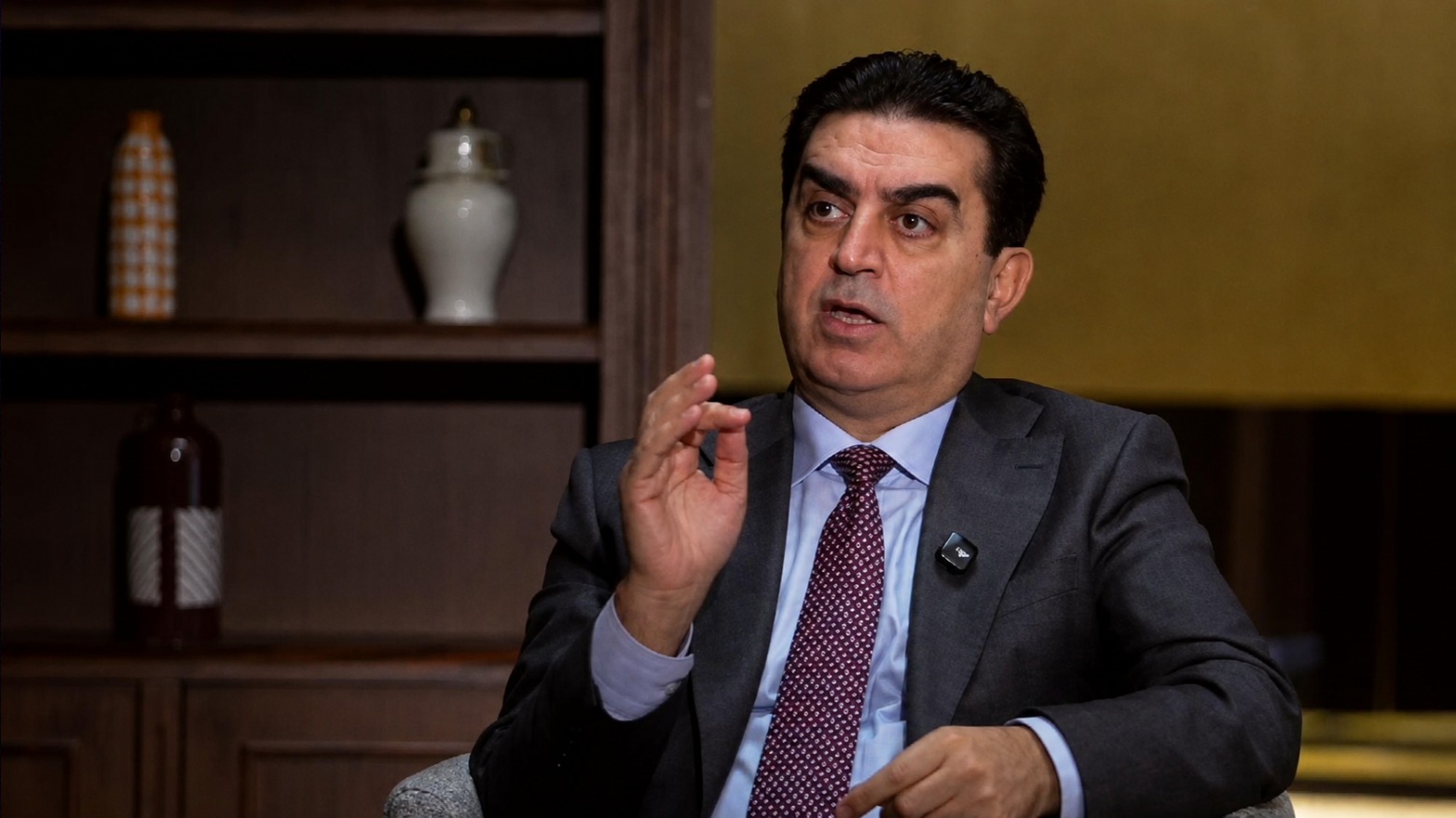
ERBIL (Kurdistan 24) - Iraqi Deputy Parliament Speaker Farhad Amin Atrushi affirmed on Sunday, August 31, 2026, that political forces support Prime Minister Ali al-Zaidi in managing the weapons regulation file, while issuing a sharp rejection of attempts to include the Peshmerga forces in the disarmament process, calling such moves a deliberate attempt to confuse the issue, as the September 30 deadline approaches with several Iran-aligned factions still refusing to comply.
"We support the prime minister and the government in the file of placing weapons under state control, and it is an important Iraqi security matter," Atrushi told the Iraqi National News Agency NINA on Sunday.
The deputy speaker placed the disarmament file in the broadest possible diplomatic context, warning that Iraq's international standing depends directly on its outcome. "The future of Iraq's foreign relations will depend on placing weapons under state control. Without that, Iraq's relations with neighboring countries, its regional environment, and countries of the world will be threatened and poor," he said, framing weapons regulation not as a domestic security matter alone but as the foundation of Iraq's entire foreign policy posture going forward.
On the question of the Peshmerga, Atrushi was categorical and direct. "Peshmerga forces are part of the security system and existed before the ratification of the Iraqi constitution in 2005 and before the formation of the new state in 2003, to fight dictatorship. They operate according to the constitutional text of Article 121, paragraph five, which speaks of the Region's guard and internal security forces," he said. He then added: "Dragging the Peshmerga forces into the weapons regulation file is intended to confuse the cards."
The clarification directly echoes the position stated by Iraq's National Security Adviser Qasim al-Araji on Saturday, August 29, 2026, who explicitly told Al Jazeera that Peshmerga weapons fall within Iraq's constitutional framework and are therefore not subject to the September 30 disarmament deadline, which applies exclusively to forces operating outside the constitution. Atrushi's statement from the parliament's leadership reinforces that position at the legislative level, making it a cross-institutional consensus rather than solely an executive branch interpretation.
The remarks come as American pressure on Baghdad to regulate Iran-aligned militia weapons has intensified significantly. Al-Zaidi set the September 30 deadline to coincide with the conclusion of the international coalition's anti-ISIS mission led by Washington, a timeline that has placed the disarmament file and the coalition withdrawal on a parallel track. Some factions have explicitly linked their weapons' future to the departure of foreign forces, while others have set sweeping conditions including the full withdrawal of US forces, the expulsion of PKK fighters from Iraq, and the departure of Turkish forces from northern Iraqi territory.
Katayib Sayyid al-Shuhada issued a statement on August 29, 2026, reframing the entire process as a reorganization of weapons rather than a handover, reserving the right to rearm whenever circumstances require and setting six conditions for even nominal participation. The Nasr Alliance has warned that failure to reach agreement by September 30 could push Iraq into civil war. Badr Organization Secretary-General Hadi al-Amiri pledged on August 26 that there will be no confrontation between the state and the resistance, calling weapons regulation a purely Iraqi national decision.
Atrushi's intervention as deputy parliament speaker adds a significant Kurdish political voice to the disarmament debate, signaling that the Kurdistan Region's political representatives at the federal level are aligned with al-Zaidi's government on the disarmament process while firmly protecting the Peshmerga's constitutional status from being drawn into a file it does not belong to.