Ukraine Accuses US of Helping Russia as Starlink Restrictions Hamper Defenses
Zelensky urges Elon Musk to restore Starlink services as Kyiv reports deadly Russian missile strikes, power outages, and threatened intelligence cuts amid growing tensions with Washington
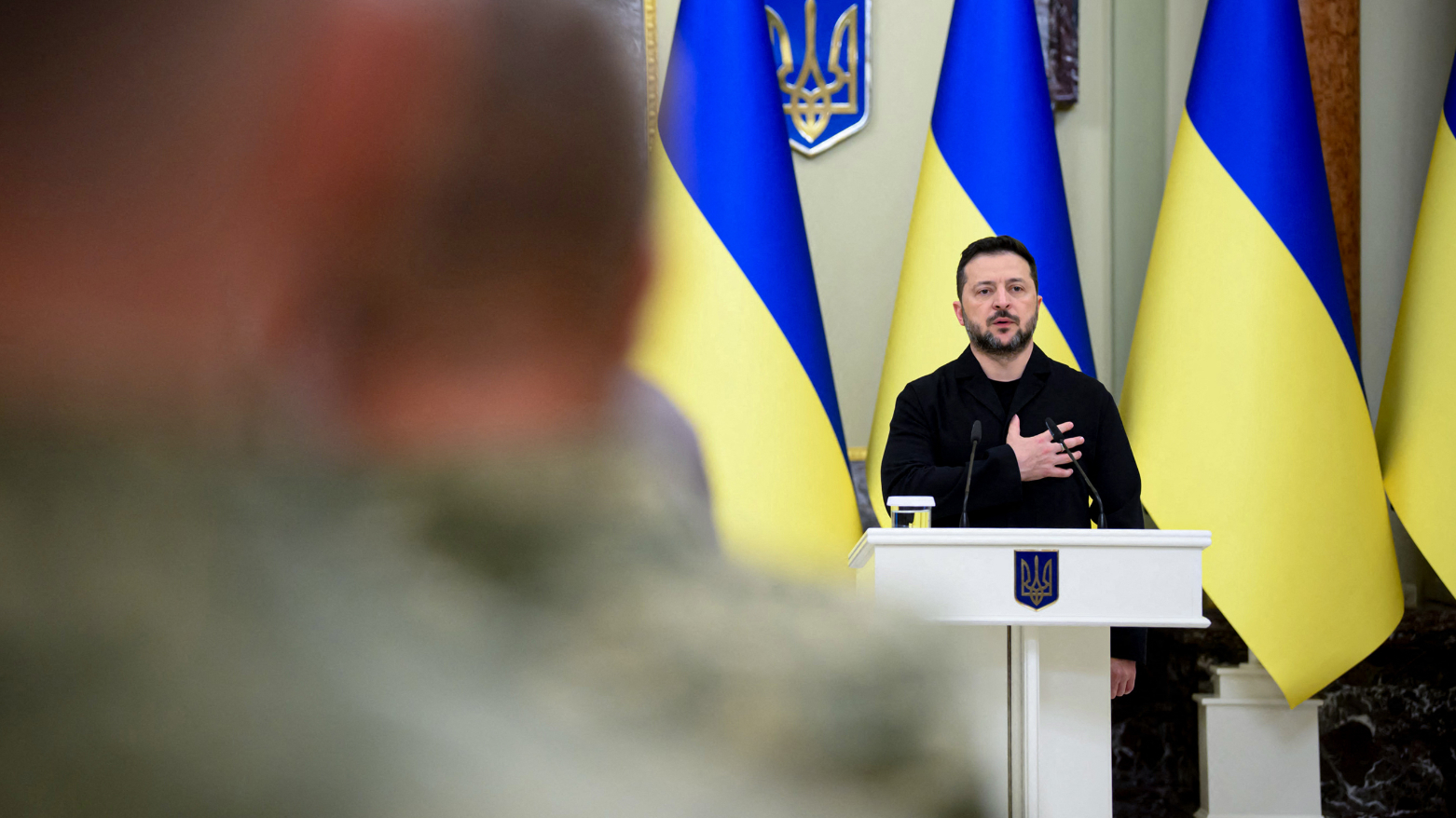
ERBIL (Kurdistan24) — Ukraine on Wednesday accused the United States of indirectly helping Russia by withholding warnings of incoming missile strikes and restricting satellite internet services used by Ukrainian forces, as President Volodymyr Zelensky appealed to tech billionaire Elon Musk to restore Starlink capabilities and criticized Washington's handling of the war.
Zelensky called on Musk, whose SpaceX company operates the Starlink satellite network, to reverse reported restrictions that Kyiv says have hampered military operations, particularly the deployment of strike and interceptor drones used to counter Russian attacks.
“I hope that it's a mistake, maybe huge technical problem,” Zelensky told British journalist Piers Morgan. “I don't know, but we are asking to do it, to switch (it) on.”
Former Ukrainian Defense Minister Mykhailo Fedorov later said Starlink operations at speeds of up to 160 kilometers per hour were being restored, potentially allowing strike drones and interceptor drones to resume flights.
Musk, however, rejected responsibility for the restrictions, saying decisions concerning the relevant military satellite system rested with the US government.
He distinguished between Starshield, a satellite communications system owned and controlled by the US government, and the civilian Starlink network, which Ukraine also uses but is not authorized to employ for offensive operations.
“Starshield systems are owned and controlled by the US government. Any limits on speed or usage are decided by the US military and ultimately POTUS,” Musk said, referring to US President Donald Trump.
A senior Ukrainian official told AFP that Washington had also threatened in recent days to suspend intelligence sharing on Russian missile launches, information Kyiv relies on to detect incoming attacks and organize its defenses.
Trump denied on Tuesday that he had threatened to withdraw such intelligence.
Ukrainian officials alleged that the reported intelligence threats and Starlink restrictions were connected to a broader shift in US policy toward the conflict.
“It's obvious they (the United States) are helping Russia for some reason,” the senior official told AFP.
Zelensky adviser Sergiy Beskrestnov also warned that the restrictions were undermining Ukraine's ability to counter Russian drone attacks.
“Through their actions, our partners are depriving us of one of the few chances we have to defend the country against jet-powered Shahed drones,” he wrote on Telegram.
Zelensky Says Trump Is Choosing Russia's Side
The dispute over military communications came as Zelensky expressed frustration with Trump's approach to the war, including an announced diesel-supply arrangement with heavily sanctioned Russia.
Asked whether he felt betrayed, Zelensky replied affirmatively, saying Trump's decisions were moving Washington away from Kyiv.
“It's painful when President Trump chooses one side, not our side,” he said. “I think his advisors are wrong. I don't know who is pushing him not to the right side. This is not (the) right side of history.”
Zelensky had also condemned the absence of advance warnings from allies before a new wave of Russian missile attacks on Tuesday night and early Wednesday, describing the situation as “completely unjust.”
He accused Moscow of violating what he described as an “energy ceasefire” announced unilaterally by Trump, arguing that Russia had squandered an opportunity to reduce hostilities.
Ballistic missiles struck Kyiv for a second consecutive night, with Ukrainian officials reporting that warning sirens had not sounded early enough to allow residents to reach shelters, basements, or metro stations before the attacks.
“Russia has never before shown such ostentatious disrespect toward the United States,” Zelensky said, accusing Moscow of disregarding Washington's efforts to ease the conflict.
The failure to provide timely warnings has been relatively rare during the war. Ukrainian officials have previously suggested that the use of difficult-to-detect missiles or technical problems could explain similar incidents.
Deadly Strikes Disrupt Ukraine's Energy Infrastructure
The latest Russian attacks killed 15 people across Ukraine and caused significant damage to energy facilities and equipment, leaving large areas of Kyiv without electricity.
Power plants in the eastern Kharkiv region came under ballistic-missile attack, while strikes also affected Zhytomyr in northwestern Ukraine, Sumy in the northeast, and Chernihiv in the north.
Russia has repeatedly targeted Ukraine's electricity generation, power distribution, and heating infrastructure, seeking to disrupt essential services and place additional pressure on the population.
Such attacks are particularly dangerous ahead of winter, when temperatures in parts of Ukraine can fall to minus 20 degrees Celsius, increasing the risks associated with prolonged electricity and heating outages.
The reported restrictions on satellite communications and the alleged threat to intelligence sharing could further complicate Ukraine's efforts to protect its cities and energy infrastructure from Russian missile and drone attacks.
Moscow Watches for Changes in US Policy
In Moscow, Kremlin spokesman Dmitry Peskov said Russia was monitoring developments for indications that Washington's support for Ukraine might be changing.
“We are carefully noting all this. It is too early to draw any systemic conclusions,” Peskov told reporters.
Meanwhile, Kirill Dmitriev, Russian President Vladimir Putin's special envoy for economic cooperation, said the first contracts for diesel supplies to the United States were expected to be signed in the coming days.
“We are in close, hourly contact with the American side, and everything is moving very quickly,” Dmitriev said.
The prospective energy arrangement comes as Trump faces mounting domestic pressure over rising fuel prices ahead of next month's crucial US midterm elections. Trump has blamed Ukrainian attacks on Russian oil refineries for contributing to fuel supply constraints and higher prices at American gas stations.
However, most experts attribute the principal pressure on global energy markets to the US-Israeli military campaign against Iran that began in late February, which has led Tehran to block the Strait of Hormuz, a critical passage for international oil and gas shipments.
The emerging tensions over intelligence sharing, satellite communications, and energy cooperation have raised questions about the direction of US policy toward the war.
While Washington's role in the reported Starshield restrictions remains a central issue in Kyiv's accusations, Moscow has signaled that it is watching closely for evidence of a broader shift in American support for Ukraine.