Afghanistan Pitches Mineral Wealth to Trump Administration
The Taliban is offering U.S. companies access to Afghanistan's mineral resources as Kabul seeks sanctions relief, investment and movement on frozen central-bank assets.
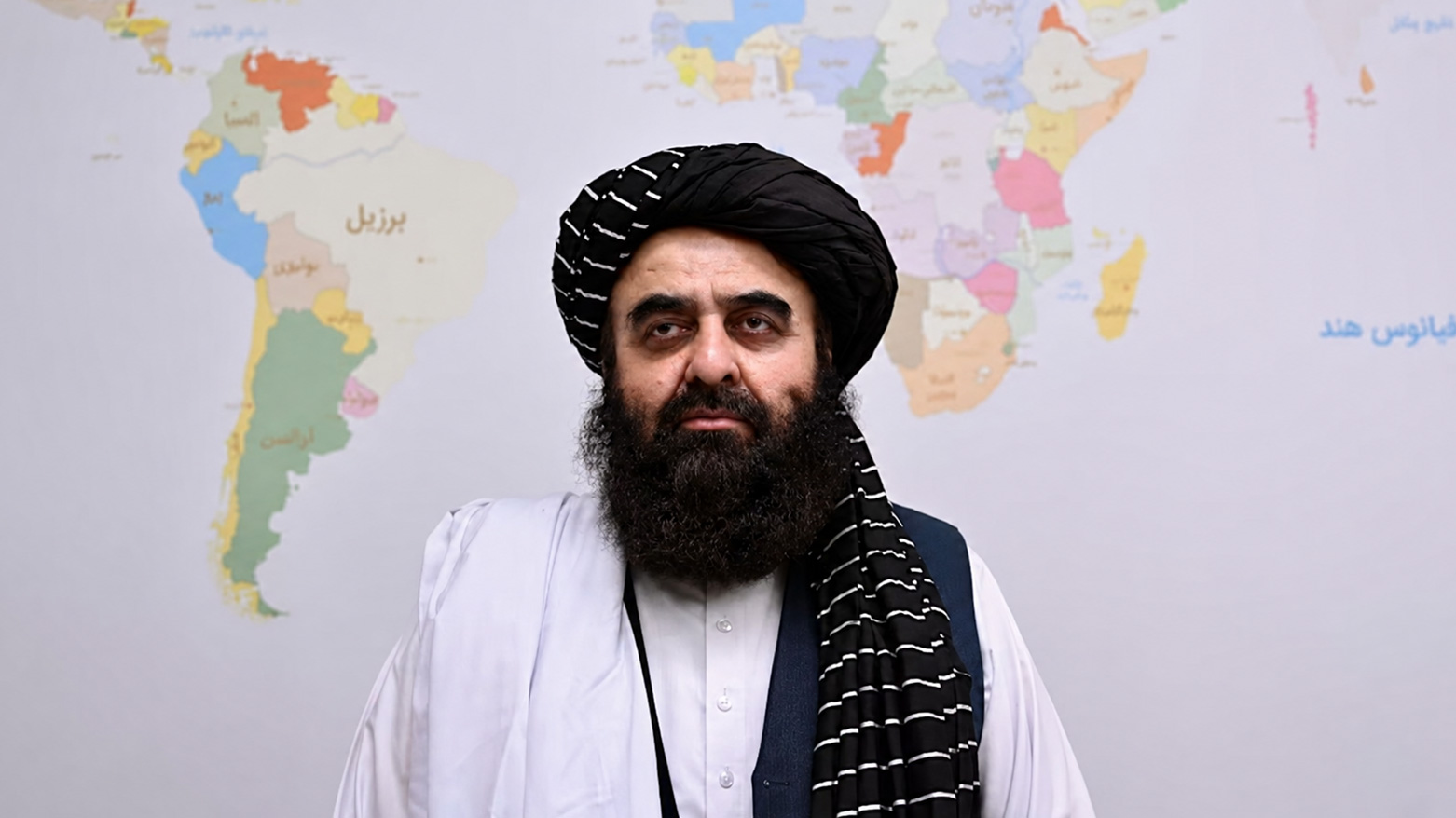
ERBIL (Kurdistan24) - Afghanistan's Taliban government is offering U.S. companies access to the country's vast mineral resources as part of a renewed effort to engage President Donald Trump's administration, seeking sanctions relief, foreign investment and movement on billions of dollars in Afghan central-bank assets held abroad.
The Financial Times reported Monday that Taliban Foreign Minister Amir Khan Muttaqi said Kabul would welcome American investment across mining, infrastructure, agriculture and trade, arguing that relations with Washington should increasingly be based on future economic opportunities rather than the legacy of two decades of war.
"Our economic policy is open," Muttaqi told the Financial Times during an interview in Kabul.
The overture represents an attempt by the Taliban to transform one of Afghanistan's most frequently cited economic assets, its largely undeveloped mineral wealth, into diplomatic leverage five years after the movement returned to power following the withdrawal of U.S.-led forces.
But the proposal remains an invitation rather than an agreement. The Financial Times reported that Muttaqi did not say whether the mineral investment pitch had been presented directly to the White House.
Afghanistan's mineral promise
U.S. and Afghan geological work conducted before the Taliban's 2021 takeover estimated that Afghanistan could possess at least $1 trillion worth of mineral resources, including copper, iron ore, lithium, cobalt, gold and niobium.
That figure should not be read as $1 trillion of proven, immediately recoverable reserves.
Geological resources can remain commercially inaccessible for decades because of inadequate infrastructure, security conditions, extraction costs, electricity requirements, water availability, transportation networks and the difficulty of attracting long-term capital.
Afghanistan nevertheless holds significant potential at a time when governments increasingly treat access to critical minerals as an issue of economic and national security.
Since returning to power, the Taliban has announced more than $7 billion in mining investments involving countries including China and Iran, according to the Financial Times. Those projects cover commodities including gold, gemstones and chromite.
Kabul is now signaling that American companies could also participate.
For the Taliban, such investment could provide revenue, infrastructure and a potential economic bridge to Washington. For the United States, Afghanistan's resources could theoretically add another source of critical minerals as Washington attempts to diversify supply chains away from overwhelming Chinese dominance.
Why minerals could attract Washington
The Taliban's timing coincides with an intensifying U.S.-China contest over critical-mineral supply chains.
Rare earth elements in particular are essential for high-performance magnets used in electric vehicles, wind turbines, industrial machinery and sophisticated military systems.
China's strongest position is not simply the amount of ore located within its territory, but its dominance in processing and manufacturing.
International Energy Agency figures show that China accounted for about 60% of mining for the four main magnet rare earths in 2024, but approximately 91% of refining and 94% of sintered rare-earth magnet production.
That distinction is important for evaluating Afghanistan's value to Washington.
Lithium, copper and cobalt are critical minerals but are not themselves rare earth elements. And simply developing Afghan mines would not automatically establish an independent U.S. supply chain.
Ore would still need to be processed, refined and converted into usable industrial materials, often through facilities and technical capabilities that remain heavily concentrated in China.
The United States has consequently been investing not only in mines but in separation facilities, metal production and magnet manufacturing, including through its partnership with California-based MP Materials.
Afghanistan could therefore offer geological potential, but turning that potential into strategic supply would require large investments well beyond opening mines.
Frozen reserves form another part of Taliban push
Kabul's economic overture is also closely tied to its demand for access to Afghan central-bank reserves held outside the country.
Afghanistan's central bank estimates around $9.5 billion in reserves remain abroad, including approximately $7 billion that had been held in the United States, according to the Financial Times.
In 2022, Washington transferred $3.5 billion of those assets into the Switzerland-based Afghan Fund, designed to support Afghan monetary and financial stability without placing the money directly under Taliban control. The FT reported that those assets have since grown to more than $4 billion with interest.
Muttaqi argues that sanctions have failed to produce their intended outcome and says Afghan national assets should not be used as political leverage.
The Taliban hopes deeper economic relationships will eventually help weaken the sanctions regime and reduce the country's international isolation.
Major political barriers remain
Any large American investment program would nevertheless confront substantial political and legal obstacles.
The Taliban government lacks broad international recognition and continues to face severe criticism over its restrictions on women and girls, particularly in education, employment and public life.
Senior Taliban officials are also subject to international sanctions.
The Financial Times reported that foreign diplomats have warned that investors would have to navigate sanctions applying to Taliban officials, while rights advocates fear economic normalization could reduce international leverage over Kabul's domestic policies.
Washington has so far shown little indication that a minerals proposal alone will overcome those disputes.
Trump has also pushed a very different Afghan demand: renewed U.S. access to Bagram Air Base north of Kabul. The Taliban has rejected the idea, maintaining that Afghanistan's military and civilian installations are national assets.
Muttaqi has, however, encouraged Washington to reopen the U.S. Embassy in Kabul, another indication that the Taliban is seeking a broader reset in relations.
Minerals as a diplomatic opening
The Taliban's offer ultimately reflects a more transactional approach to escaping international isolation.
Rather than asking Washington to reassess Afghanistan solely on political grounds, Kabul is presenting economic incentives that could overlap with Trump administration priorities: minerals, infrastructure investment, competition with China and potential commercial opportunities for American companies.
Whether that proves persuasive remains uncertain.
Afghanistan possesses substantial geological potential, but extracting it on a commercially meaningful scale requires financing, infrastructure, technical expertise, political stability and access to international financial systems.
For Washington, minerals would also have to be weighed against counterterrorism concerns, Taliban governance, women's rights, sanctions law and the unresolved dispute over Afghanistan's frozen reserves.
The result is an offer with strategic appeal but substantial obstacles.
Five years after the Taliban returned to Kabul, it is trying to convince Washington that Afghanistan should no longer be viewed primarily through the history of the war.
Its latest argument is economic: beneath Afghanistan's mountains lies enough potential wealth, Kabul says, to give the United States a reason to reconsider what the next chapter of the relationship could look like.