Egypt Parliament to Hold Emergency Session on Potential Support for Saudi Defence Against Houthis
President Abdel Fattah al-Sisi says Cairo is prepared to take defensive measures if Riyadh requests assistance, as Saudi Arabia reports intercepting four drones amid escalating Houthi attacks.
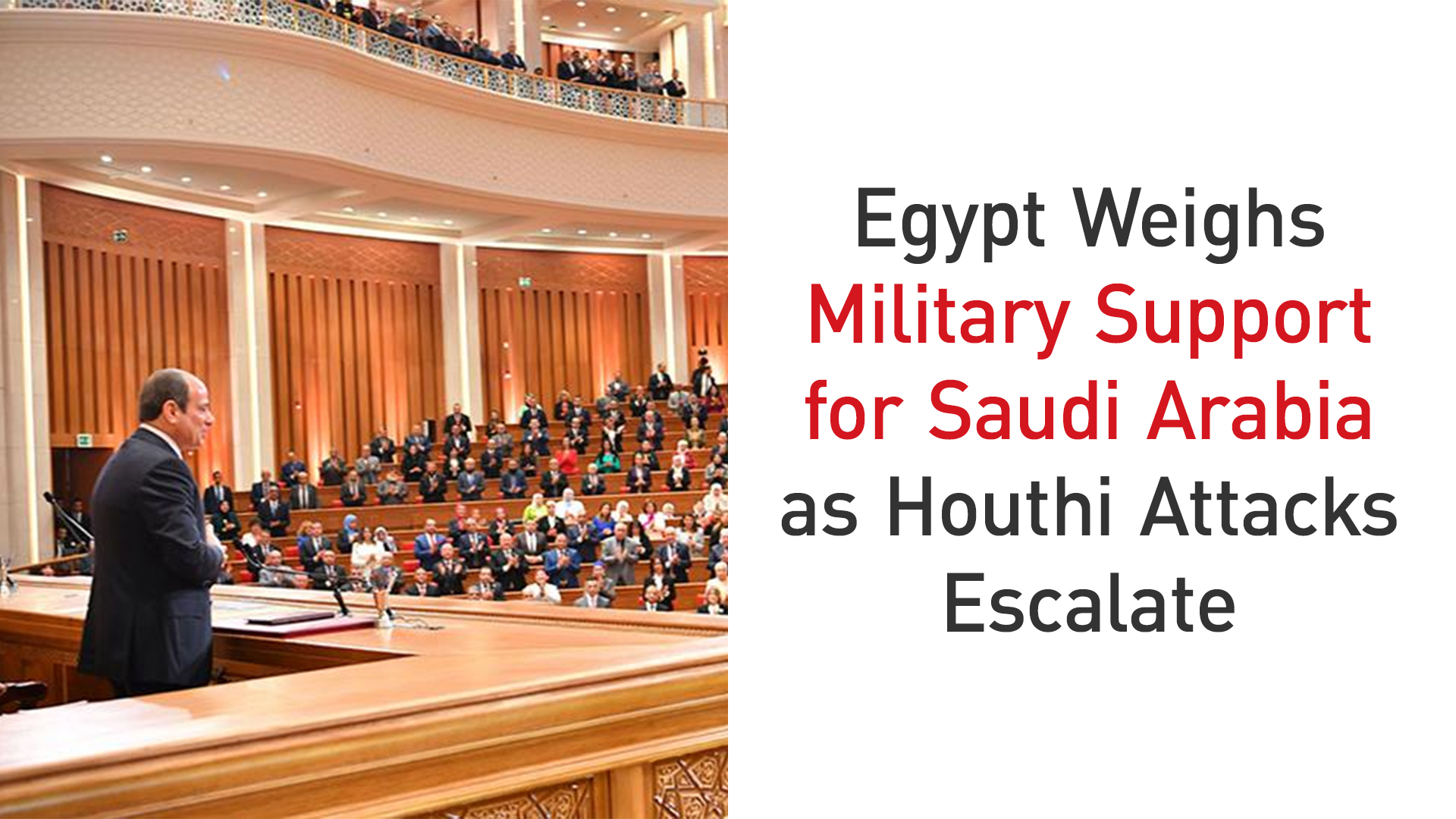
ERBIL (Kurdistan24) — Egypt’s parliament will hold an emergency session on Sunday to consider potential support for Saudi Arabia’s defence against escalating attacks by Yemen’s Iran-backed Houthis, following President Abdel Fattah al-Sisi’s pledge that Cairo would help protect the kingdom if requested.
Saudi Arabia said Saturday that its air defences had intercepted and destroyed four drones over the Riyadh region, the Eastern Province, and southern parts of the country, as the kingdom faced continued attacks amid the renewed conflict in Yemen.
A spokesman for the Saudi-led military coalition said the drones had been intercepted over the preceding hours.
The developments came shortly after Sisi declared Egypt’s readiness to take measures to defend Saudi territory and security, while stressing that Cairo was not seeking to initiate hostilities or attack other countries.
“I'm not talking about fighting anyone or attacking anyone,” Sisi said. “We are speaking only about defence.”
Egyptian state media reported that parliament would convene on Sunday at the president’s request, although details of the proposed authorisation and the potential scope of Egyptian assistance were not immediately available.
Speaking at a graduation ceremony at the Egyptian Military Academy, Sisi said it was “inconceivable” for Cairo to stand by while Saudi Arabia was harmed or its security and stability threatened.
He also reaffirmed Egypt’s support for protecting Gulf states and called on attendees to stand and offer a military salute to the countries.
Sisi’s remarks followed renewed Houthi attacks on Saudi targets, including energy infrastructure and transport facilities. An attack on Riyadh’s international airport last week killed 13 people.
The Houthis have also declared a maritime blockade on Saudi Arabia and seized territory around the Bab al-Mandab Strait, a strategic chokepoint connecting the Red Sea to the Gulf of Aden.
The waterway has taken on greater significance for Saudi oil exports as disruptions to shipping through the Strait of Hormuz have increased pressure on alternative maritime routes.
The renewed escalation has also been accompanied by Saudi airstrikes against Houthi positions in Yemen. On Saturday, a Houthi-affiliated news agency reported that Saudi strikes overnight had killed at least 12 people and wounded more than 30 in Dhamar and Taiz provinces.
The agency alleged that civilian areas had been targeted and that cluster munitions had been used. These claims had not been independently verified.
Saudi Arabia has accused Iran of encouraging the Houthis’ escalation, an allegation Tehran denies. Iranian Foreign Minister Abbas Araghchi said Saturday that a comprehensive political process was the only practical and sustainable way to resolve the conflict and reiterated Tehran’s offer to mediate between the parties.
Egypt-Saudi ties and Red Sea security
Egypt joined the Saudi-led coalition supporting Yemen’s internationally recognised government in 2015, but its contribution has largely focused on securing Red Sea shipping routes rather than frontline combat operations.
Cairo and Riyadh maintain longstanding strategic and economic ties, with Saudi Arabia having provided significant financial assistance to Egypt following the 2013 ouster of President Mohamed Morsi and during subsequent economic crises.
Saudi Crown Prince Mohammed bin Salman, who serves as the kingdom’s de facto leader, visited Cairo last month. During the visit, Egypt reaffirmed its support for measures Saudi Arabia might take to safeguard its security, while both leaders called for free and secure navigation in the Red Sea.
The waterway is particularly important to Egypt because it provides access to the Suez Canal, a major source of foreign currency.
Egyptian Foreign Minister Badr Abdelatty said last month that disruptions caused by Houthi attacks on commercial shipping since 2023 had cost the canal approximately $11 billion in revenue.
Despite its close security ties with Gulf states, Egypt has not joined a mutual defence agreement signed by Saudi Arabia, Türkiye, and Pakistan in August. Cairo has said it is studying the agreement in depth but has yet to announce a decision on membership, reflecting its traditionally cautious approach to regional military alliances.
The emergency parliamentary session will therefore take place against the backdrop of mounting security pressures on Saudi Arabia, growing risks to Red Sea maritime traffic, and uncertainty over whether Egypt will move beyond its existing maritime security role to provide broader defensive assistance to the kingdom.