Pezeshkian Thanks Putin for Russia’s Support During Iran War
Pezeshkian and Putin met on the sidelines of the Shanghai Cooperation Organization summit in Kyrgyzstan, where they discussed bilateral relations and ways to expand cooperation.
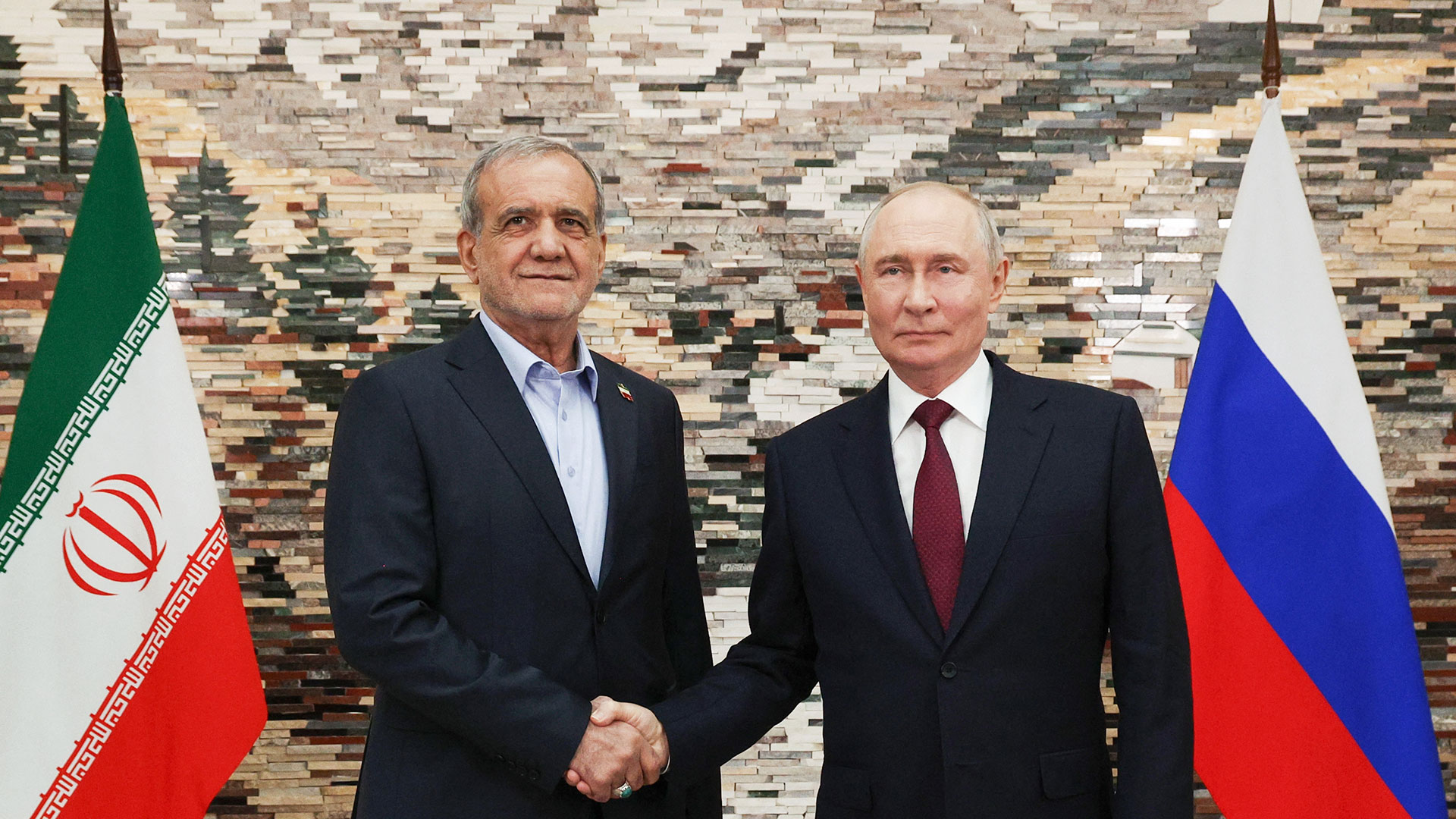
ERBIL (Kurdistan24) – Iranian President Masoud Pezeshkian thanked Russian President Vladimir Putin on Tuesday for Moscow’s support during the Middle East war, as the two leaders met for the first time since the conflict erupted.
Pezeshkian and Putin met on the sidelines of the Shanghai Cooperation Organization summit in Kyrgyzstan, where they discussed bilateral relations and ways to expand cooperation.
“We appreciate and thank you for your positions at every stage, both during the period when the fighting and acts of aggression were taking place and under normal circumstances, when the United States was imposing sanctions on us, both at the United Nations and in international forums,” Pezeshkian told Putin.
“This shows that our relationship is a strategic relationship; it is not an ordinary relationship,” he added.
The Iranian presidency said in an earlier statement that the two presidents “reviewed bilateral relations” and “discussed ways to strengthen and expand cooperation in various fields.”
The meeting comes as Moscow and Tehran have significantly deepened their military and economic ties since Russia launched its full-scale invasion of Ukraine.
Pezeshkian and Putin last met at a summit in Turkmenistan in December 2025.
The war between Iran and the United States erupted on February 28 after US-Israeli strikes killed Iran’s Supreme Leader Ayatollah Ali Khamenei and several senior military officials.
Iran responded with attacks across the region, as the conflict expanded beyond its borders.
Tehran subsequently imposed a blockade on the Strait of Hormuz, a critical global energy route, while Washington established a naval counter-blockade targeting Iranian ports.
An April 8 ceasefire halted the most intense fighting, but sporadic attacks, particularly around the Strait of Hormuz, have continued to undermine prospects for a lasting peace agreement.
The United States has also shifted toward what it describes as a campaign of “economic asphyxiation” against Iran.
During a meeting with Iranian Foreign Minister Abbas Araghchi in Saint Petersburg in late April, Putin said Moscow would do “everything” possible to help secure peace in the Middle East.