Tasnim Says Nine Iranian Military Personnel Killed in U.S. Strikes
Tasnim says six Iranian naval personnel and three military pilots were killed in U.S. strikes on Sept. 1 as renewed fighting spreads across the region.
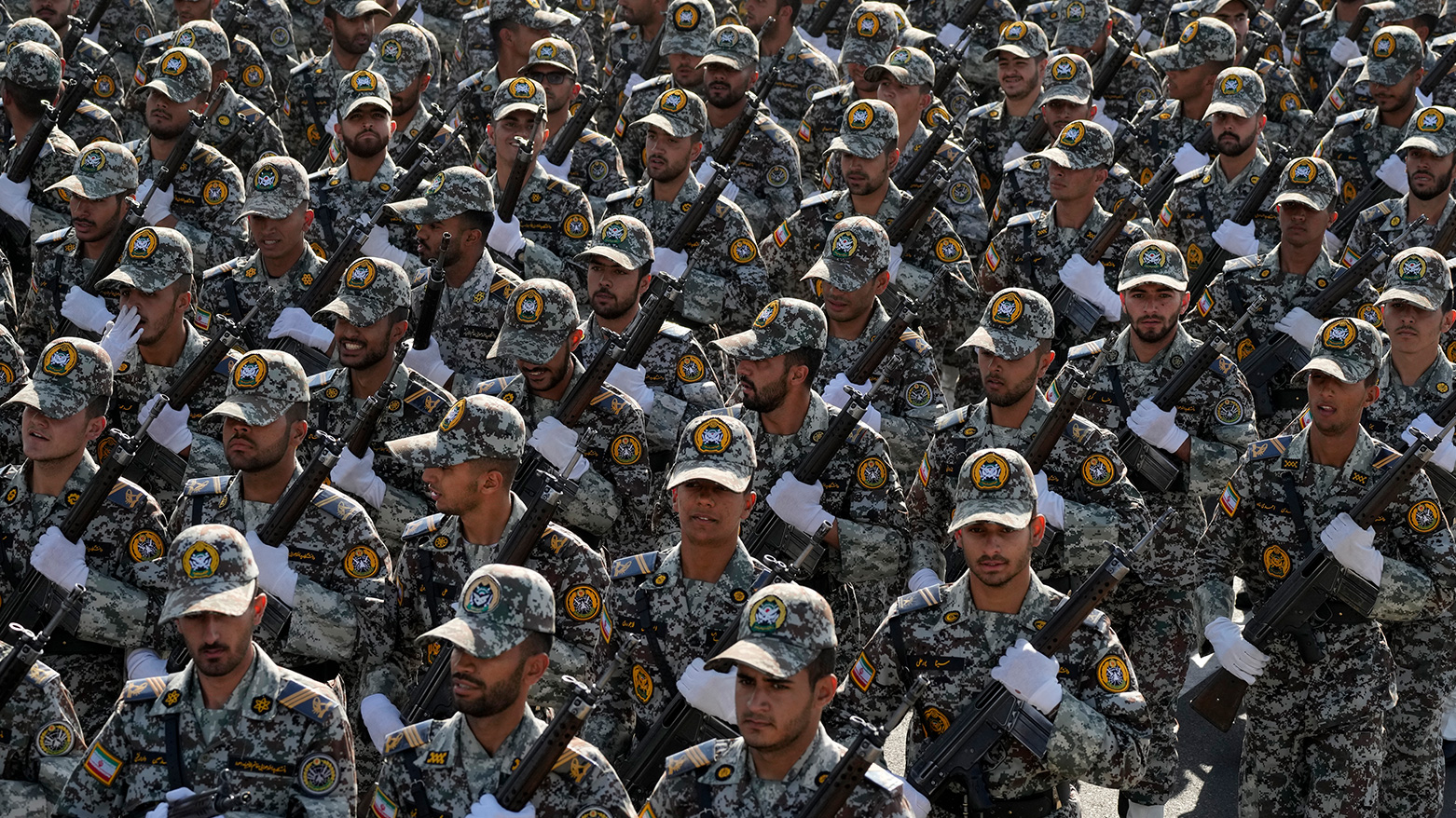
ERBIL (Kurdistan24) - Nine Iranian military personnel, including six members of the navy and three military pilots, were killed in U.S. strikes carried out on Sept. 1, Iran's Tasnim News Agency reported Thursday, adding to the casualties from a renewed burst of fighting between Washington and Tehran across the region.
Tasnim said six members of the Iranian Army's naval forces were killed when U.S. forces struck several locations in southern Iran on Tuesday night.
The agency did not identify the specific sites where the naval personnel died, their ranks or the units to which they belonged.
In a separate report, Tasnim said three Iranian Army pilots were also killed in U.S. strikes that night.
It provided no further details about their aircraft, bases or military assignments.
The two reports bring the number of Iranian military personnel Tasnim says were killed in the Sept. 1 attacks to nine.
It remains unclear whether all nine were included in broader casualty figures reported this week.
Agence France-Presse, citing developments across Iran, Washington and Dubai, reported that extensive U.S. bombardment between Tuesday and Wednesday had killed at least 19 Iranians. AFP said it was not immediately clear whether the six naval personnel reported by Tasnim were already included in that total.
Fighting spreads across region
The reported deaths come amid another escalation in the six-month U.S.-Iran conflict.
AFP reported Thursday that Iran launched attacks against U.S. military targets in Kuwait and claimed another strike on Al Minhad Air Base in the United Arab Emirates.
Kuwait's military said it intercepted an Iranian missile-and-drone attack, while Iran's army said U.S. assets at Ahmad al-Jaber Air Base had been targeted.
Kuwait condemned the attack as a violation of international law.
Iran also claimed to have struck Al Minhad in the UAE, although Emirati authorities did not report such an attack in the information cited by AFP.
The latest exchanges followed renewed U.S. strikes against Iran beginning Sunday, including an attack on Larak Island near the Strait of Hormuz.
Washington has said its operations are aimed at Iranian military capabilities threatening maritime traffic and U.S. forces.
Tehran has described the attacks as violations of its sovereignty and has pledged to retaliate.
Wedding strike allegation adds tension
Iran has also accused the United States of responsibility for an alleged missile strike on a wedding gathering in the coastal town of Kuhestak on Tuesday night.
The Iranian Red Crescent said four people, including a child, were killed and more than 50 wounded.
U.S. Vice President JD Vance said Washington was investigating the allegation but voiced skepticism about Iranian state-media reporting.
U.S. Central Command spokesman Tim Hawkins said the American military does not target civilians.
No independent determination of responsibility for the reported wedding strike was available in the source material.
IRGC chief Ahmad Vahidi said Thursday that Iran would retaliate for the deaths.
Jordan increasingly drawn into conflict
The renewed fighting has also placed Jordan under growing pressure because of its longstanding security partnership with Washington.
Associated Press journalist Sam McNeil reported that Jordan hosts U.S. forces at multiple military facilities and has faced repeated Iranian missile and drone attacks during the conflict.
A 2021 defense agreement gives U.S. forces and contractors access to 12 military installations across Jordan, according to the AP report.
McNeil wrote that Jordan's Muwaffaq Salti Air Base became an important logistics hub for U.S. operations, with transport and combat aircraft using the facility in the run-up to the Iran war.
Most incoming Iranian missiles and drones targeting Jordan have been intercepted by U.S. and allied defenses, according to AP.
Jordanian Foreign Minister Ayman Safadi defended Amman's security partnership Thursday, rejecting Tehran's argument that Jordan's relationship with Washington justified attacks on the kingdom.
"We are a sovereign country. We were not a party to this war," Safadi said in remarks cited by AP.
Competing claims over strength and strategy
Washington and Tehran continue to offer sharply different portrayals of the military balance.
Iranian security chief Mohsen Rezaei said Wednesday that Tehran had adopted a new strategy that would impose heavier costs on the United States.
Israeli Prime Minister Benjamin Netanyahu, by contrast, said Thursday that Iran's government was "weaker than ever" and fighting for survival.
The Trump administration is also increasing economic pressure alongside military operations.
AFP reported that U.S. Energy Secretary Chris Wright said Washington planned to expand sanctions targeting Iran's trading partners as part of what he described as maximum pressure.
At the same time, Vice President Vance sought to play down the scale of the conflict Thursday, saying he would not characterize the situation as a conventional war and arguing that major combat operations had been concentrated earlier in the confrontation.
For Tehran, however, the reported deaths of six naval personnel and three pilots underscore the continuing military cost of renewed U.S. strikes.
With attacks and counterattacks again extending across Iran and several Gulf states, the latest casualty reports point to a conflict that remains volatile despite intermittent pauses and repeated efforts to limit escalation.