Israel Election: Netanyahu Bloc Short of Majority
Final results give Prime Minister Benjamin Netanyahu's bloc 53 seats, Gadi Eisenkot's opposition 48, and Arab-led parties a record 19, leaving both camps short of the 61 seats needed to form a government
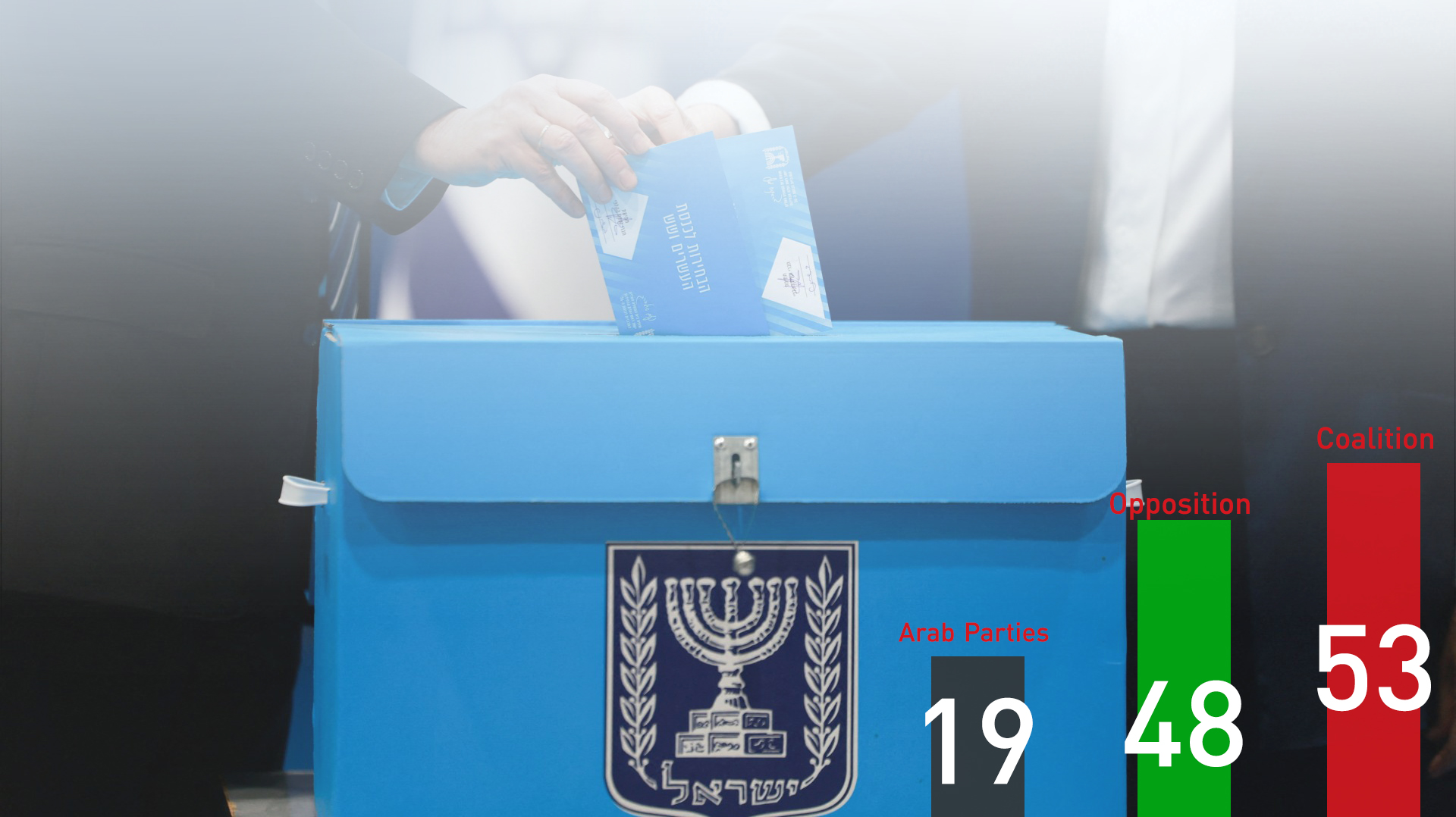
ERBIL (Kurdistan 24) - Israel finished counting the votes from Tuesday's national election with Prime Minister Benjamin Netanyahu's right-wing bloc on 53 seats, eight short of the 61 needed for a majority in the 120-seat Knesset, and with the rival bloc led by former military chief Gadi Eisenkot on 48. Parties led by Arab citizens won a record 19 seats, which leaves neither camp able to form a government without a partner that both have ruled out.
Haaretz reported on Thursday, via Al Jazeera, that more than 99 percent of ballots had been tallied with the same split. NBC News reported that election officials released the results that day. JNS reported that the Central Elections Committee published the final figures on Friday. The count shows how far Netanyahu's camp has fallen: it held 68 seats at its peak in the previous parliament, according to NBC News. Likud finished as the largest single party, JNS reported.
The numbers moved steadily against Netanyahu as ballots came in. Kurdistan 24 reported on Wednesday that his bloc led with 59 seats after 28 percent of the vote was counted, against 46 for Eisenkot's. By the time roughly 77 percent was counted, Jewish News reported the bloc at 54 and Eisenkot's at 47. The final tally settled at 53, 48 and 19. Reuters noted that Eisenkot's bloc also fell short of pre-election polls that had forecast a tight race.
The Arab-led parties, Ra'am and the Joint List, made historic gains. Palestinians with Israeli citizenship voted in record numbers on Tuesday, NBC News reported, with many hoping to oust Netanyahu and far-right members of his coalition, including Finance Minister Bezalel Smotrich and National Security Minister Itamar Ben-Gvir. The arithmetic looks simple on paper: Eisenkot's 48 seats plus 19 would make 67.
In practice, it is blocked. Times of Israel reported that Eisenkot, Naftali Bennett and other opposition leaders have ruled out working with Ra'am and the Joint List. Netanyahu has also rejected any role for them. Al Jazeera reported that he called such a partnership "a shame and a disgrace," while AP reported that he dismissed it as treasonous.
The opposition is not unified on the question. Yair Golan, leader of the Democrats, told his partners in Eisenkot's bloc on Wednesday that there was an "opportunity to form a change government in partnership" with the Arab parties, Reuters reported. AP reported that his party supports bringing Arab-led parties into a coalition. NPR outlined one route: Eisenkot's allies could break their campaign promises and form a minority government relying on Arab-party support, either as formal members or from outside the coalition.
The next step belongs to Israeli President Isaac Herzog. He said on Wednesday that he would receive the official results the following week and then begin consultations with party leaders, and he urged parties to do everything possible to avoid another election, according to Kuwait Times and Jewish News. The president then assigns a member of the Knesset, usually the leader of the largest faction, to form a government. That person has 28 days, with a possible 14-day extension. If the effort fails, the president can turn to a second candidate and eventually to a third before new elections are called, according to the New York Times explainer. The Israel Democracy Institute says that no government has been sworn in less than 50 days after an election and that the process historically takes 20 to 100 days. Netanyahu remains in office as caretaker prime minister while the talks proceed.
The result lands as Netanyahu continues to press for a resumption of strikes on Iran, the Wall Street Journal reported, and as Trump has said his support saved the Israeli prime minister from a major defeat. How that pressure plays out may depend on whether Netanyahu can assemble a government at all. Herzog's consultations next week will show whether any bloc can find the eight or thirteen seats it lacks, or whether Israel heads to another election.