KRG Develops Comprehensive Strategy to Cut Air Pollution, Protect Environment
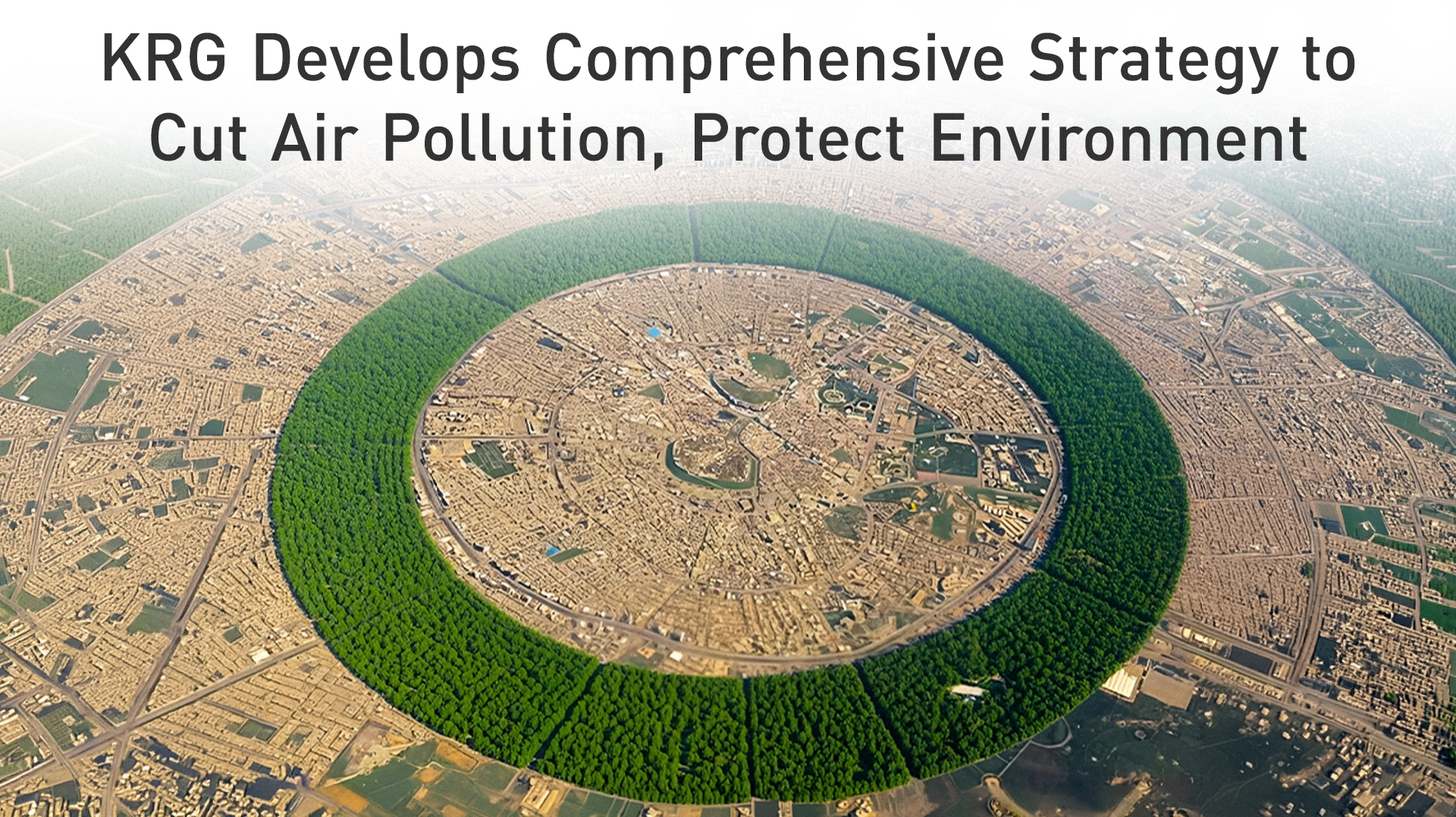
One of the KRG’s major environmental initiatives is the Erbil Green Belt, which is being developed in a circular formation around the city with a width of two kilometers.
ERBIL (Kurdistan24) — The Kurdistan Regional Government (KRG) is developing a comprehensive strategy to reduce air-polluting gases and protect the environment as part of broader efforts to address climate change, an environmental official said Sunday.
Sinan Abdullah, spokesperson for the Kurdistan Region’s Board of Environmental Protection and Improvement, told Kurdistan24 on Sunday that global climate forecasts indicate temperatures are expected to rise significantly in the coming years, warning that the trend could have widespread consequences for people and the environment.
“However, the KRG, through strategic projects in the fields of environment, water, and air, is taking measures to prevent a significant rise in temperatures in the Kurdistan Region,” Abdullah said.
He said several strategic projects had been implemented during the ninth KRG cabinet, led by Prime Minister Masrour Barzani, while additional initiatives are currently underway to protect the Region’s environment, water resources, and air quality.
The government’s efforts cover several key sectors, including energy, industry, water security, agriculture, green spaces, waste management, transportation, and environmental awareness.
Renewable energy and emissions reduction
In the energy sector, the KRG is working to expand the use of renewable energy, particularly solar power, as an alternative to electricity generators.
In the oil and gas sector, measures are also being taken to reduce gas flaring and lower carbon dioxide and methane emissions.
The Runaki program has had a significant impact on air quality, according to official figures. The initiative has allowed more than 6,000 private generators to be shut down while providing 24-hour electricity to nearly 5.5 million people across the Kurdistan Region.
Water security and agriculture
The government is also expanding water infrastructure by constructing dams and ponds to strengthen water security.
During the ninth cabinet, nine dams and 30 ponds were completed, while another 57 ponds are currently under construction, according to official KRG figures.
Farmers have been encouraged to adopt modern irrigation methods, including drip irrigation, as well as agricultural machinery that uses less fuel and has a lower environmental impact.
Green spaces and waste management
Abdullah highlighted the expansion of green spaces through the Erbil Green Belt project and the construction and renovation of parks and gardens.
According to KRG figures, green space in cities has increased from 15 percent to 20 percent during the ninth cabinet.
The government is also pursuing recycling projects aimed at converting waste into energy or organic fertilizer, a process expected to help reduce methane emissions from waste.
Transportation and environmental monitoring
Measures are being taken to reorganize public transportation and reduce traffic congestion and vehicle emissions. At the same time, the government is working to increase public awareness and encourage citizens to take a more active role in protecting the environment.
The official said monitoring mechanisms for government projects have also been strengthened. Industrial and commercial projects must now meet environmental requirements and take measures to reduce harmful emissions before receiving approval.
Four air-quality monitoring stations have been established across the Region, while 34 million square meters of firebreaks have been created to protect forests from wildfires.
Erbil Green Belt
One of the KRG’s major environmental initiatives is the Erbil Green Belt, which is being developed in a circular formation around the city with a width of two kilometers.
The project’s first phase has been completed, while work on the second phase is underway.
Under government plans, 7.7 million olive and pistachio seedlings will be planted as part of the project, alongside the construction of 10 water ponds to irrigate the trees.
The Green Belt is expected to help combat desertification and rising temperatures, improve air quality, reduce dust storms, increase local agricultural production, and create employment opportunities.
The project is also intended to expand green spaces around Erbil and provide residents with a healthier and more environmentally sustainable living environment.