Tehran, Muscat Near Deal on Temporary Safe Passage Through Hormuz
Iran says negotiations with Oman over temporary safe passage through the Strait of Hormuz are nearing completion, sending Brent crude lower as markets anticipate improved shipping conditions.
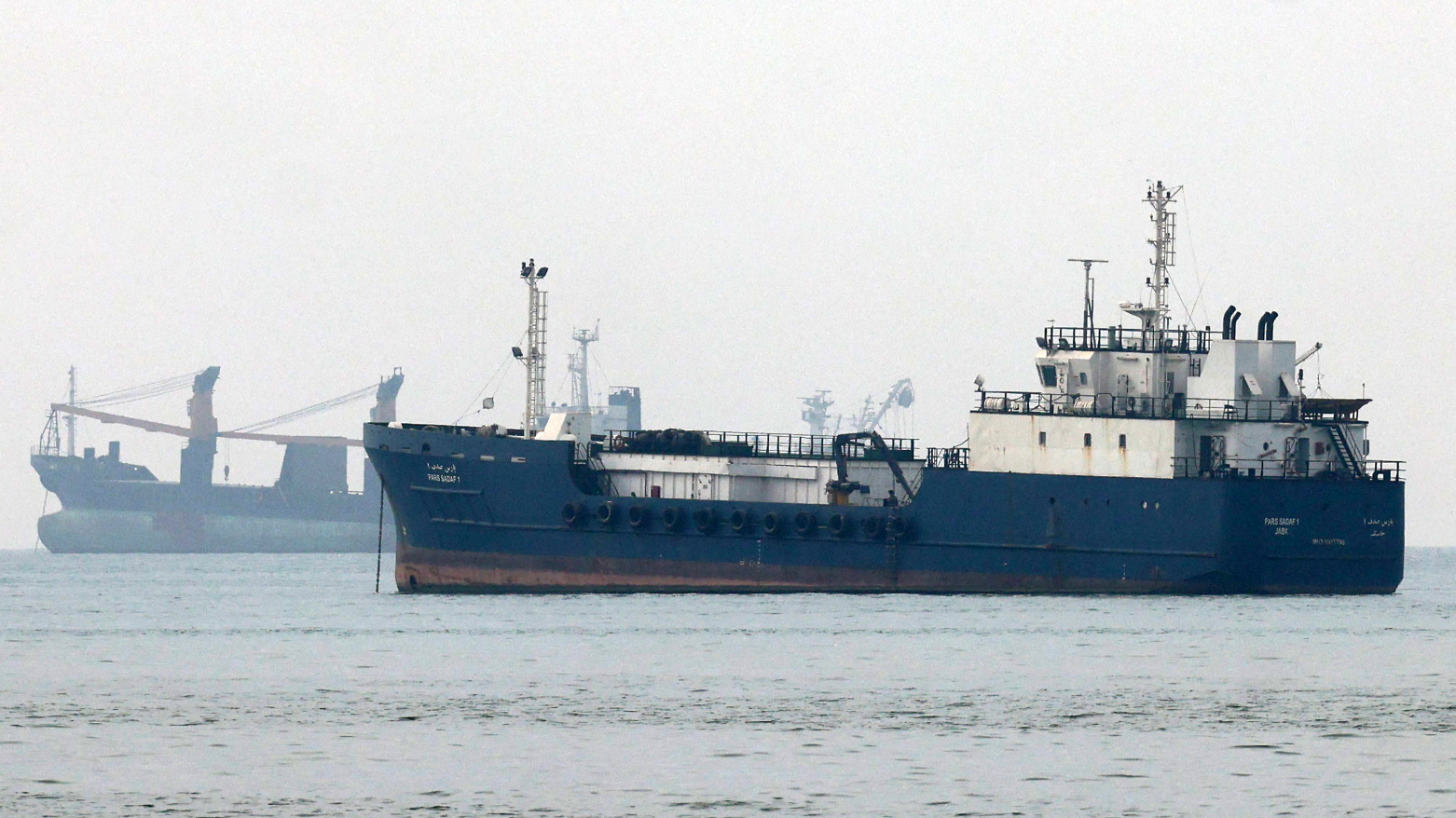
ERBIL (Kurdistan24) - Iran said negotiations with Oman over the Strait of Hormuz have entered their final stage and could produce a temporary safe-passage arrangement within days, an announcement that immediately pushed oil prices lower as markets reacted to the prospect of improved shipping through one of the world's most important energy routes.
Iranian Foreign Ministry spokesperson Esmaeil Baqaei said during a weekly news conference in Tehran that talks with Muscat had made substantial progress.
"Talks with Muscat have reached their final stages, and a mutual understanding on establishing a temporary safe passage through the strait is expected within the coming days," Baqaei said.
He added that any resulting arrangement could be registered with the International Maritime Organization and said Tehran hoped outside actors would not interfere with the negotiations.
The announcement quickly affected energy markets.
Brent crude fell from $97.93 to $96.38 a barrel, reflecting expectations that a temporary transit arrangement could reduce immediate risks to oil tankers and commercial shipping.
Safe Passage Talks Advance Amid Competing Pressure
The negotiations between Tehran and Muscat have been underway for several weeks as Oman again assumes a mediating role between Iran and external powers.
Iran has sought to establish a system under which transit through Hormuz would be subject to conditions determined by Tehran, including forms of payment or levies connected to services in the waterway.
Washington has opposed such restrictions and continues a blockade of Iranian ports aimed at limiting Tehran's oil exports.
The United States has also pressed for a return to prewar conditions in Hormuz, when commercial traffic passed through the strait without Iranian restrictions or additional charges.
Shipping through the waterway has been heavily disrupted since the war began on Feb. 28 following U.S. and Israeli strikes on Iran and Tehran's subsequent military response.
The strait has since become one of Iran's principal instruments of leverage.
Commercial traffic has declined sharply, and shipping companies have faced heightened risks from mines, vessel seizures, missile attacks and the broader military confrontation between Iran and the United States.
U.S. Energy Secretary Chris Wright said Sunday that roughly 9 million barrels of oil per day were moving through Hormuz, well below the roughly 20 million barrels that passed through the strait before the conflict.
With additional crude moving through Saudi and Emirati bypass pipelines, Wright estimated total regional oil flows at around two-thirds of prewar levels.
Associated Press reporters Samy Magdy, Julia Frankel and Cara Anna noted, however, that Wright's figure appeared higher than some longer-term vessel-tracking estimates.
Diplomacy and Escalation Proceed in Parallel
The progress with Oman comes even as Iran prepares another maritime escalation.
Mohsen Rezaei, head of Iran's Supreme National Security Council, said Tehran plans to announce a new exclusion zone extending from what Iran considers the U.S. naval blockade line toward the Strait of Hormuz and into parts of the Persian Gulf.
"Any vessel entering the new zone will be added to Iran's sanctions list," Rezaei warned.
The geographic boundaries and enforcement mechanisms remain unclear.
The United States says more than 20 warships are supporting its blockade of Iranian ports.
According to AP, the operation had redirected 92 commercial vessels and disabled three as of Sunday.
Tehran, meanwhile, has continued to insist that its oil trade remains active despite U.S. pressure.
Rezaei claimed Iran was still selling between one million and 1.5 million barrels of oil daily, although that figure was not independently verified in the reporting provided.
The simultaneous pursuit of a negotiated safe-passage arrangement and a new exclusion zone illustrates the two-track nature of Iran's strategy: maintaining military and economic leverage while leaving space for limited diplomatic arrangements that could reduce pressure on selected shipping.
That tension has become increasingly important for global energy markets.
Even partial improvements in Hormuz traffic can ease fears of supply disruption, while renewed attacks or restrictions can quickly send crude prices higher.
Economic Pressure Mounts Inside Iran
The war is also placing growing pressure on Iran's domestic economy.
Associated Press reporter Nasser Karimi reported Tuesday that Tehran had raised gasoline prices for the heaviest consumers, the second such increase since December.
Under the new system, consumers buying more than their monthly quota of 110 liters must pay 100,000 rials per liter, twice the previous rate for fuel above the quota.
The government said the measure was linked to the "current situation."
Iranian officials say gasoline consumption reached a record 145 million liters per day in August, while domestic production capacity stood at roughly 122 million liters, leaving the remainder to be covered through imports.
The price increase comes as inflation remains high and the Iranian rial continues to weaken.
That economic pressure adds urgency to Tehran's effort to maintain oil exports and manage access through Hormuz.
A temporary arrangement with Oman would not resolve the wider U.S.-Iran confrontation, nor would it necessarily restore normal commercial transit.
But even a limited safe-passage mechanism could reduce immediate risks for selected vessels and provide a framework for wider maritime de-escalation.
For now, the market reaction suggests traders see the talks as potentially significant.
Whether that optimism lasts will depend on the final terms of any agreement, how Washington responds, and whether Iran's planned exclusion zone undermines the very shipping stability the negotiations with Muscat are intended to create.