Tensions Escalate as CENTCOM Says Iranian Vessel Destroyed in Gulf of Oman
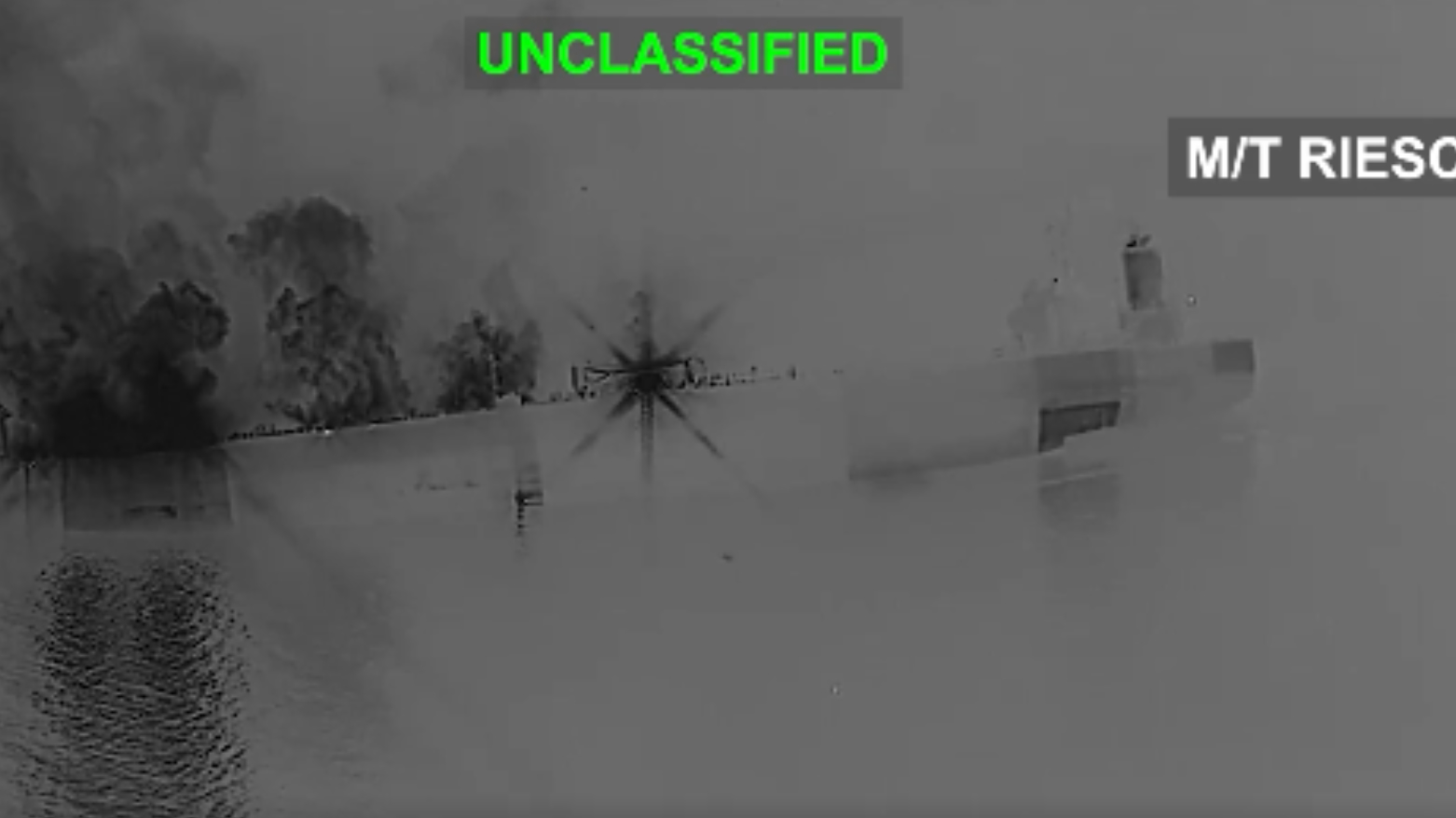
CENTCOM said the M/T Riesco sank in the Gulf of Oman after being destroyed by US forces, while Iran’s Revolutionary Guard said it had attacked US and other vessels attempting to pass through the Strait of Hormuz.
ERBIL (Kurdistan24) - The United States and Iran exchanged fresh attacks on Wednesday, as Tehran retaliated for the destruction of five Iranian oil tankers by US forces and Washington said it had acted after Iranian forces attempted to attack a US Navy warship.
The latest escalation deepened a six-month-old war between the two countries, with Iran maintaining control over much of the traffic through the Strait of Hormuz and the United States pursuing a campaign targeting Iranian ports and its economy.
US Central Command (CENTCOM) said the M/T Riesco sank in the Gulf of Oman on Sept. 8 after being destroyed by CENTCOM forces.
The US command said the action was carried out in response to attempted attacks by Iran’s Islamic Revolutionary Guard Corps (IRGC) against a US Navy warship.
In a post on X, CENTCOM stated:
“M/T Riesco sinks in the Gulf of Oman, Sept. 8, after being destroyed by CENTCOM forces in response to attempted IRGC attacks on a U.S. Navy warship.”
The latest material states that US forces destroyed five Iranian oil tankers the previous day. The US military said crews were directed to abandon the vessels before they were struck.
Iran’s IRGC said Wednesday that it had attacked 20 US vessels attempting to pass through the Strait of Hormuz.
The figure comprises two US vessels, eight oil tankers and 10 other vessels, according to a statement issued by the IRGC and reported by Iran’s official IRNA news agency.
The IRGC said the vessels had planned to pass through a prohibited and unsafe area of the Strait of Hormuz and described them as violators.
The latest Iranian attacks came as Tehran maintained what the report described as a stranglehold over the vital waterway, which normally carries around one-fifth of global oil and liquefied natural gas exports.
Iran has asserted control over the Strait since the war began in February, with traffic through the waterway virtually paralyzed. Tehran requires vessels to obtain permission and pay transit fees before using the strait.
The escalation followed an Iranian media report on Tuesday that a US missile had struck a small Iranian oil tanker approximately four nautical miles from Kharg Island in the Gulf.
Tasnim news agency reported that there were no casualties and that the tanker’s personnel had begun evacuating the vessel.
The agency said relevant authorities were investigating the extent of the damage and other dimensions of the incident.
Iran’s Fars news agency separately reported that two explosions had been heard near Kharg Island, while saying there was no indication of fire or smoke in the area at that time.
Iranian Army Chief of Staff Ali Abdollahi had warned that the Islamic Republic would strike US bases in the region if Iranian oil tankers were attacked.
The naval force of Iran’s IRGC issued an urgent warning to crews of oil tankers located in Kuwaiti and Bahraini ports.
The force called on crews to leave their vessels immediately, whether the ships were anchored offshore or inside ports, warning that they would be targeted.
The statement accused Kuwait and Bahrain of hosting US forces and participating in what it described as hostile actions.
The warning followed the earlier statement by Ibrahim Zolfaqari, spokesperson for Iran’s Khatam al-Anbia Central Headquarters, who said Iranian armed forces would target US military bases and interests in the region if Iranian oil tankers were attacked.
The latest escalation also put further pressure on global energy markets.
Oil prices climbed toward $100 a barrel in Asian morning trading as the fighting threatened to further restrict crude supplies from the oil-rich Middle East.
Brent crude, the international benchmark, rose to $99.46 per barrel, while West Texas Intermediate, the main US crude contract, reached $94.45 per barrel.
The latest escalation follows Iran’s announcement Tuesday that its IRGC had seized what it described as one of the most modern unmanned American submarine drones in the Strait of Hormuz.
The US military said the underwater drone had malfunctioned and described it as an older model that did not carry sensitive data.
Iranian state television also reported that the IRGC had attacked two US destroyers with ballistic missiles.
The US military had not immediately commented on that report in the material provided.
The latest developments mark a broader escalation involving oil tankers, naval vessels and the strategically important Strait of Hormuz.
The United States said its actions followed Iranian attempts to strike a US Navy warship, while Iran has framed its attacks as retaliation for US strikes on its oil tankers.
The confrontation has also placed commercial shipping and global energy supplies under increasing pressure, with Iran warning vessels operating near US-allied Kuwait and Bahrain and the United States saying further Iranian attacks on its naval forces could bring additional strikes on Iranian tankers.