Qatar and Egypt Press Iran Diplomacy as Houthis Claim Saudi Strikes
Qatar’s emir and Iran’s president discuss Strait of Hormuz security in Moscow as Egypt urges de-escalation and Houthis claim missile strikes on Saudi Arabia.
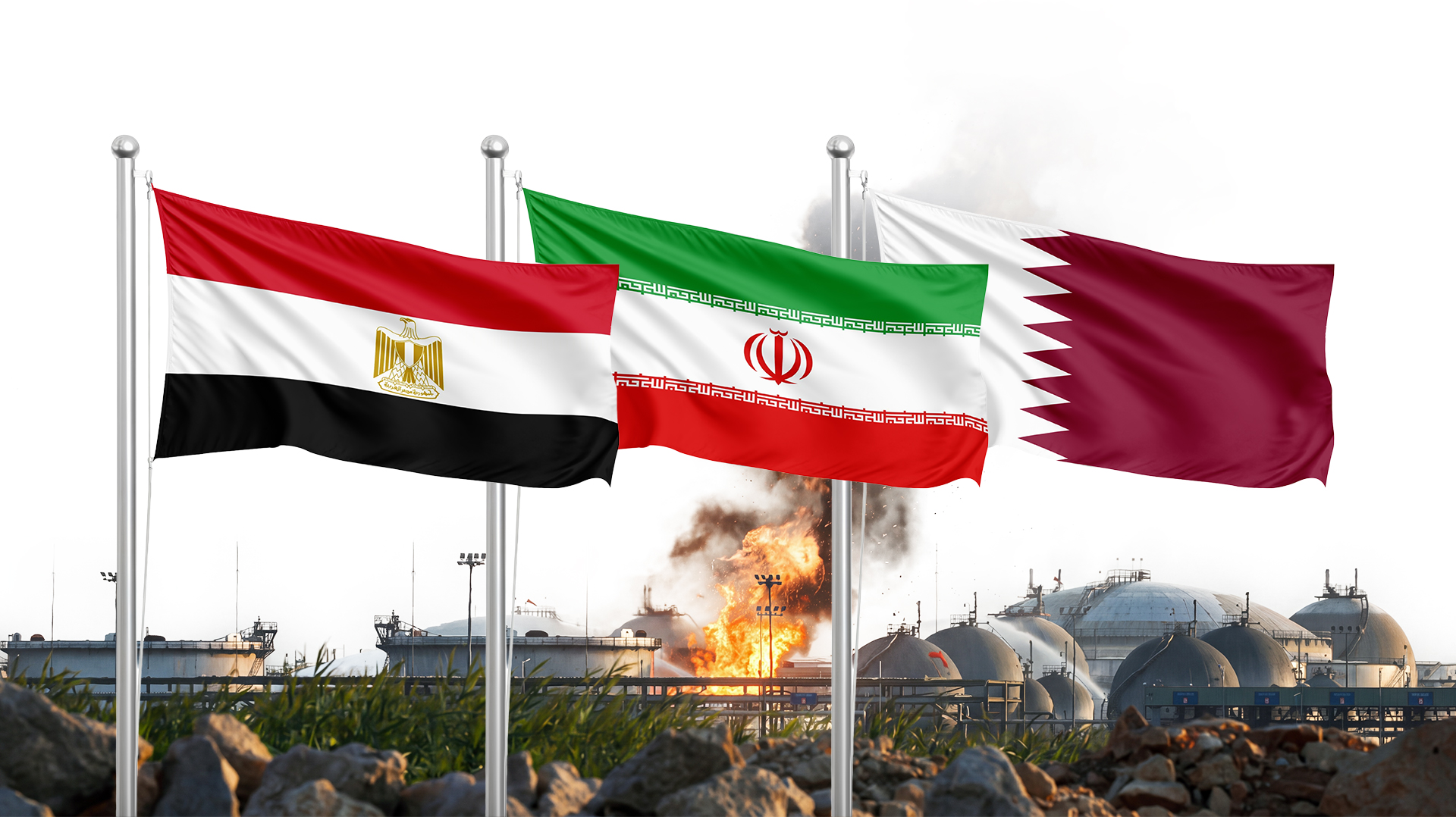
ERBIL (Kurdistan24) - The Emir of Qatar and the President of Iran sat down in Moscow on Tuesday to discuss the security of the Strait of Hormuz and the energy transport routes that run through it, as diplomatic contacts over regional tensions multiplied across the Middle East. The same day, Egypt’s and Iran’s foreign ministers spoke by phone, while Yemen’s Houthis announced missile attacks on targets inside Saudi Arabia.
Emir of Qatar Tamim bin Hamad Al Thani and Iranian President Masoud Pezeshkian met on the sidelines of an international energy forum in the Russian capital. Together they reviewed the latest regional developments, the course of negotiations, and the protection of the Strait of Hormuz and energy transport lines.

The Qatari Emiri Diwan said in a statement that the talks addressed the region’s sensitive situation and highlighted the most important changes, particularly the security of the Strait of Hormuz, oil and gas exports, and the suspended negotiations.
Both sides stressed the importance of strengthening and deepening political and economic relations between Doha and Tehran. They pointed to the need to use all available capabilities and opportunities to develop bilateral cooperation in a way that serves security, eases crises, and supports geopolitical and economic stability across the region.
Since the deep tensions between the US and the Islamic Republic of Iran began, Qatar has secured an unprecedented position as a main bridge and trusted mediator for both sides. Doha has not only relayed official messages. It has become the center of indirect negotiations and of efforts to untangle diplomatic knots.
Egypt and Iran urge swift de-escalation
Egyptian Foreign Minister Badr Abdelatty and Iranian Foreign Minister Abbas Araghchi spoke by phone also on Tuesday and reviewed the latest regional developments. They warned of the region’s recent concerns and stressed the urgent need to reduce tensions and prevent regional conflicts from widening.
Egypt’s Foreign Ministry said in a statement that, besides discussing the region’s latest sensitive developments, the two ministers explored the options and plans available for dealing with the situation.

Abdelatty stressed that every party must play its part toward the shared goal of reducing tensions, especially given the recent rise in worrying signs in the region.
According to the statement, the two sides focused on the recent diplomatic meetings in Tehran. Abdelatty reaffirmed Egypt’s full support for all efforts to contain tensions and prevent a slide into a more destructive crisis.
The ministers also stressed the importance of continuing broad regional consultations between Iran and the four-party ministerial mechanism (R4), which includes Egypt, Saudi Arabia, Pakistan, and Türkiye.
Egypt’s Foreign Ministry added that the recent diplomatic moves show that influential parties’ sense of responsibility is the only way to overcome the challenges and bring stability to the Middle East.
The call came a day after delegations from Saudi Arabia, Türkiye, and Pakistan, members and founders of the Mecca Agreement, visited Tehran. There they met the secretary of Iran’s Supreme National Security Council and discussed easing the situation.
Houthis announce missile attacks on Saudi Arabia
Yemen’s Ansar Allah group, known as the Houthis, announced that it had struck several military and oil targets inside Saudi Arabia with ballistic missiles. Among them, it said, were two military aircraft and an oil refinery.
Houthi military spokesman Yahya Saree said on Tuesday, on the group’s official Telegram account, that its forces had targeted two military transport aircraft in southern Saudi Arabia with two ballistic missiles.
Saree said the first aircraft was hit at Najran Airport and the second at King Khalid Air Base in the Khamis Mushait area, both with precision.
The announcement came shortly after the group declared another attack, in which it said it targeted the Ras Tanura oil refinery in eastern Saudi Arabia with a ballistic missile.
As Qatar, Egypt, and Iran stress de-escalation and regional consultation, the Houthi announcement lands in the same stretch of events. The Strait of Hormuz, the suspended negotiations, and the shared goal of reducing tensions are among the issues now before the parties.