Houthis Seize Mocha as Yemen Fighting Threatens Bab al-Mandab Shipping Route
Houthi forces advance toward strategic Red Sea chokepoint as Saudi Arabia reports renewed attacks and hundreds are killed in renewed conflict
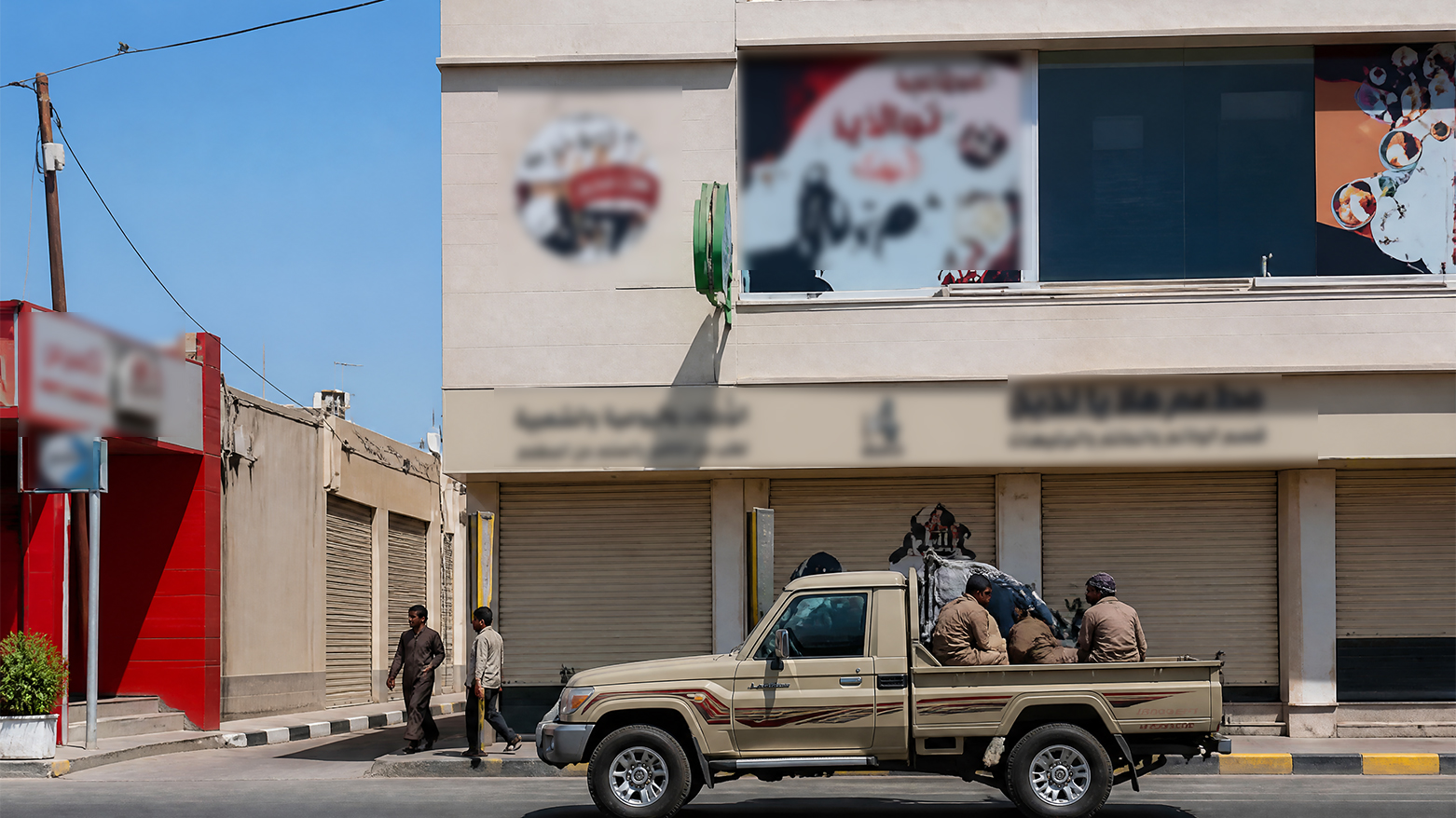
ERBIL (Kurdistan24) — Yemen’s Houthi forces seized control of the strategic Red Sea port city of Mocha on Thursday and advanced toward the Bab al-Mandab Strait, a Yemeni military source told AFP, raising fresh concerns over shipping and oil exports through one of the world’s most important maritime chokepoints.
Witnesses told AFP they saw Houthi forces entering Mocha while chanting “death to America, death to Israel.” The Yemeni military source said the group was advancing toward Bab al-Mandab after taking control of the city.
The source also said Houthi forces had seized Zuqar Island in the southern Red Sea following rocket attacks and a ground assault involving boats carrying fighters.
The developments came as the Houthis reported a new wave of Saudi airstrikes. Houthi news agency Saba said the Saudi air force had conducted around 40 strikes in recent hours across Taiz, Hodeida, Al-Jawf and Marib governorates.
The escalation follows a large-scale Houthi offensive against Saudi-backed Yemeni government forces that began last week, reigniting a conflict that had remained relatively contained since a United Nations-brokered ceasefire in 2022.
Since the latest fighting began, more than 500 people, mostly combatants, have been killed, according to an AFP tally compiled from several sources. The International Organization for Migration (IOM) said Tuesday that nearly 20,000 people had been displaced by the renewed violence.
On Wednesday, the Saudi-led coalition said Houthi forces had launched ballistic missiles and drones toward several cities in southern Saudi Arabia.
Saudi civil defense authorities issued temporary warnings over potential danger in Khamis Mushait and Abha before lifting them shortly afterward.
The renewed fighting has unfolded against the backdrop of the wider Middle East war that began on Feb. 28, when the United States and Israel launched strikes on Iran, prompting Iranian retaliation across the region.
Bab al-Mandab emerges as a new flashpoint
The Houthi advance toward Bab al-Mandab has heightened concerns over a waterway that connects the Red Sea with the Gulf of Aden and the wider Indian Ocean.
Known as the “Gate of Tears” in Arabic, the strait is about 100 kilometers long and only around 30 kilometers wide at its narrowest point. It separates Yemen from Djibouti and Eritrea and serves as a key maritime link between Europe and Asia.
The route is particularly important because vessels traveling through the Red Sea can continue north through the Suez Canal, significantly shortening shipping routes between Asia, Europe and North America.
Houthi attacks on Red Sea shipping during the Gaza war sharply reduced traffic through the waterway. According to IMF PortWatch data analyzed by AFP, total transits fell from 26,895 vessels in 2023 to 14,498 in 2024 and 14,070 in 2025.
Average daily transits during January-August 2026 stood at 40.8 vessels, still little more than half the pre-crisis level.
The Houthis have said their maritime operations are conducted in support of Palestinians and have targeted vessels they claim have links to Israel. Since declaring a maritime blockade of Saudi Arabia in July, the group has also repeatedly attacked Saudi shipping in the Red Sea.
The Houthis have denied seeking to replicate Iran’s blockade of the Strait of Hormuz by closing Bab al-Mandab or imposing transit fees.
An analysis by the Institute for the Study of War said the Houthis were seeking to undermine Saudi Arabia’s ability to export oil and increase the economic and political costs of Riyadh’s military operations.
Saudi oil exports face fresh risks
The strategic importance of Bab al-Mandab has increased further since Iran closed the Strait of Hormuz during the wider Middle East war, making alternative routes for Gulf energy exports more important.
The US Energy Information Administration said about 12 percent of global oil shipments passed through Bab al-Mandab in 2023, underscoring the strait’s importance to international energy markets.
Saudi crude shipments from the Red Sea port of Yanbu surged after the war began, averaging around 3.8 million barrels per day between March and July, according to commodities data firm Kpler. That was roughly five times the pre-war level.
However, shipments fell to about 1.5 million barrels per day in August after Houthi attacks on Saudi shipping resumed in July. Preliminary Kpler data showed exports at 2.44 million barrels per day during the first nine days of September, although the figure remains subject to revision.
Andreas Krieg, a security expert at King’s College London, said the principal danger may be prolonged uncertainty rather than the physical closure of Bab al-Mandab.
“I would expect prolonged instability to suppress traffic through Suez and impose significant costs on Egypt, while adding time and expense to Europe-Asia trade,” Krieg said.
He added that further Houthi gains around Bab al-Mandab would provide the group with “extraordinary strategic leverage,” although it already has the ability to threaten maritime traffic without controlling the strait itself.
Yemen conflict threatens to deepen regional crisis
Yemen’s renewed fighting began after the Houthis allowed an Iranian aircraft to land in the country in July despite Saudi control of Yemeni airspace. Saudi-backed government forces subsequently struck Sanaa airport, an attack the Houthis blamed on Saudi Arabia.
The escalation has since developed into a broader exchange of strikes involving Houthi forces, Saudi Arabia and Saudi-backed Yemeni government forces.
The Houthis seized Yemen’s capital, Sanaa, in 2014 and subsequently forced the internationally recognized government to flee, prompting a Saudi-led military intervention in 2015. The conflict continued until the UN-brokered truce in 2022 substantially reduced hostilities.
The latest escalation risks returning Yemen to a war that killed hundreds of thousands of people and produced one of the world’s worst humanitarian crises, while simultaneously threatening a critical maritime corridor at a time when disruptions in the Strait of Hormuz have already placed additional pressure on global energy and shipping markets.