Trump Denies Offering Iran Sanctions Relief
Trump takes to Truth Social to reject Monday's Axios report, as mediators meet Araghchi in New York Tuesday to discuss a Qatari proposal before a separate session with Trump administration officials toward a final agreement
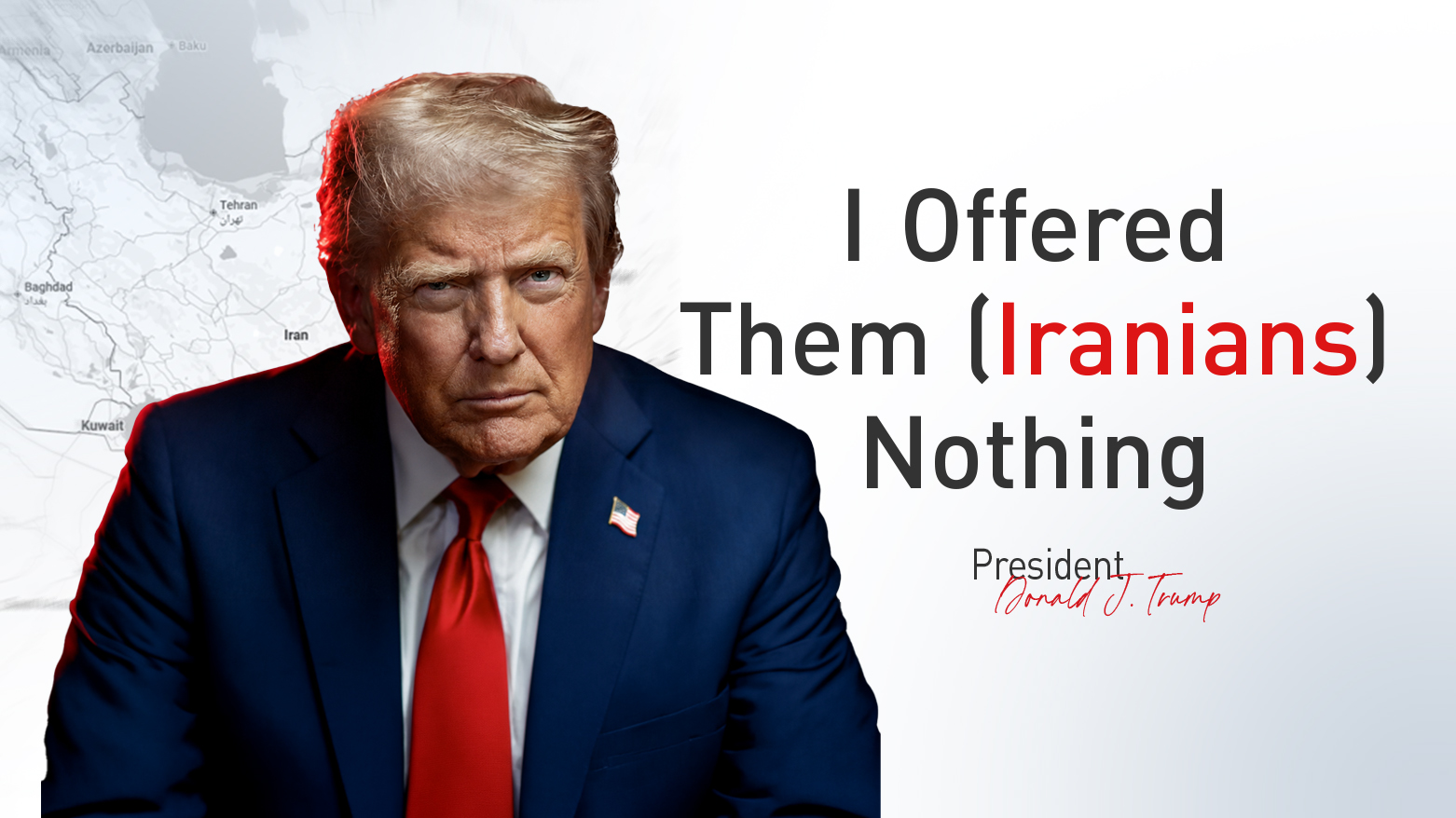
ERBIL (Kurdistan 24) - President Donald Trump rejected on Tuesday reports that he had offered to lift sanctions and release frozen Iranian assets, calling the Axios story fake news published to create chaos, even as mediators are scheduled to meet Iranian Foreign Minister Abbas Araghchi in New York on Tuesday to discuss a Qatari proposal before a subsequent session with Trump administration officials aimed at reaching a final agreement.
"Axios published a story claiming that I proposed lifting sanctions and releasing blocked funds to Iran, but this is not true and I have offered them nothing," Trump wrote on Truth Social on Tuesday. He described the Axios report as, like most other reports, fake news used only for the purpose of creating chaos in what he called Trump Derangement Syndrome. Trump called on Axios to retract the story as soon as possible.
The rejection directly contradicts Monday's Axios report by journalist Barak Ravid, who cited a US official as saying Trump is willing to give Iran sanctions relief and the release of frozen funds for concrete progress on the nuclear file. The same US official had also told Al Jazeera that indirect discussions through intermediaries are ongoing and positive, and that without addressing the nuclear issue no agreement will be reached. Trump's Truth Social post places the White House in direct conflict with its own unnamed officials on the question of what Washington has offered Tehran.
Mediators Meet Araghchi Tuesday, Then Trump Officials
Despite Trump's public denial, the diplomatic machinery is operating. According to Axios, Monday's message from Washington coincides with new efforts by Qatari and Pakistani mediators to halt the military tensions between the two countries. As part of that framework, mediators are scheduled to meet Araghchi in New York on Tuesday to discuss a Qatari proposal, before subsequently meeting with Trump administration officials to work toward a final agreement.
The sequence described by Axios, mediators to Araghchi first, then mediators to Trump officials, suggests a structured indirect negotiation is underway regardless of what either side says publicly. Iran's conditions have been conveyed to Washington through Qatar. A Qatari proposal is now on the table. Tuesday's meetings in New York are designed to advance that proposal toward a framework both sides can accept.
The frozen assets file is one of the most important negotiating topics and one of Tehran's primary demands. According to the US official cited by Axios on Monday, Trump sees linking the frozen assets question to reducing Iran's nuclear threat as an opportunity to reach an agreement. Trump's Tuesday denial of having offered anything does not necessarily mean the offer does not exist in some form within the mediated framework. It may reflect the president's unwillingness to be seen as having made concessions before Iran has made verifiable steps.
Araghchi said Sunday that Iran will not back down from its conditions, that Trump's public statements have been contradictory, and that Tehran is waiting for the mediators to convey Washington's final position. Tuesday's meetings in New York may produce exactly that final position, through channels that both sides maintain plausible deniability over until a deal is ready to be announced.
Rubio: Iran Spends Its Oil Money on Weapons and Proxies, Not on Its People
Secretary of State Marco Rubio provided the clearest American articulation yet of why Washington distrusts Iranian intentions in a Fox News interview on Tuesday morning, explaining what the Trump administration believes Iran does with the revenues it generates from energy sales.
"Iranians don't use that money they have got from selling energy to build hospitals, schools, or roads," Rubio said. "They use it for two things: to build weapons for themselves and to expand the revolution by funding Hezbollah, Hamas, and Shia militias in Iraq."
Rubio's statement provides the ideological and strategic underpinning of the US demand for guarantees of Iranian seriousness before any sanctions relief is extended. The US official who told Al Jazeera on Monday that Washington doubts Iranian promises and needs proof that Iran is not merely seeking relief from its difficult economic situation was expressing the same concern Rubio articulated explicitly on Fox News Tuesday morning. From Washington's perspective, any money released to Tehran through sanctions relief or the unfreezing of assets risks being channeled not into Iranian civilian welfare but into the proxy network and weapons programmes that Operation Economic Outcast is specifically designed to defund.
The Rubio statement also explains why the Trump administration frames the nuclear deal not as a diplomatic accommodation but as a structural dismantling of Iran's capacity to threaten its neighbors, and why concrete and verifiable nuclear progress is Washington's non-negotiable condition for any financial relief.