From the Dollar to the Dinner Table: Iraq’s Dinar Shift Puts Prices and Purchasing Power Under Pressure
Iraq’s new official exchange rate is set to reverberate through imports, businesses, local production and household budgets as the dollar surges to around 170,000 dinars per $100 in Kurdistan Region markets
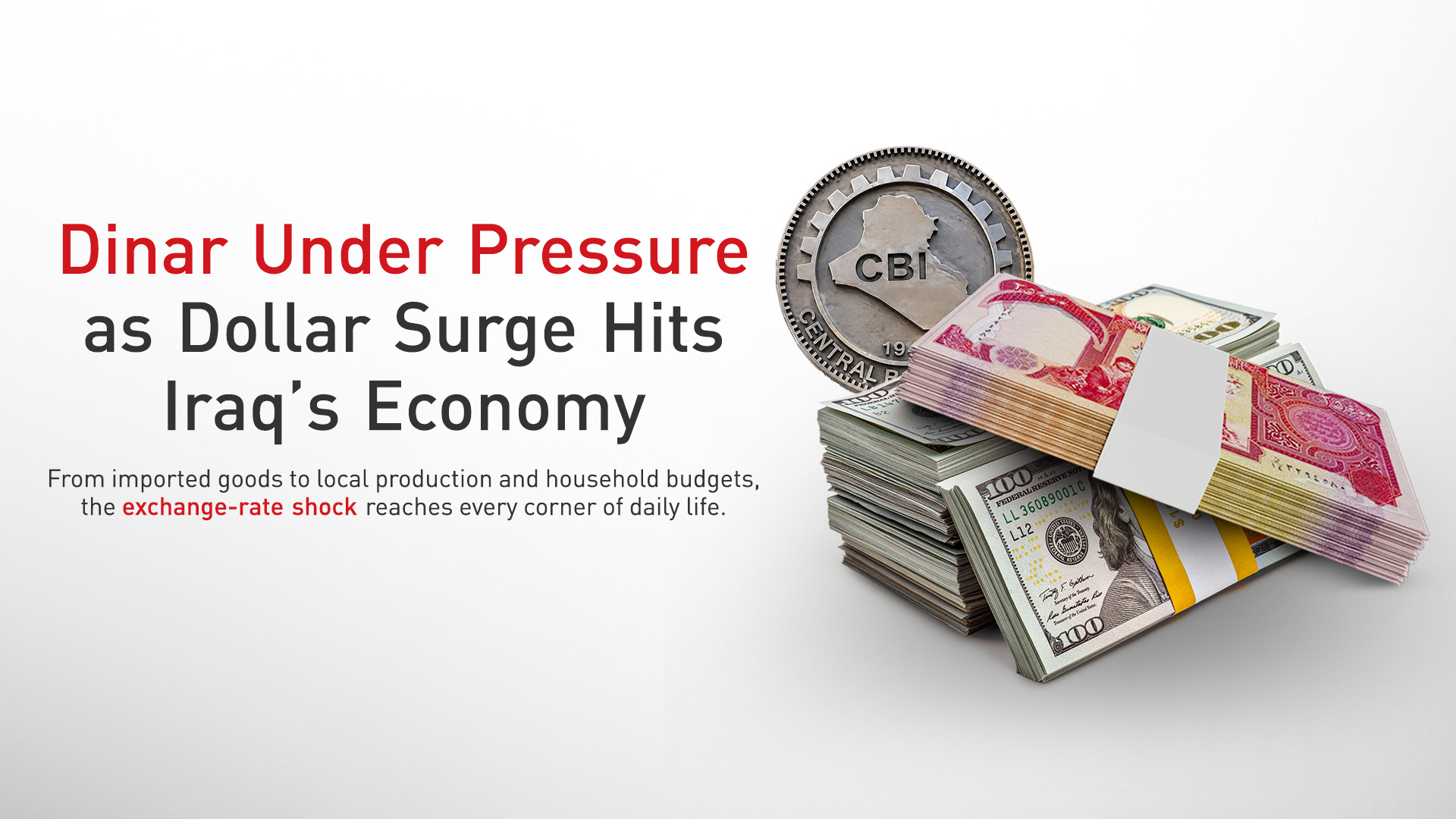
ERBIL (Kurdistan24) — Iraq’s decision to reset the official exchange rate of the US dollar to 1,520 Iraqi dinars is likely to have consequences far beyond currency markets, putting pressure on importers, businesses, manufacturers and household budgets across the country as the dollar simultaneously climbed to around 170,000 dinars per $100 in Iraq and the Kurdistan Region markets.
The Central Bank of Iraq (CBI) introduced the new exchange-rate structure on Wednesday, following a decision by the Council of Ministers. Under the new structure, the government will purchase dollars from the Finance Ministry at 1,500 dinars, sell them to banks at 1,510 dinars, and non-bank financial institutions will sell them to final beneficiaries at 1,520 dinars.
The decision represents a substantial change from the previous official rate and comes as Iraq faces significant financial and economic pressures.
The move will allow the government to obtain more dinars for each dollar of oil revenue, but also warned that it will increase import costs and weaken household purchasing power.
The impact is already more complicated in the Kurdistan Region, where the parallel-market dollar rate is substantially above the new official rate. The dollar reached around 170,000 dinars per $100 in regional markets on Wednesday, creating a wide gap between the rate available through official channels and the rate businesses and individuals may face in the parallel market.
Meanwhile, signatures are being collected in the Iraqi Parliament to summon the Governor of the Central Bank of Iraq and the Minister of Finance, according to Kurdistan24’s correspondent in Baghdad, amid growing concern over the government’s newly introduced dollar exchange-rate structure.
The move follows the Central Bank’s decision to set the dollar’s selling price at 1,520 Iraqi dinars for end beneficiaries through banks and non-bank financial institutions, a change that has contributed to market disruption and raised concerns over its potential impact on prices and purchasing power.
Importers face higher replacement costs
For businesses importing goods from Türkiye, China, Iran, the Gulf and other markets, the exchange rate is a direct component of the cost of bringing products into Iraq. When importers must acquire dollars at a higher market rate, they need more dinars to pay the same foreign-currency invoice.
That pressure can quickly move through the supply chain. Importers may increase wholesale prices to protect their margins, wholesalers may pass those costs to retailers, and retailers may ultimately raise prices for consumers.
The effect can reach a broad range of products, including food, clothing, electronics, household appliances, vehicles, medicines, construction materials and other imported goods.
Research conducted by Kurdistan24 found that exchange-rate fluctuations have a significant relationship with inflation in Iraq and the Kurdistan Region, with the parallel exchange rate having a particularly strong impact on the level of inflation across the country.
The research linked that vulnerability in part to Iraq’s reliance on imported goods and services to meet domestic demand.
Local products are not insulated
The effect of a weaker dinar is not limited to products that arrive in Iraq as finished imports.
A locally manufactured product may still depend on foreign inputs. Iraqi and Kurdistan Region businesses can import machinery, spare parts, chemicals, packaging, industrial components, raw materials and other production inputs before selling the finished product domestically.
As the cost of those imported inputs rises in dinar terms, domestic manufacturers face higher production costs.
A factory producing food products, beverages, furniture, construction materials or other goods may therefore be forced to choose between absorbing the additional cost and accepting lower profit margins, or raising its prices and passing part of the increase to consumers.
This creates a form of imported inflation that can spread even into sectors that appear, on the surface, to be entirely domestic.
Businesses face uncertainty as well as higher costs
For business owners, the problem is not simply the price of the dollar today but the difficulty of predicting what the dollar will cost when the next shipment arrives.
Importers need to calculate their replacement costs, while retailers must decide whether to raise prices immediately or wait for the market to stabilize.
A prolonged gap between the official and parallel rates could make that calculation more difficult and encourage businesses to price goods according to the higher market rate rather than the official rate.
Small and medium-sized enterprises may be particularly vulnerable because they generally have fewer financial reserves and less access to foreign-currency financing than larger companies.
Businesses that pay foreign contractors, purchase software and digital services from abroad, import equipment, or have dollar-denominated obligations can also face higher operating costs even when most of their revenues are generated in dinars.
Household purchasing power under pressure
For ordinary people in Iraq and the Kurdistan Region, the most important question is ultimately what the exchange rate does to the cost of everyday life.
A family whose income remains fixed in Iraqi dinars could find that the same monthly salary buys fewer imported or import-dependent goods. Higher prices for food, clothing, medicines, household products, transportation-related goods and other necessities can gradually reduce real purchasing power.
The effect is particularly significant in the Kurdistan Region, where the dollar is widely used in commercial transactions and where the parallel rate has risen sharply above the official rate.
Earlier data from the United Nations in Iraq showed that energy and import-related price pressures can have a disproportionate effect on household expenditure, with the Kurdistan Region experiencing particularly sharp increases in some energy costs.
Who could benefit?
The weaker dinar will not affect every economic actor in the same way.
People and businesses earning income in dollars could receive more dinars when converting their foreign-currency earnings. Export-oriented businesses could similarly benefit from receiving foreign currency while paying some of their domestic costs in dinars.
The government can also obtain more dinars for each dollar of oil revenue under the new official exchange rate. This is particularly important for Iraq because oil sales remain the principal source of state revenue.
The Iraqi government is facing a substantial revenue shortfall amid disruptions to oil exports and that the devaluation is intended to generate more dinar revenue from each dollar earned.
But these fiscal benefits come with a trade-off: the government may receive more dinars from dollar-denominated oil revenues while households and businesses face higher costs for imported goods and inputs.
The parallel-market gap is the key variable
The biggest question for businesses and consumers in the coming weeks may be whether the gap between the official and parallel rates narrows or persists.
The official end-user rate is now 1,520 dinars per dollar, while the dollar was trading around 170,000 dinars per $100 in Kurdistan Region markets on Wednesday. Other Iraqi markets also recorded sharp movements following the announcement.
If the parallel market stabilizes closer to the official rate and businesses can obtain foreign currency through formal channels, the pressure on prices could be contained. If the gap remains wide, however, businesses that depend on market-rate dollars may continue calculating their costs according to the higher rate, potentially keeping upward pressure on prices.
For the Kurdistan Region in particular, this distinction is significant because Kurdistan24 economic researches suggest that movements in the parallel exchange rate have a stronger inflationary effect there than movements in the official rate.
From currency policy to the cost of living
The new exchange rate therefore represents more than a monetary-policy decision or a change on the CBI's exchange-rate sheet. Its effects can travel through almost every layer of the economy—from the importer paying a foreign supplier, to the factory purchasing raw materials, to the shopkeeper replacing inventory, and finally to the consumer paying for goods.
For Iraq’s government, the policy offers a way to increase the dinar value of dollar revenues at a time of fiscal pressure. For businesses, it creates new cost and pricing challenges. And for households whose salaries are paid in dinars, its ultimate impact will depend on how much of the higher currency cost is passed through to prices and whether incomes adjust accordingly.
The coming period will therefore test not only the CBI’s ability to manage the exchange-rate transition, but also the government's capacity to prevent a wider erosion of purchasing power while keeping the parallel market under control.
The longer the gap between the official and market rates persists, the greater the risk that exchange-rate pressures become embedded in prices across both imported and locally produced goods.