US Weighs ‘Mother of All Bombs’ in Potential New Strikes Against Iran, CNN Reports
CNN says US military plans include targeting Iranian energy infrastructure and nuclear sites with the powerful conventional weapon, although officials question its ability to achieve Washington’s strategic objectives
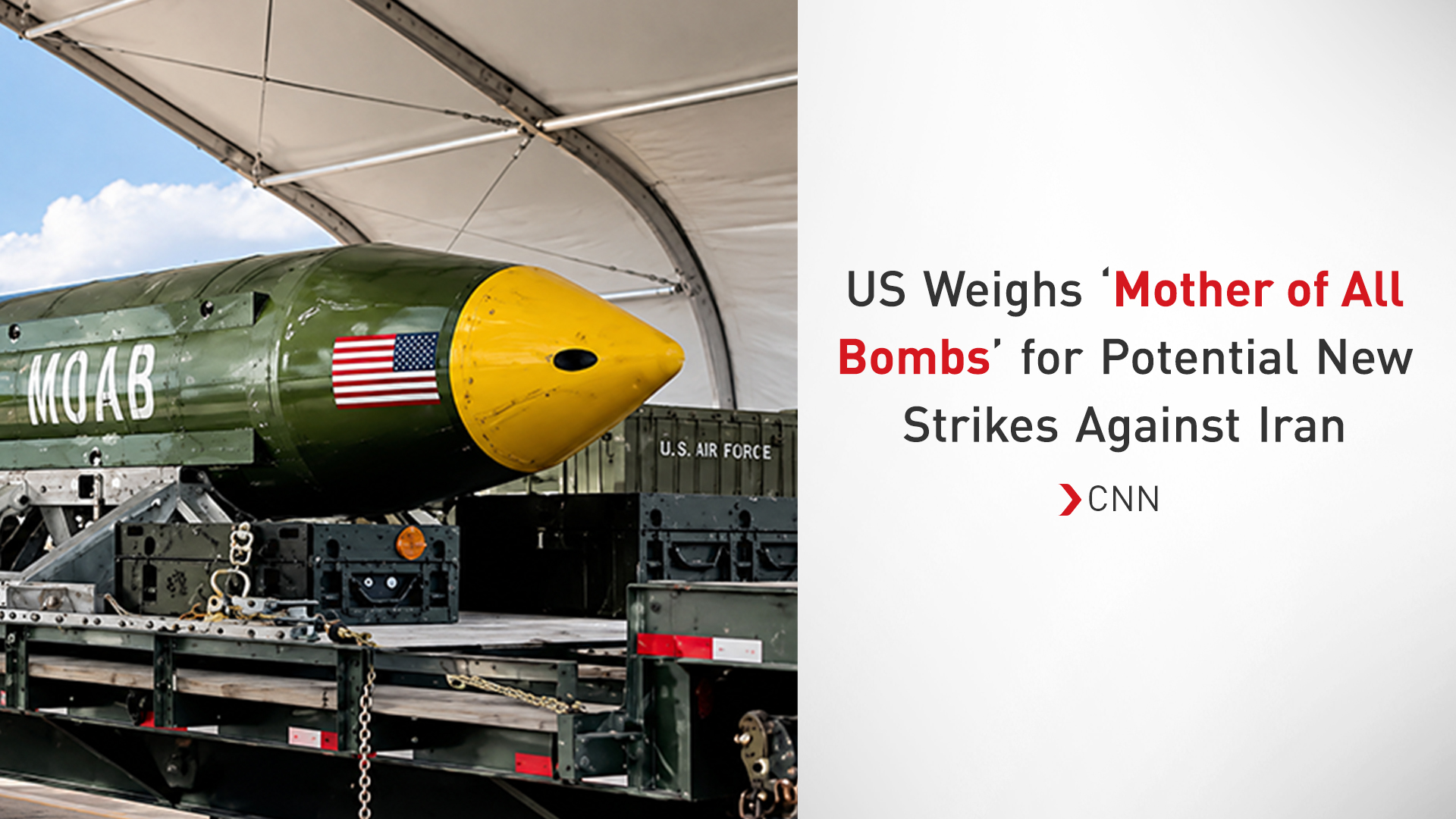
ERBIL (Kurdistan24) — The United States military has developed contingency plans that could involve using the country’s largest non-nuclear bomb against Iranian energy infrastructure and nuclear sites if President Donald Trump orders renewed combat operations, CNN reported on Wednesday, citing multiple US officials familiar with the planning.
The plans reportedly include the potential deployment of the GBU-43/B Massive Ordnance Air Blast (MOAB), widely known as the “Mother of All Bombs,” in a possible escalation of the US campaign against Iran.
However, officials familiar with the discussions have questioned whether the weapon would deliver the intended military and strategic results.
According to CNN, Trump has instructed the military to develop additional strike options against Iranian targets, including energy infrastructure.
The options could also involve strikes against nuclear facilities, including the suspected underground site at Pickaxe Mountain, which Washington and Israel believe houses components of Iran’s nuclear program.
The report comes amid uncertainty over the trajectory of the conflict and the prospects for a negotiated settlement. Although Trump has publicly indicated that he would refrain from launching additional strikes before the US midterm elections, CNN reported that some administration officials remained uncertain whether that position was definitive.
A White House official told CNN that the administration does not comment on sensitive military plans that may or may not exist, adding that Trump continues to keep all options available to prevent Iran from obtaining a nuclear weapon.
The Pentagon also said it plans for a wide range of operational scenarios to implement presidential and defense leadership directives.
Questions Over the Bomb’s Effectiveness
Despite its enormous destructive power, the MOAB may not be suitable for destroying deeply buried nuclear facilities, according to officials cited by CNN.
The GPS-guided weapon weighs approximately 21,000 pounds and is designed to produce a massive air blast over a broad area. Its effects can devastate exposed targets, but its ability to penetrate heavily fortified underground structures is limited.
CNN reported that officials involved in the planning questioned whether the bomb could penetrate the layers of granite believed to protect the suspected nuclear facility at Pickaxe Mountain.
Its potential use against such sites could therefore cause extensive surface destruction without necessarily eliminating the underground facilities Washington seeks to neutralize.
The distinction is strategically significant. A weapon capable of devastating buildings and equipment across a wide area does not necessarily possess the penetrating power required to destroy deeply buried nuclear infrastructure.
Some officials have also questioned whether deploying the MOAB would advance Washington’s broader objectives or fundamentally alter the course of the war. Nevertheless, CNN reported that the weapon remains among the options being considered, including as a means of exerting psychological pressure on Tehran.
The potential deployment would raise additional concerns about civilian casualties, particularly if energy infrastructure targeted by US forces were located near populated areas or other civilian facilities.
A Potential Escalation as Washington Seeks an Exit Strategy
The reported planning reflects a broader dilemma facing the Trump administration: how to pursue its stated objectives against Iran while finding a way to bring the conflict to an end.
CNN reported that administration officials and military planners have been exploring options that could allow Trump to present a symbolic victory to the American public while preserving the possibility of a diplomatic breakthrough, including an agreement to reopen the Strait of Hormuz.
The strategic calculations are complicated by the domestic political costs of a prolonged conflict.
Trump faces pressure to end a war that has become unpopular among many Americans, while the administration has struggled to secure a negotiated agreement that would resolve the confrontation.
According to CNN, some military options could involve a major show of force intended to demonstrate US capabilities and potentially pressure Iran into concessions. However, officials have questioned whether such strikes would achieve the administration’s stated objectives or simply trigger further retaliation.
A broader ground operation would represent a substantially different level of escalation. CNN reported that, although military planners consider scenarios involving ground forces, there was no indication that administration officials were advocating such a move.
Trump has shown little interest in deploying US ground troops into Iran, leaving the administration to weigh airstrikes, military pressure, and diplomatic options against the risks of prolonging the conflict.
The MOAB’s History and Its Limitations
The MOAB was developed in 2003 during preparations for the Iraq War and was used operationally for the first time in April 2017, when Trump authorized its deployment against an Islamic State (ISIS) tunnel complex in Afghanistan during his first presidential term.
The strike targeted a network of fortified tunnels used by ISIS fighters. US and Afghan officials said at the time that the attack destroyed tunnels, weapons, and ammunition.
The weapon was designed primarily to destroy large-area targets and exposed or fortified positions through an immense blast. It is not a specialized deep-penetration bomb designed to burrow through thick rock to destroy heavily protected underground facilities.
That distinction is especially relevant to Iran, where some nuclear-related infrastructure is believed to be buried deep underground.
The US military possesses other specialized weapons designed to attack hardened and deeply buried targets, but the CNN report does not establish that the MOAB alone could eliminate Iran’s suspected underground nuclear facilities.
If deployed against Iran, the MOAB would mark its first reported use in the current conflict and represent a significant escalation in the use of conventional air power.
Its potential military impact, however, would depend on the targets selected and whether the weapon could achieve more than widespread surface destruction.
For now, the reported plans indicate that the US military is preparing options for a possible resumption of combat operations, rather than confirming that Trump has authorized the use of the bomb.
Whether Washington ultimately chooses further military action or pursues diplomacy remains uncertain, as the administration weighs the risks of escalation against its stated objective of preventing Iran from acquiring a nuclear weapon.