European Union Declares Turkey-Libya Maritime Agreement Illegal
The EU's declaration reaffirms the bloc's longstanding position against the 2019 memorandum of understanding on maritime boundaries between Ankara and Tripoli, which Greece, Cyprus, and Egypt have consistently rejected as violating their sovereign rights in the Eastern Mediterranean
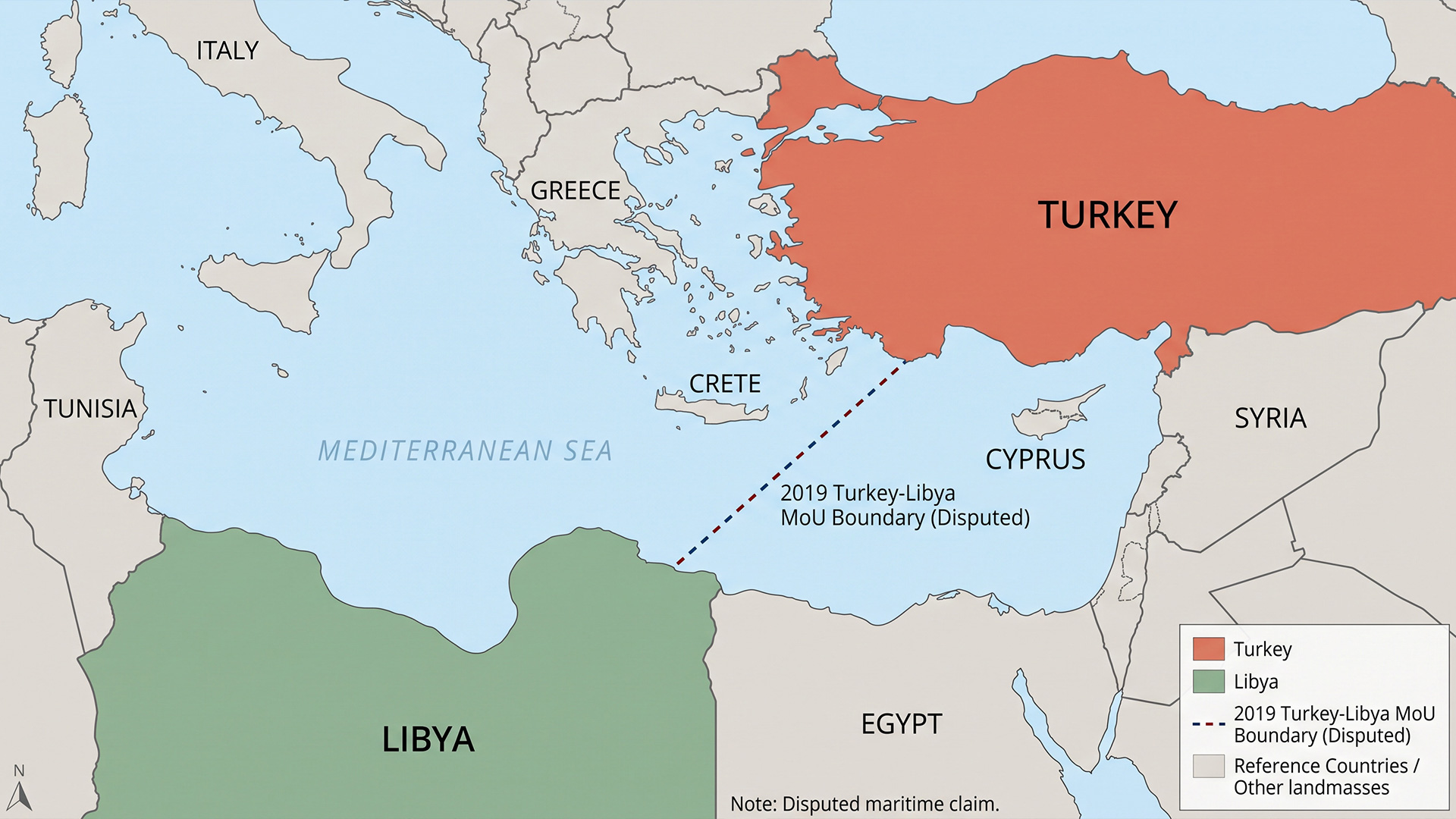
ERBIL (Kurdistan 24) - The European Union formally declared the maritime agreement between Türkiye and Libya illegal on Wednesday reaffirming the bloc's position that the memorandum of understanding on maritime boundaries signed between Ankara and Tripoli cannot produce any legal effects on third parties and violates the sovereign rights of EU member states and neighboring countries in the Eastern Mediterranean.
The EU's declaration renews the bloc's opposition to the 2019 Turkey-Libya memorandum of understanding on maritime boundaries and military cooperation, which Ankara and the Tripoli-based Government of National Accord signed in November 2019 in a deal that Greece, Cyprus, Egypt, and France condemned at the time as violating international law, specifically the United Nations Convention on the Law of the Sea.
Why The Agreement Is Disputed
The Turkey-Libya maritime agreement drew an imaginary line across the Mediterranean between the Turkish coast and the Libyan coast that, critics argued, disregarded the presence of Greek islands including Crete and Rhodes that lie between the two countries and that under UNCLOS would generate their own exclusive economic zones. Greece argued the agreement attempted to eliminate Greek islands' maritime entitlements entirely, while Cyprus said it directly encroached on Cypriot waters. Egypt separately signed a competing maritime boundary agreement with Greece in August 2020, directly contradicting the Turkey-Libya line.
The practical consequence of the disputed agreement is a contested zone in the Eastern Mediterranean where overlapping claims between Türkiye on one side and Greece, Cyprus, and Egypt on the other have periodically generated naval confrontations, exploration disputes, and diplomatic crises. The agreement also formed part of the broader Turkish-Libyan military cooperation framework under which Ankara deployed forces to support the Tripoli government against the Libyan National Army.
The EU's Wednesday declaration places the bloc's formal legal position on the record at a moment when Eastern Mediterranean energy dynamics have been significantly affected by the US-Iran conflict and Strait of Hormuz disruption, increasing the strategic importance of alternative Mediterranean energy routes and the exclusive economic zones through which subsea pipeline corridors could be developed.