Trump: US is Not Negotiating With Iran
Bloomberg reports Iran fears post-election escalation and doubts Washington will honor any deal, as Trump rules out strikes before November 3, hints at post-midterm resumption, and Iran tells Pakistani mediator Munir it has nothing new to say to Washington
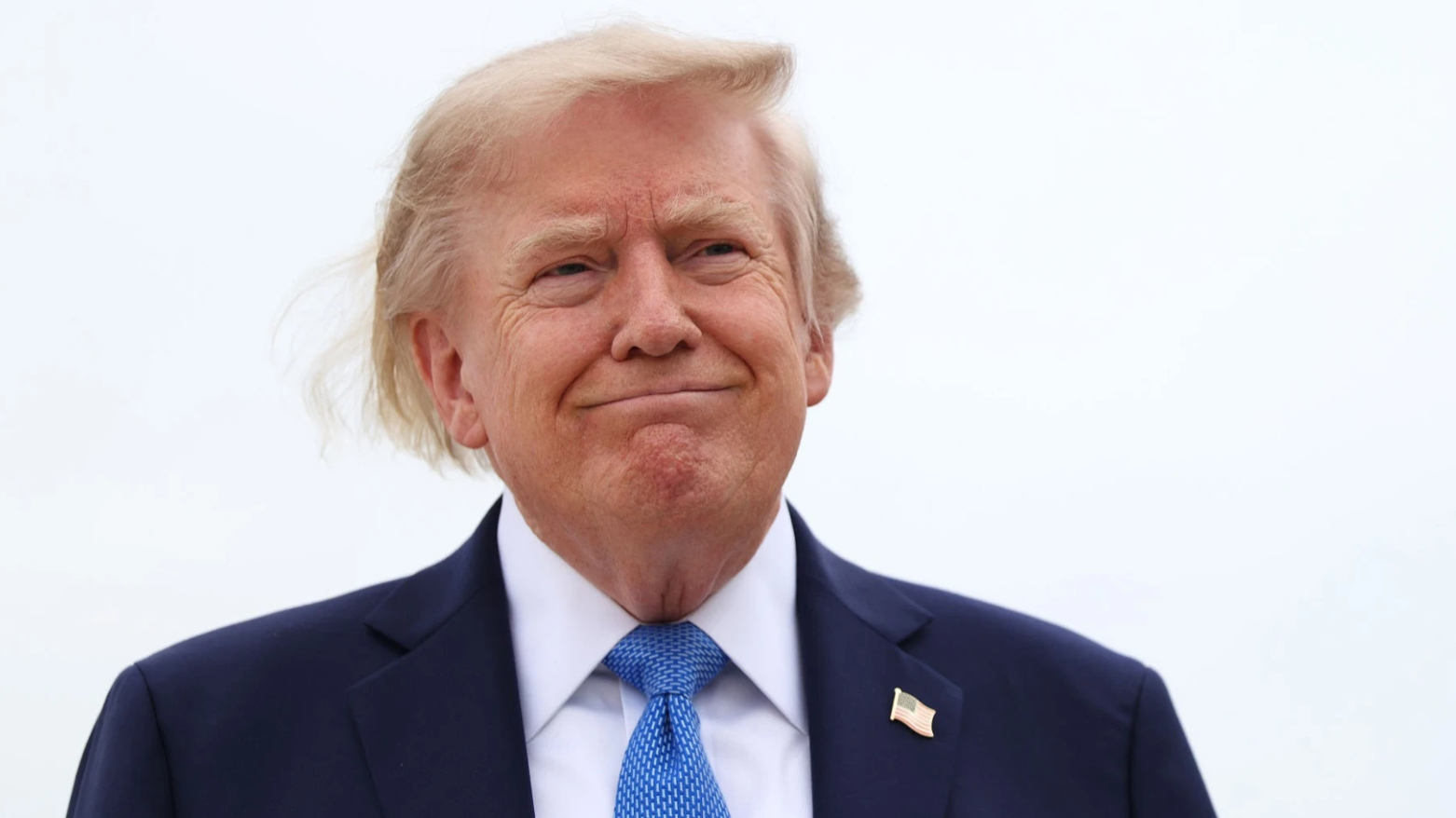
ERBIL (Kurdistan 24) - President Donald Trump said Thursday, October 22, 2026, that the United States is not negotiating with Iran, that a development in the conflict is expected fairly soon, and that most people believe it will come after the November 3 midterm elections, in statements that reframe the previously active diplomatic track as having stalled while signaling a post-election inflection point in the conflict.
Trump had previously ruled out any US military strikes against Iran before the November 3 midterms, posting on social media on October 8 that "the US will not be attacking Iran at any time prior to the midterm elections," while simultaneously saying his team has been having productive discussions with the Islamic Republic. Thursday's statement that the US is not negotiating with Iran represents a sharper formulation, characterizing the current status as not talks but a period of waiting for a development.
Speaking to Journalists, Donald Trump Said " US is Not Negotiating With Iran". More on: https://t.co/5BaPZ5i1rs https://t.co/vRKFe7aiUL
— Kurdistan 24 English (@K24English) October 22, 2026
The Post-Election Calculus
Trump's suggestion that most people believe the development will come after the election aligns with reporting from Bloomberg, which found that Iran is also skeptical that a peace agreement can be reached before the November 3 midterms, and that officials in Tehran believe there is a high probability of conflict escalation after the US election. Iran fears a new escalation after the election while doubting that the Trump administration will honor the terms of any potential agreement. Washington, for its part, also does not trust Tehran, Bloomberg reported.
Trump has previously hinted with confidence that an endgame to the war could come in the days before or after the election, while also saying he remained open to resuming full-scale military operations against Iran after November 3. He told reporters last week that Iran will be very quick one way or the other.
Iran's Position Through The Mediator
Iran's parliament speaker Qalibaf told Pakistani Army Chief General Munir during his Tuesday Tehran visit that Tehran has nothing new to say to Washington and that the US cannot gain Iran's trust unless it fulfills its seven conditions, in a message delivered directly through Washington's own chosen mediator. Sources told Al Arabiya that Pakistan knows Iran must show greater flexibility on the nuclear file, and that Munir's primary goal in meeting Iranian officials was de-escalation.
The Military Backdrop
A third US aircraft carrier, the USS Theodore Roosevelt, and approximately 10,000 Marines are heading to the Middle East and expected to arrive by end of November. Two carriers, the USS George H.W. Bush and the USS George Washington, are already in the Arabian Sea. Trump is weighing new military options against Iran for after November 3. Three tankers caught fire overnight in the western Strait of Hormuz after what the IRGC described as mine strikes, with CENTCOM rejecting all Iranian mine claims as false and saying Iran uses missiles and drones in its Hormuz operations.
Only 28 percent of Americans approve of how Trump is handling the Iran conflict, including one in four Republicans, according to a Reuters/Ipsos poll, making the Iran war one of the most politically damaging files the administration carries into the November 3 elections.