Why Did the US Fine KLM and Air France Over Iraq Flights?
The US Department of Transportation fined KLM about $320,000 and Air France $105,000 for flying below mandated altitudes over Iraq, citing passenger safety.
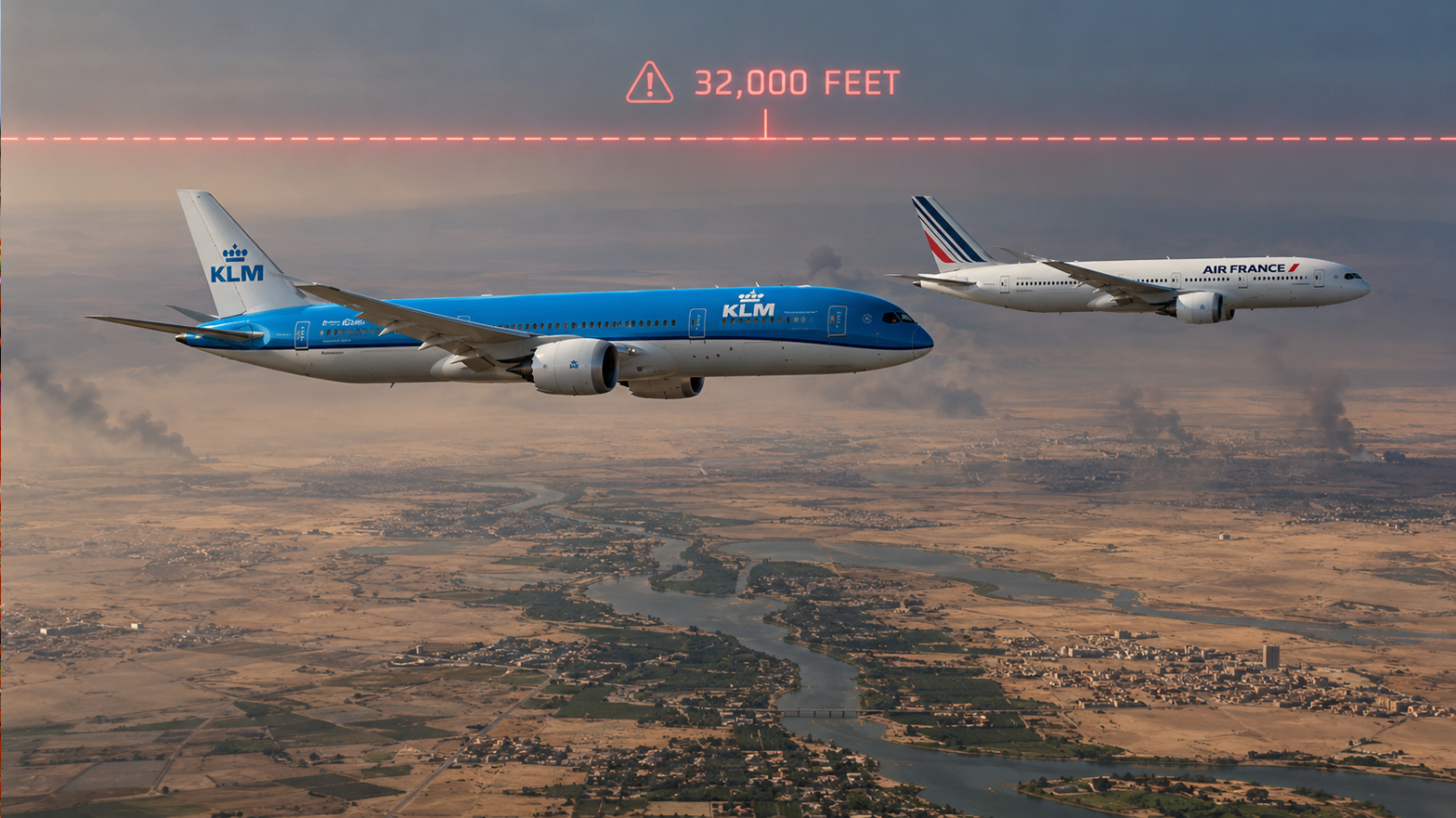
ERBIL (Kurdistan24) - The US Department of Transportation has imposed heavy financial penalties on two major European airlines, KLM of the Netherlands and Air France of France, after their aircraft flew over Iraqi airspace below the altitude set by US regulations.
The department decided to fine the Dutch carrier KLM about $320,000. Inspections showed the company flew its aircraft very low over Iraqi airspace more than 100 times, contrary to safety guidelines.
KLM explained that the incidents were sudden and that its crews were forced to fly that way. US officials, however, say the flights put passengers’ lives at serious risk.
KLM must pay the first part of the penalty, $200,000, within 60 days. The remaining $120,000 is suspended on condition: if the airline commits another violation of this kind within the next year, it will have to pay that sum too.
Air France faced the same problem and was also fined. Its penalty stands at $105,000, of which $65,000 must be paid within 60 days.
US Transportation Secretary Sean Duffy commented on the penalties.
“Compliance with safety rules by companies is not optional. We will never hesitate to hold accountable those airlines that violate safety laws, because protecting the lives of passengers is above everything,” Duffy said.
Both European companies said they have decided to accept the penalties and will not appeal. They said they will instead monitor their compliance with the rules more closely in the future.
Following the political and security developments in the region, particularly in areas such as Iraq and Syria, the presence of armed groups and the risk of anti-aircraft missiles and heavy weapons have led aviation authorities worldwide, particularly in the US and Europe, to set strict limits on flight altitudes.
The US Federal Aviation Administration (FAA) had previously ruled that aircraft may not fly in Iraqi airspace below a set altitude, which is 32,000 feet. Below that altitude, aircraft are exposed to the risk of missile attack.
The US was not penalizing the two European airlines for enforcing its own rules over Iraqi airspace as such. It acted on the basis of commercial cooperation and codeshare arrangements.
The legal basis that gave the Department of Transportation the right to impose the fines rests on three points.
First, the KLM and Air France flights carried the shared booking code of the American carrier Delta Air Lines.
Second, when a foreign airline places an American company’s code on its flights, it becomes legally bound to comply with FAA instructions and guidelines, including the ban on flying below 32,000 feet in certain airspace such as Iraq’s, to avoid missile threats and security risks.
Third, the companies operate frequent flights to the US or deal with the American aviation sector, which subjects them to regulatory agreements that allow US authorities to penalize them financially for breaching operating conditions tied to American codes.