Prime Minister Barzani Puts Industry at Center of Economic Diversification
Prime Minister Masrour Barzani says new Zakho automobile projects will support industrial growth, private-sector jobs and economic diversification.
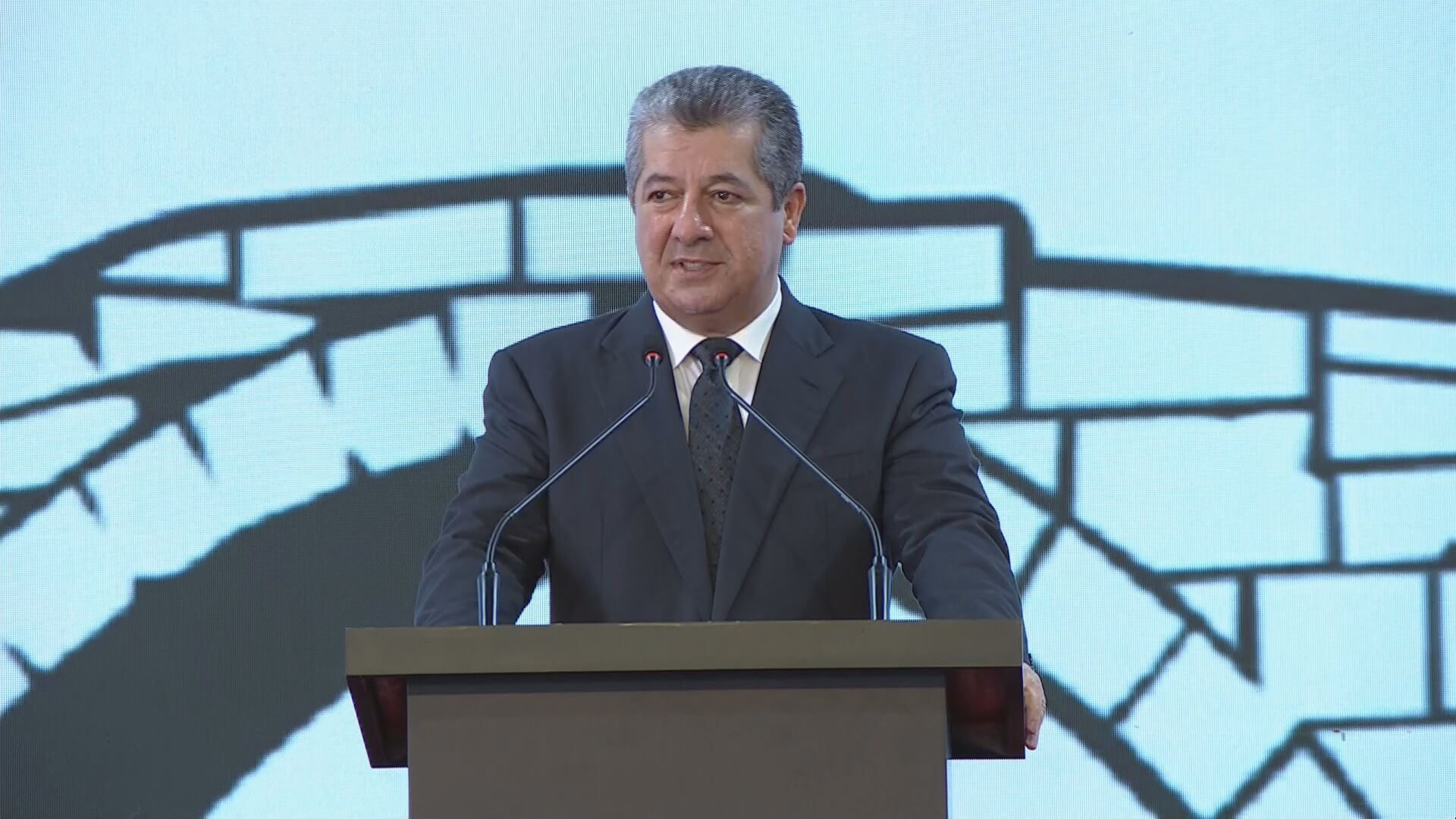
ERBIL (Kurdistan24) - Kurdistan Regional Government Prime Minister Masrour Barzani on Sunday said expanding the industrial sector has become a central part of the government's economic diversification strategy, as he inaugurated and launched a series of automobile-related projects in the Zakho Independent Administration.
Speaking in Batel subdistrict on Oct. 25, Prime Minister Barzani said the government wants industrial development to create private-sector jobs, build technical skills among young people and attract foreign expertise and technology into the Kurdistan Region.
The Prime Minister attended the inauguration of the Golden Global Development project and a Nissan branch, laid the foundation stone for the Motor Plex Iraq project, and witnessed an agreement with Chinese automaker Jetour to establish an automobile assembly plant.
Prime Minister Barzani said the projects fit within a broader government program aimed at diversifying the Kurdistan Region's revenues and economy by developing agriculture, industry and tourism in parallel.
"Developing the industrial sector has been part of the Kurdistan Regional Government's program, alongside diversifying the Kurdistan Region's revenues and its economy," he said. "We have sought to place greater emphasis on the industrial sector."
The ceremony brought together local investors and representatives of foreign companies. Prime Minister Barzani welcomed Japan's consul, the head of the Chinese Consulate and a Jetour representative, and thanked Muhannad Group, particularly Ahmed Mushir, and Ahmed Rekani for helping bring the projects to the area in cooperation with Chinese and Japanese companies.
He also thanked the Supervisor of the Zakho Independent Administration for facilitating investment and industrial development in the area.
The speech placed particular emphasis on the automobile industry. Prime Minister Barzani said the Nissan operation in Zakho would serve as the main distributor for vehicles imported into Iraq, with vehicles then sent onward to other parts of the country.
Prime Minister Masrour Barzani says the new Nissan facility in Zakho will distribute vehicles entering Iraq nationwide, creating jobs and building private-sector skills as the Kurdistan Region expands its industrial base. Read more: https://t.co/9PJnzFtTPH https://t.co/1LzNMjsa9L
— Kurdistan 24 English (@K24English) October 25, 2026
He said that role would create additional employment in the Kurdistan Region, especially in the area, while giving workers opportunities to develop professional skills in the private sector.
The Prime Minister linked Sunday's projects to other recent automobile-sector investments, noting that a similar Toyota project had been inaugurated in Duhok a few days earlier, followed by another project in Erbil.
He described the sequence as a promising beginning for wider industrial development across the Kurdistan Region's provinces, administrations and localities.
Prime Minister Barzani also argued that the Kurdistan Region's geographic position could help it develop into a base for companies seeking access to markets across the Middle East.
"Kurdistan itself is located in a highly strategic position, connecting many markets across the Middle East," he said.
He said that position could allow the Region to play a larger economic role and encourage more companies to establish operations there, while generating greater benefits from businesses investing in the Kurdistan Region.
A substantial part of the speech was directed at Kurdish investors. Prime Minister Barzani urged local businesses to consider partnerships with international companies as a way of bringing new technology, expertise and industrial practices into the Region.
"I also call on our own investors in Kurdistan to think more seriously about how they can invest in the Kurdistan Region and, where necessary, establish joint ventures with foreign companies," he said.
Such partnerships, he added, could strengthen the economy while helping develop scientific and technical methods in the industrial sector.
Prime Minister Barzani said the government views young people as a major source of economic capacity and argued that foreign investment should also serve as a channel for knowledge transfer.
"We know very well the capabilities and talents of our young people," he said. "They are a tremendous force for advancing the Kurdistan Region in every field."
Bringing knowledge and expertise from abroad, he added, could improve professional standards, technical understanding and working practices in the Kurdistan Region.
The Prime Minister said thousands of employment opportunities had been created in the recent period and described private-sector job creation as one of the government's main objectives in pursuing economic diversification.
He compared the current emphasis on industry with the government's earlier focus on agriculture, while saying tourism also remains a priority.
"All of these will help organize and increase employment opportunities for our people and advance the Kurdistan Region's economy," Prime Minister Barzani said.
Batel subdistrict featured prominently in the speech. The Prime Minister said he was pleased to hear that unemployment there had fallen to zero, describing it as the only subdistrict in Iraq and the Kurdistan Region reported to have reached that level.
He said employment opportunities had become numerous enough that people from other areas were traveling to Batel in search of work. Prime Minister Barzani congratulated the subdistrict and the Zakho Independent Administration and encouraged other cities and areas of the Kurdistan Region to take similar steps to develop their local economies and private sectors.
He said local economic growth must be accompanied by government support, with public institutions using their capabilities to facilitate private investment and expansion.
"The government, for its part, must mobilize all its capabilities to support and facilitate the private sector so that we can make further progress and advance the Kurdistan Region's economy," he said.
The Jetour project formed another major part of the ceremony. Prime Minister Barzani said the Chinese company would assemble and manufacture vehicles in the Kurdistan Region, describing it as the first project of its kind in Kurdistan.
He said the plant would contribute to the development of the automobile industry, create more employment and give young people access to technical knowledge and practical experience.
"In terms of technology and the industrial sector, these projects will undoubtedly play a very effective role," he said.
The Motor Plex project, meanwhile, is intended to operate as a complex connected to the automobile sector and skills development.
Prime Minister Barzani said it would help train young people in driving techniques as well as principles, guidelines and practical aspects of the automobile industry. He described both the Jetour plant and Motor Plex as investments intended to serve future generations by combining employment with technical training.
Gohdar Shekho, Supervisor of the Zakho Independent Administration, said during the ceremony that local authorities had worked to diversify Zakho's economy across industrial, tourism and agricultural sectors.
Shekho said nearly 140 factories had opened in Zakho over the past five years and that six additional factory licenses had recently been issued, with job creation among the stated objectives. He said Zakho was moving toward becoming an industrial hub for the Kurdistan Region and Iraq.
Sunday's program also included tourism-related development. Earlier Kurdistan24 reporting said Prime Minister Barzani was due to visit the Zakho corniche and the Toga Porto Marina investment project, a development consisting of cafés and restaurants that is in its final stages.
The Prime Minister, however, centered his speech on industry and the role of private investment in broadening the economy. He closed by thanking the companies and investors involved and expressing hope that the projects would continue to expand.
Taken together, his remarks presented automobile investment not simply as a commercial expansion but as part of the KRG's wider effort to connect industrial growth with employment, technical skills, foreign expertise and economic diversification across the Kurdistan Region.
Edited and updated by Dr. Kamaran Aziz on Sunday, Oct. 25, 2026, at 01:20pm.