Three Men Secretly Urged Putin Not To Use Nuclear Weapons In Ukraine
An American lawyer, a banker, and a former German spy opened an unofficial back-channel to the Kremlin after a Russian businessman close to Putin warned in 2022 that battlefield developments could lead to a third world confrontation, with Putin publicly declaring nuclear weapons had no military or p
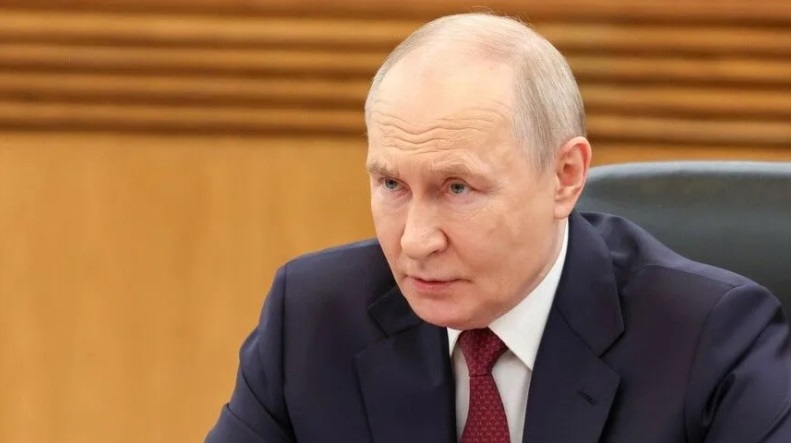
ERBIL (Kurdistan 24) - A Financial Times investigation revealed the details of secret communications conducted by an American lawyer and a banker, assisted by a former German spy, to contain the risk of Russian nuclear escalation in Ukraine in 2022, after a Russian businessman close to the Kremlin warned that Putin might use tactical nuclear weapons in Ukraine and that battlefield developments could lead to a third global confrontation.
The three men cooperated to open an unofficial back-channel with Putin to persuade him not to use nuclear weapons, with the secret channel ultimately carrying an American message to Putin confirming that Washington does not seek to topple the Russian regime or destroy Russia. The day after the American message arrived through the unofficial channel, Putin publicly declared that the use of nuclear weapons carried no military or political utility for Russia.
The Warning That Triggered The Operation
The sequence began with a warning from a Russian businessman close to the Kremlin in 2022 about the possibility that Putin might use tactical nuclear weapons in Ukraine and that the trajectory of the war could lead to a global confrontation. The warning was taken seriously enough by the three men to prompt the construction of an entirely unofficial diplomatic back-channel bypassing formal government structures on both sides.
The Three Men
The Financial Times investigation identifies the channel as having been conducted by an American lawyer and a banker working together, assisted by a former German spy. The combination of legal, financial, and intelligence expertise across three nationalities allowed the group to construct a communication pathway that could credibly reach the Kremlin without triggering the institutional resistance that formal diplomatic approaches would have encountered at a moment of maximum hostility between Washington and Moscow.
The Message And Its Effect
The core message carried through the unofficial channel to Putin was that Washington does not seek to topple the Russian regime or destroy Russia, addressing what the Kremlin had publicly described as its existential concern about the Western response to the Ukraine war. The timing of Putin's subsequent public statement — declaring nuclear weapons held no military or political utility for Russia the day after the message arrived — suggested to those involved that the channel had been effective in conveying the American assurance directly to the Russian president at a moment of peak nuclear risk.
The Relevance Today
The Financial Times investigation's publication arrives as the risk of nuclear escalation has returned to the center of global security concerns. Putin proposed a Trump-Xi-Putin trilateral summit on Ukraine at the APEC summit in Shenzhen in November with Ukraine excluded from the table. Russian FM Lavrov confirmed in Tehran last week that Russian specialists are returning to Iran's Bushehr nuclear power plant. Iran's NPT withdrawal debate intensified earlier in the conflict. US Space Force confirmed the deployment of orbital weapons. The back-channel of 2022 that averted one nuclear crisis offers a precedent for the kind of unofficial diplomacy that complex multi-front crises sometimes require when formal channels are closed.