Kurdistan24 Investigates Why Chine's Great Wall Isn't the Same Everywhere
Kurdistan24 team traveled across China to document the Great Wall’s two faces: stone at Mutianyu and Badaling near Beijing, and clay at Jiayuguan Pass.
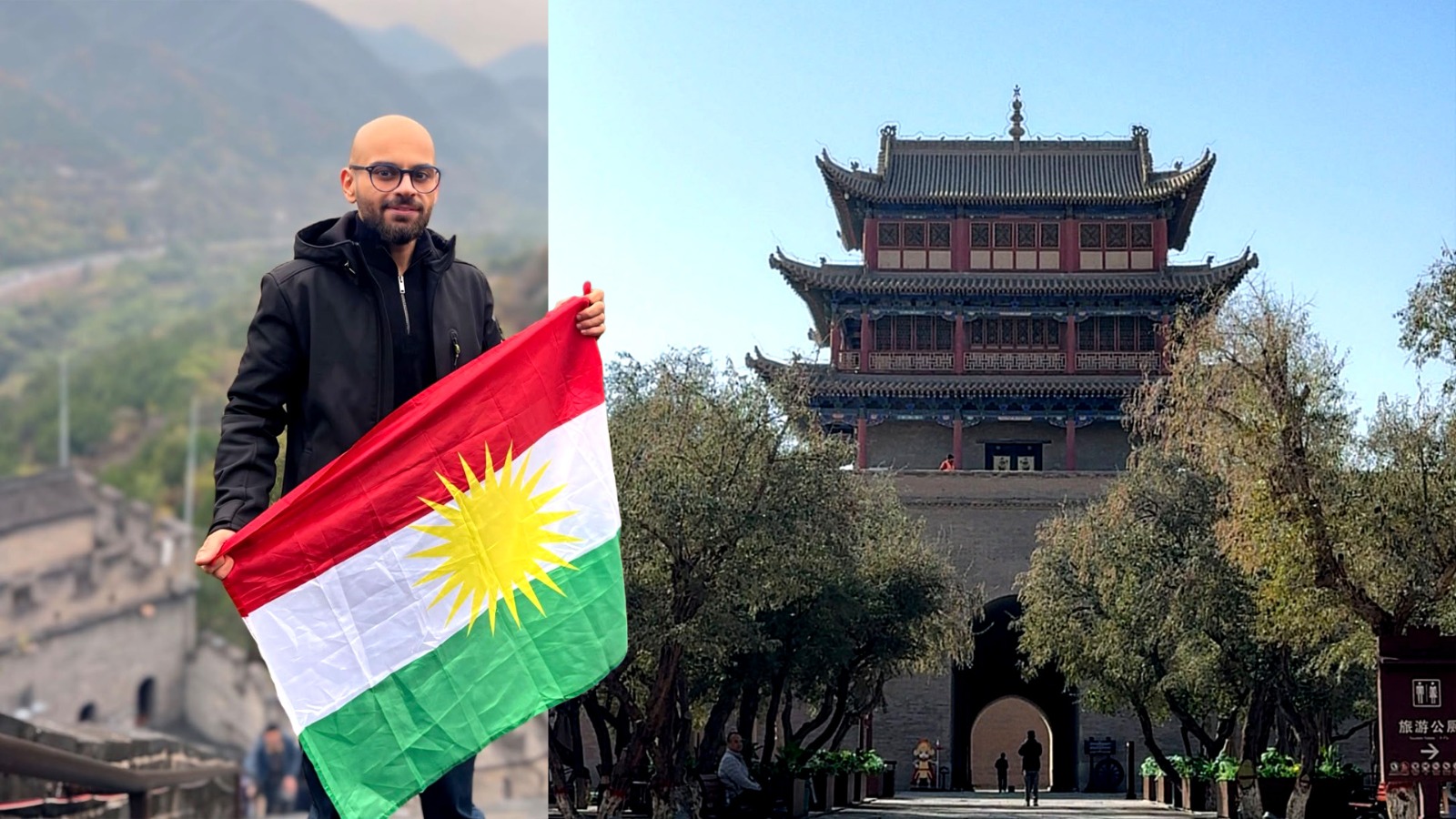
ERBIL (Kurdistan24) - On an expedition that covered thousands of kilometers across China, a Kurdistan24 team documented the striking visual and historical contrast of the Great Wall of China, a monument that tells no single story but wears two entirely different faces. One is a majestic wall of stone, embracing the clouds of the mountain peaks around Beijing. The other is an enduring wall of clay, swallowed by the horizon among the barren sands of the Gobi Desert in the far west.
During a field tour of the Mutianyu and Badaling sections in the mountains north of Beijing, the Kurdistan24 camera captured how the wall becomes a vast stone dragon, winding with remarkable engineering skill along rugged ridges covered in dense forest.

Here, enormous granite blocks fuse with the natural rock as the defensive towers rise. The silence is broken only by the roar of the wind and the murmur of thousands of tourists, whom the team saw arriving from every continent.
Several local guides told the team that this rocky stretch served as the last line of defense protecting China’s emperors in the Forbidden City. Every corner, they said, reflects the severity of ancient military architecture and a philosophy of strength built on solid stone and impossible terrain.

Traveling west to Gansu province, on the edge of the Gobi Desert, the team found the scene transformed. The wall’s granite gave way to clay and rammed earth, blending into the color of the vast sands at the historic Jiayuguan Pass.
The correspondent visited the stronghold known as the “first and greatest pass under heaven,” which once marked the dividing line between the borders of ancient Chinese civilization and the unknown on the Silk Road. Here, a solemn desert atmosphere prevails. Nothing rises above the sound of the wind battering the yellow clay fortresses, while watchtowers scattered across the horizon recall the trade caravans and the soldiers who spent decades guarding the arteries of ancient global commerce in complete isolation.

From this comprehensive field observation, the Kurdistan24 team concluded that the Great Wall is more than a defensive line. It is an ingenious reflection of the land’s geography. The builders used mountain rock where it was available and desert clay where stone was absent, creating the longest structure humankind has ever built.
The journey between the green mountains of Beijing and the yellow sands of Jiayuguan showed, the team said, that the wall remains alive not only through its stone and clay but through its power to capture the world’s imagination. Through gates that the centuries have not erased, it still links the past of the Middle East and Asia to the civilization of the Chinese dragon.


