Kurdistan Interior Minister Urges Religious Pulpits to Combat Violence
Kurdistan Region Interior Minister Rebar Ahmed says the Region is reviewing its 2011 law on violence against women and family to remove obstacles to enforcement.
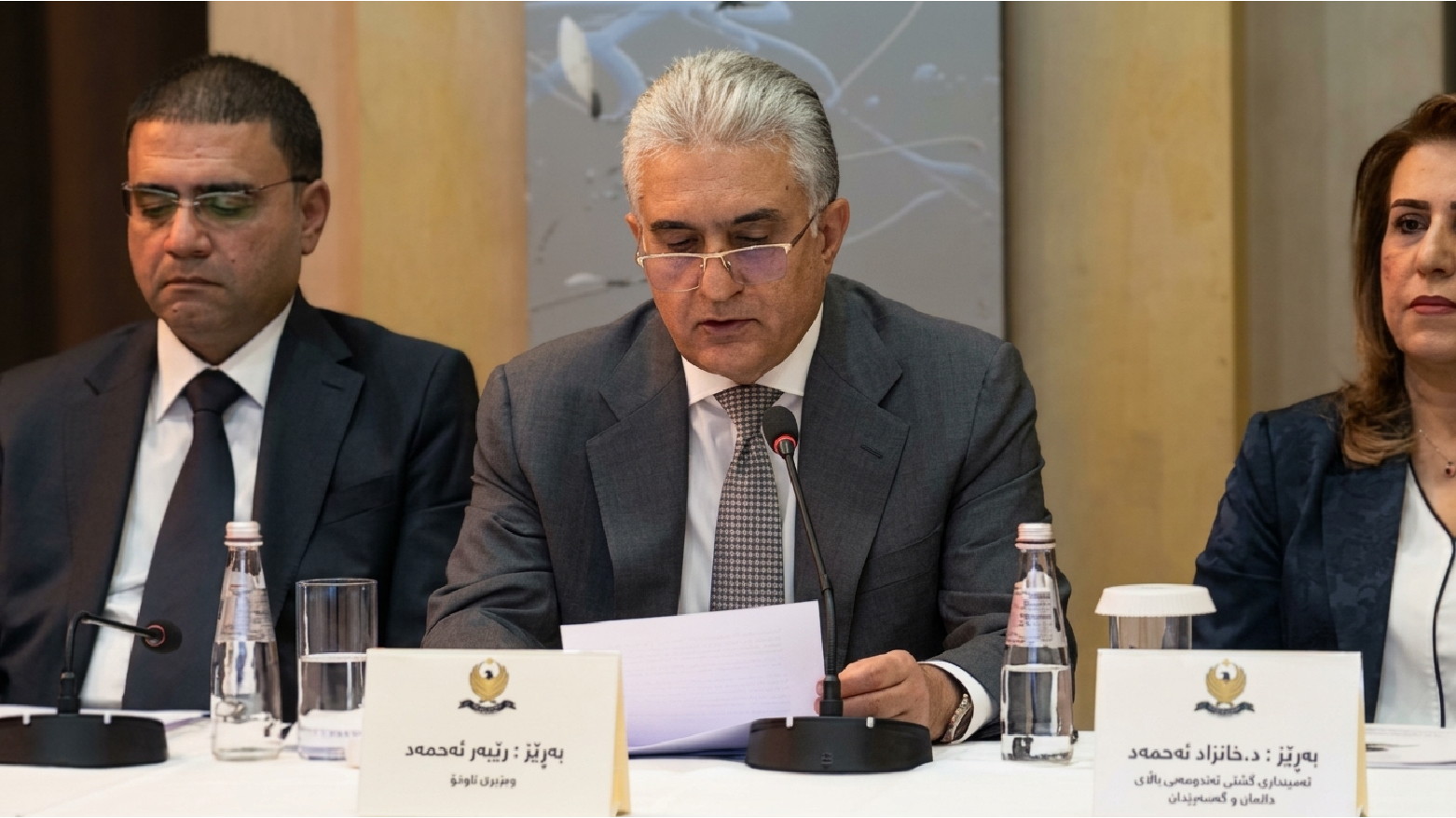
Erbil (Kurdistan24) - The Kurdistan Region is reviewing its law on combating violence against women and the family to resolve the obstacles that stand in the way of its implementation, Interior Minister Rebar Ahmed said on Tuesday, pointing to challenges in the mechanisms for protecting, transferring, and sheltering victims, as well as in how judges read the legal texts.
In a statement to the Iraqi News Agency, Ahmed said the Law on Combating Violence Against Women and the Family, passed by the Kurdistan Parliament in 2011, is regarded as a highly advanced and exemplary achievement across the entire Middle East.
The practical stage of applying the law in the courts, however, has revealed several obstacles, he said, along with ambiguity in some legal texts for judges.
Ahmed also pointed to a series of challenges tied to the mechanisms for transferring victims of violence, protecting them, and sheltering them in refuges and shelters, alongside the way reconciliation committees operate. This, he said, requires a careful review of the areas that need remedies, so that the mechanisms of implementation can be advanced.
On institutional efforts, the interior minister explained that his ministry took part in a broad workshop organized by the Kurdistan Higher Council of Women’s Affairs in cooperation with the United Nations Population Fund (UNFPA). Representatives of the judicial authority, service ministries, the Higher Council of Fatwa, and the Union of Islamic Religious Scholars of Kurdistan attended, he said, to discuss practical mechanisms for implementing the law.
He stressed that the main aim of the wide-ranging meeting is to bring together government, legislative, judicial, religious, and international parties to identify weak points and pinpoint the provisions that need review or new guidelines. It also seeks to unify judges’ understanding of the legal texts and raise the level of coordination between the relevant institutions.
Ahmed stressed the importance of raising social awareness of women’s rights and of combating domestic violence, particularly through the discourse of religious pulpits and the relevant institutions, in a way that serves the protection of victims and makes the law’s implementation more effective in society.
As the review proceeds, the Interior Ministry says the goal is to refine the mechanisms for protecting and sheltering victims and to align how judges interpret the law, with religious pulpits and public awareness campaigns expected to play a part in making the law work in practice.