Iraqi PM al-Zaidi in Damascus to Discuss Oil, Economic Ties
Iraqi Prime Minister Ali al-Zaidi met Syrian President Ahmed al-Sharaa in Damascus to discuss economic, oil and security cooperation, including the Banias pipeline.
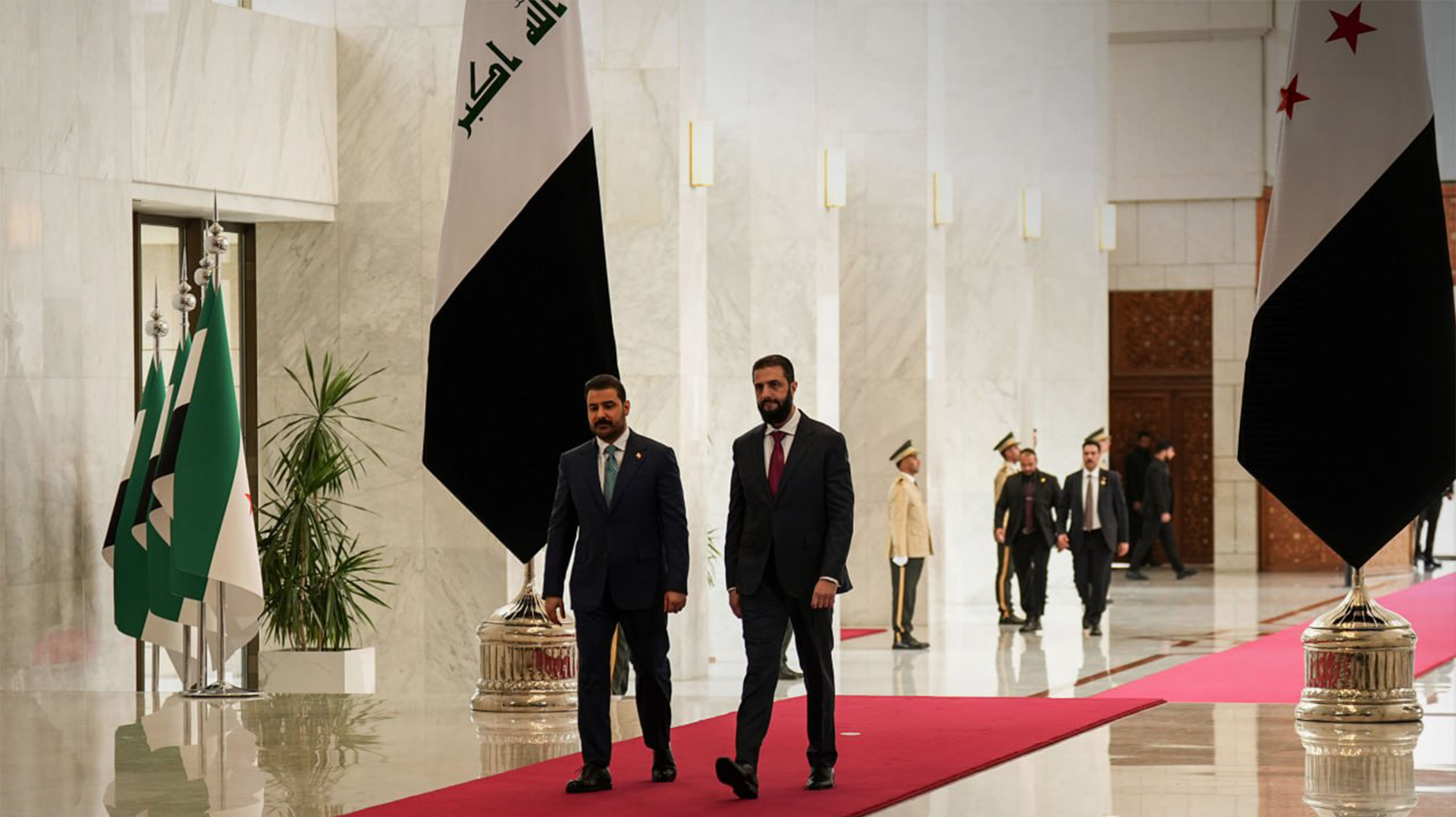
ERBIL (Kurdistan24) - Iraqi Prime Minister Ali al-Zaidi met Syrian President Ahmed al-Sharaa in Damascus on Wednesday to discuss ways of developing the partnership between the two countries, particularly in the economic and oil sectors. The talks came about three months after an agreement to export Iraqi oil through the Banias pipeline.
Al-Zaidi and his accompanying delegation arrived at Damascus International Airport on Wednesday afternoon, where Sharaa received them, according to Syrian state television.
The visit comes as Baghdad, which had dealt cautiously with Sharaa’s administration in its first months in power, stresses its desire to strengthen bilateral relations. Iraq and Syria share a border of more than 600 kilometers and face common economic and security challenges.
According to a statement from the Syrian presidency, issued after extensive talks at the presidential palace in Damascus, the two sides discussed “ways to enhance cooperation” and “developing security, economic and commercial cooperation, in addition to discussing regional and international developments.”
Al-Zaidi affirmed, according to a statement from the Iraqi prime minister’s office, “work on developing partnership and joint cooperation in various fields, particularly economic and social, strengthening security cooperation and unifying positions on regional and international issues, and working to achieve peace and stability in the region.”
According to Baghdad, the meeting discussed several issues, including “exporting Iraqi oil through the Banias pipeline with an export capacity of up to two million barrels per day, increasing the volume of trade exchange, as well as joint work to develop the agricultural sector, to achieve food and economic integration.”
Under a memorandum of understanding signed with Syria in July, Iraq began exporting limited quantities of oil through Syria after navigation in the Strait of Hormuz was disrupted following the outbreak of the Middle East war.
The memorandum provided for reviving the Haditha-Banias pipeline to carry Iraqi oil. Damascus signed a memorandum with a consortium of three companies, most prominently the US firm Chevron, to carry out the project.
The pipeline dates to 1952 but has been out of service since 2003, after it was damaged following the US invasion of Iraq. It is considered a vital outlet for exporting Iraqi oil through the Mediterranean.
Since the overthrow of President Bashar al-Assad’s rule in late 2024, a number of senior Iraqi political, intelligence and judicial officials have visited the Syrian capital. Al-Zaidi, however, is the first Iraqi prime minister to visit since then.
The two officials had met last month in New York on the sidelines of the UN General Assembly. At the time, US Special Envoy to Iraq and Syria Tom Barrack said the two countries were “weaving together a fabric of cooperation, stability and shared prosperity for their peoples.”
In an interview aired by Iraq’s Dijlah channel on Tuesday evening, Sharaa said the interests that bring the two countries together are “ahead of any moody policies.” He said the issues shared with Iraq are “very large, including security, social and economic issues.”
He said that over “the past year and a half, something good has been built in the Syrian-Iraqi relationship, especially in economic matters.”
The visit followed the transfer by the US military, earlier this year, of more than 5,700 suspected ISIS members from Syria to Iraq, including more than 3,000 Syrians. They had been held in prisons of the Kurdish Autonomous Administration, which reached an agreement with Damascus early this year to integrate its institutions into the Syrian state.
In the televised interview, Sharaa said the two countries are in contact over the Syrian detainees. He said “part of them has no relation to ISIS... and there is talk of dividing them into categories and then considering” their cases.
He added: “Syria must take responsibility for these people and not pass this burden to Iraq.”
Last year, an old arrest warrant against Sharaa, dating to a period when he was a fighter in the ranks of al-Qaeda against US forces and their allies and was imprisoned in Iraq for years as a result, caused an uproar in Iraq after the government invited him to attend the Arab summit in Baghdad.