Iran’s IRGC Says It Downed US-Made Drone Near Strait of Hormuz
Claim comes amid heightened military tensions, threats of renewed US strikes and diplomatic efforts to reopen the strategic waterway
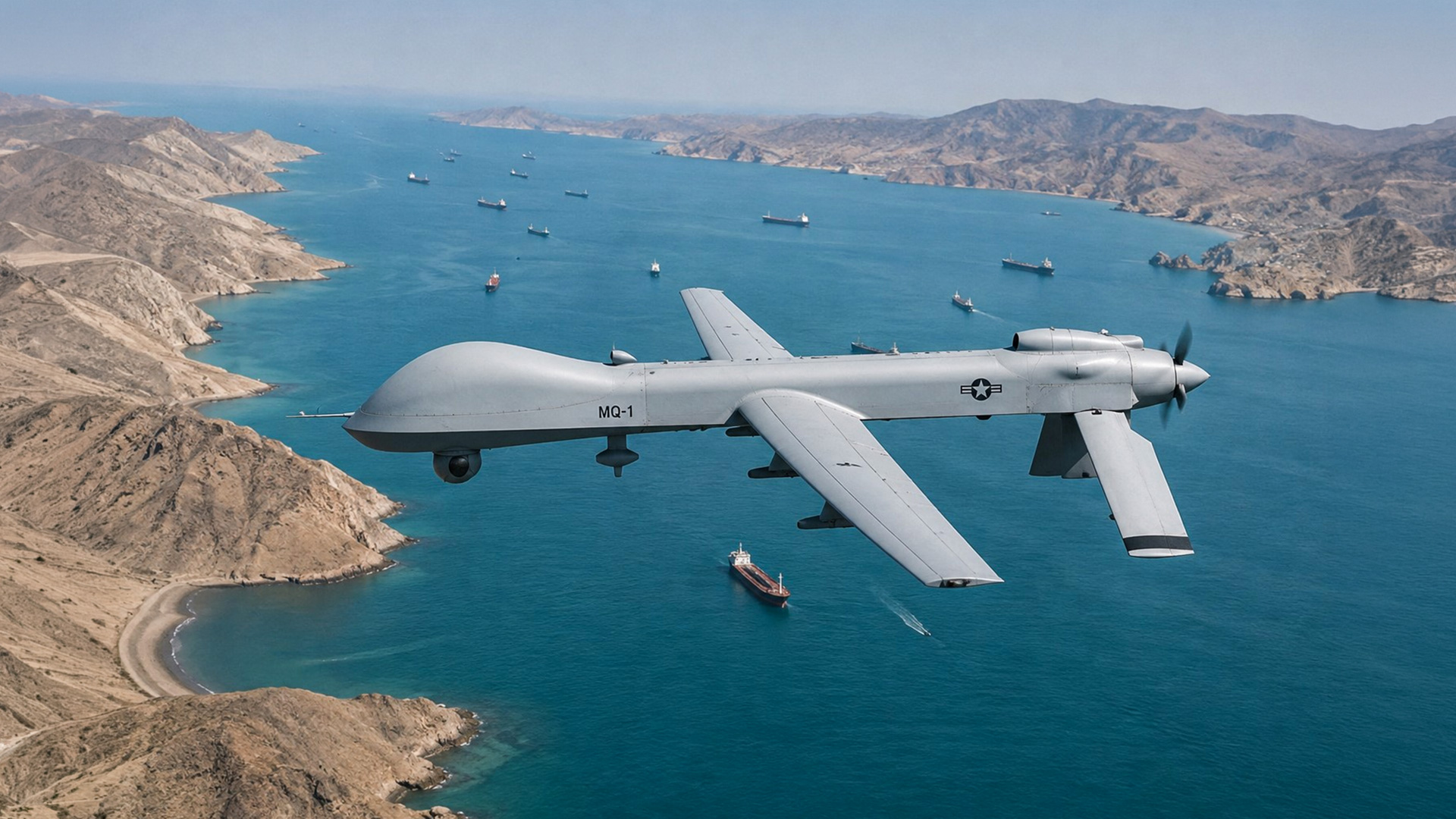
ERBIL (Kurdistan24) — Iran’s Islamic Revolutionary Guard Corps (IRGC) said on Thursday that it had intercepted and destroyed a US-made MQ-1 drone east of the Strait of Hormuz, as tensions between Tehran and Washington remain high amid an ongoing regional conflict and renewed efforts to negotiate an end to the war.
The IRGC said its Aerospace Force brought down the unmanned aerial vehicle opposite the coastal town of Sirik in Iran’s southern Hormozgan province, according to Iran’s semi-official ISNA news agency.
The force described the incident as the 14th MQ-1 drone it had intercepted and destroyed.
The incident occurred near one of the world’s most strategically important maritime corridors, where the confrontation between Iran and the United States has threatened commercial shipping and energy supplies.
The US military had not publicly confirmed the reported loss of the drone at the time of publication.
Strait of Hormuz remains a major flashpoint
The Strait of Hormuz, which connects the Gulf with the Gulf of Oman, remains at the center of the standoff. The waterway is a critical route for international oil and gas shipments, making restrictions on navigation a major concern for energy markets and countries dependent on Gulf exports.
The US Maritime Administration has warned that threats to commercial vessels in the Gulf, the Strait of Hormuz and the Gulf of Oman remain high, citing the risk of missile, drone and other attacks against shipping.
Iran has proposed reopening the strait within seven days under a broader arrangement that would include lifting the US naval blockade of Iranian ports, easing restrictions on Iranian oil sales and maintaining a ceasefire.
Under the proposal outlined by Iranian Foreign Minister Abbas Araghchi, preparations would precede the reopening, followed by the start of nuclear negotiations.
However, the future of the proposal remains uncertain, with Washington and Tehran still divided over the conditions for a settlement.
The dispute over maritime access has become one of the central obstacles to restoring normal shipping through the waterway.
Washington and Tehran face renewed military risks
The reported drone interception comes as the United States and Iran remain locked in a confrontation that began with US and Israeli strikes against Iran on Feb. 28.
The conflict has involved attacks on military and strategic infrastructure, Iranian retaliation across the region and a prolonged disruption of maritime security.
Although a ceasefire and subsequent diplomatic initiatives temporarily halted large-scale fighting, a durable settlement has remained elusive.
Disagreements over Iran’s nuclear program, sanctions relief and navigation through the Strait of Hormuz continue to complicate efforts to end the conflict.
The prospect of renewed US military action has also increased regional uncertainty.
The Associated Press reported on Wednesday that US officials had privately urged several Middle Eastern countries and regional allies to prepare for the possibility of fresh strikes against Iran after the Nov. 3 US midterm elections, as well as potential Iranian retaliation.
US President Donald Trump has not made a final decision on whether to launch further attacks, according to the report. Iran, meanwhile, has said it remains willing to pursue diplomacy through regional mediators.
Trump has also disputed reports that he directed Vice President JD Vance to restart peace negotiations, saying the contact concerned Iran’s need for medical supplies. Tehran has continued discussing its proposals with mediators, but significant differences remain over the terms of a possible agreement.
Against this backdrop, the IRGC’s reported interception highlights the continuing military risks around the Strait of Hormuz.
While the incident’s circumstances remain unconfirmed, any further confrontation in the area could complicate diplomatic efforts and deepen concerns over maritime security, regional stability and global energy supplies.