Netanyahu Rules Out Government With Arab Parties After Israel Vote
Netanyahu rejects a government backed by Arab parties after Israel's election leaves both major blocs short of a majority, with Arab factions holding 19 seats.
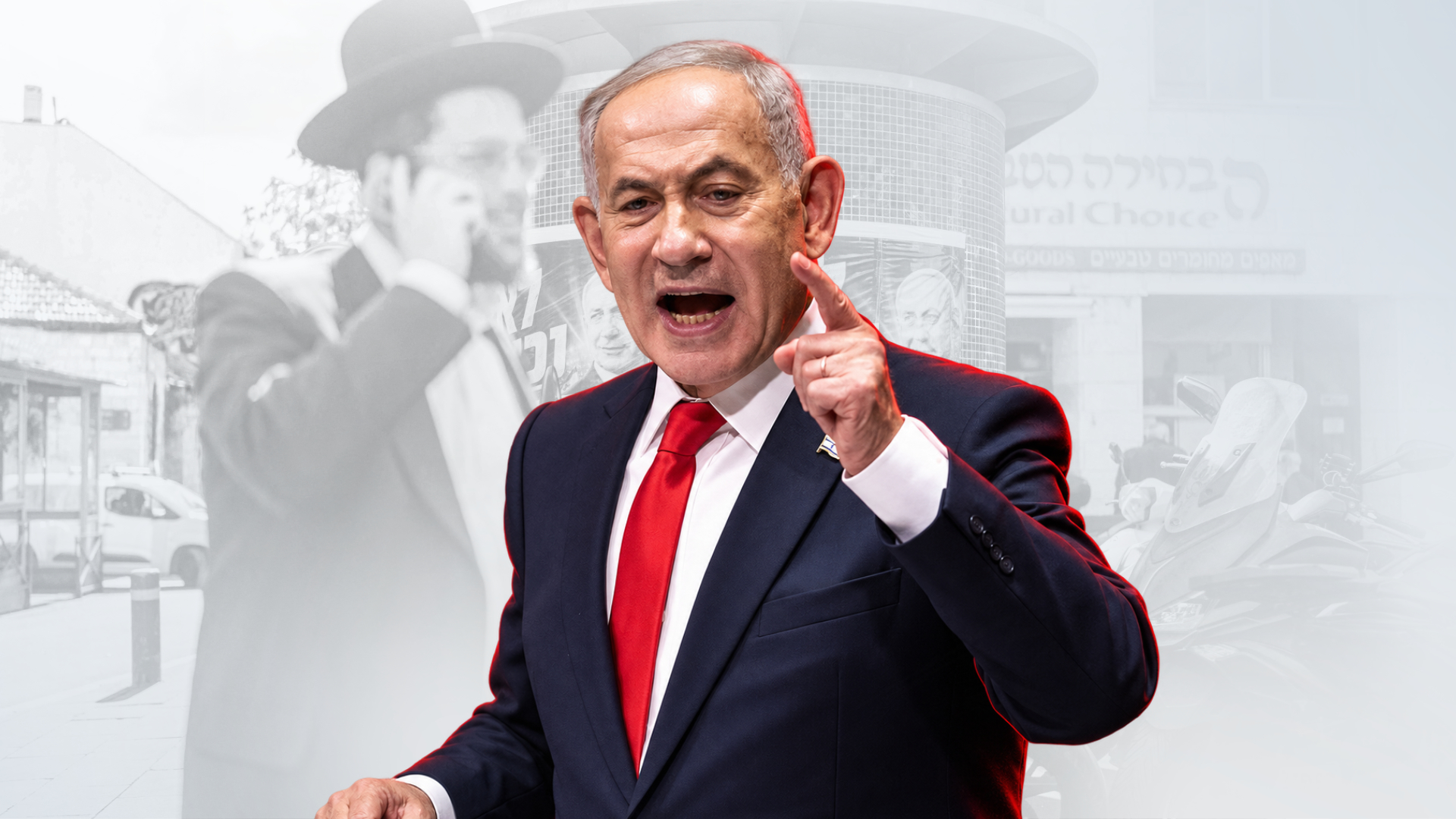
ERBIL (Kurdistan24) - Israeli Prime Minister Benjamin Netanyahu declared Thursday that forming a government with Arab-led political parties was unacceptable, reinforcing his opposition to their participation in Israel's next governing coalition as the country's election results left neither major political bloc with a parliamentary majority.
"It is forbidden to form a government with them [Arab-led parties]," Netanyahu wrote on X on Thursday, Oct. 29, following Tuesday's general election.
His statement came as Arab-led parties emerged with a historic 19 seats in Israel's 120-member parliament, the Knesset, placing them in a potentially decisive position during negotiations over the next government.
According to results reported Friday by Agence France-Presse (AFP), Netanyahu's right-wing and far-right bloc secured 53 seats, eight short of the 61 required for a majority. His Likud party remained the largest individual faction with 27 seats.
The opposition, led by former military chief Gadi Eisenkot, obtained 48 seats, while the Arab-led Ra'am and Joint List parties collectively secured 19 seats.
The outcome leaves Netanyahu and Eisenkot facing difficult negotiations. Although an alliance between Eisenkot's bloc and the Arab parties would command 67 seats, political disagreements over Arab participation have complicated that possibility.
Netanyahu had expressed similar objections in a speech to Likud supporters following the Oct. 27 election, according to remarks published by The Times of Israel on Oct. 28.
In that address, he called for a strong right-wing government and accused Arab parties of opposing Israel's existence, criticizing Israeli soldiers and maintaining unacceptable positions regarding Hamas.
Those accusations reflected Netanyahu's political characterization of the parties, rather than findings established against all Arab political representatives.
Netanyahu also placed Iran at the center of his post-election agenda, arguing that Israel should continue confronting what he described as an existential threat, in cooperation with U.S. President Donald Trump.
Arab Parties Become Potential Kingmakers
The electoral outcome has given Arab-led parties influence over coalition calculations at a time when their participation remains deeply contentious among Israel's principal political factions.
An Associated Press assessment by Tia Goldenberg identified cooperation between Eisenkot and the Arab parties as one of the clearest numerical routes to a parliamentary majority.
However, such an arrangement would require Eisenkot and his allies to overcome disagreements concerning national identity, military service, security policy and relations with Palestinian political movements.
Eisenkot has established conditions for parties seeking to join his government, including acceptance of Israel as a Jewish and democratic state, adherence to its Declaration of Independence and recognition of a duty to undertake military or civilian service.
He subsequently added that coalition partners must recognize Hamas as a terrorist organization that should be dismantled.
In an analysis published by i24NEWS on Oct. 27, senior Middle East correspondent Ariel Oseran examined how these requirements have complicated possible cooperation with the Arab-led parties.
Ra'am leader Mansour Abbas has acknowledged Israel's Jewish character as a political reality and supported voluntary civilian service organized by the Arab community without military involvement.
However, Abbas has declined to publicly designate Hamas a terrorist organization, while repeatedly condemning the attacks and atrocities committed on Oct. 7, 2023.
He has argued that demanding such declarations as a prerequisite for political participation imposes an inappropriate loyalty test on Arab representatives.
The issue carries particular weight because Ra'am previously participated in an Israeli governing coalition in 2021, demonstrating that cooperation between Jewish and Arab parties has an electoral precedent.
That government lasted approximately 18 months, according to the AP.
Dispute Over Arab Political Participation
Oseran's analysis also cited Arab-Israeli political commentator Mohammad Magadli, who questioned arguments that the October 7 attack justified excluding Arab parties from government.
Magadli emphasized that Arab and Jewish citizens had both suffered during the violence and that Arab political leaders had condemned the attacks.
He challenged the suggestion that Arab citizens should collectively face political exclusion because of Hamas's actions.
A May survey by Tel Aviv University, cited by i24NEWS, found that 77.2 percent of Arab Israeli respondents supported having an Arab party participate in the next government.
The survey also found that 75.8 percent favored voluntary civilian national service for Arab graduates.
These findings suggest substantial support for political participation among Arab respondents, although they do not resolve the disagreements among parties negotiating a coalition.
Election Allegations Add to Political Divisions
Netanyahu's rejection of cooperation with Arab-led parties followed allegations by his Likud party that Arab political groups had received foreign financial assistance to influence the election.
The accusations included claims concerning funding from Qatar, which were rejected by the Arab-led parties and the Qatari government.
According to AFP, government officials had not presented evidence substantiating the allegations.
Ra'am leader Abbas denied wrongdoing and welcomed an investigation, while the Joint List accused Netanyahu's allies of attempting to undermine the political influence of Arab voters.
Israel's domestic security agency, Shin Bet, said it was examining suspected irregularities but cautioned against attributing wrongdoing to an entire community that had participated lawfully in the election.
Electoral officials also rejected suggestions of widespread irregularities.
Eisenkot criticized the allegations, accusing Netanyahu's political camp of seeking to undermine public confidence in the election results.
Coalition Negotiations Face Uncertain Outcome
The opposition has several possible routes to government, but each involves political compromises.
The AP identified a unity government between Netanyahu and Eisenkot, efforts to attract defectors from rival political factions, or another election as possible outcomes.
A unity arrangement would face considerable resistance because Eisenkot and his allies have opposed serving under Netanyahu, citing his handling of the October 7 security failures and concerns over his leadership.
Joint List leader Yousef Jabareen told AFP that his party was prepared to cooperate with the opposition to remove Netanyahu but would not join a government.
That position leaves open the possibility of parliamentary support from outside a governing coalition.
For Netanyahu, excluding Arab-led parties remains a central political position, even as their parliamentary strength gives them potential influence over the formation of the next government.
If neither camp can assemble the required majority, Israel could face another election, with Netanyahu continuing to lead a caretaker government until a new administration is formed.