Qatari Mediators Hold 12-Hour Talks in Tehran, Axios Reports
Qatari mediators have held more than 12 hours of talks in Tehran on the American proposal to resume peace talks, as Pakistan voices cautious optimism.
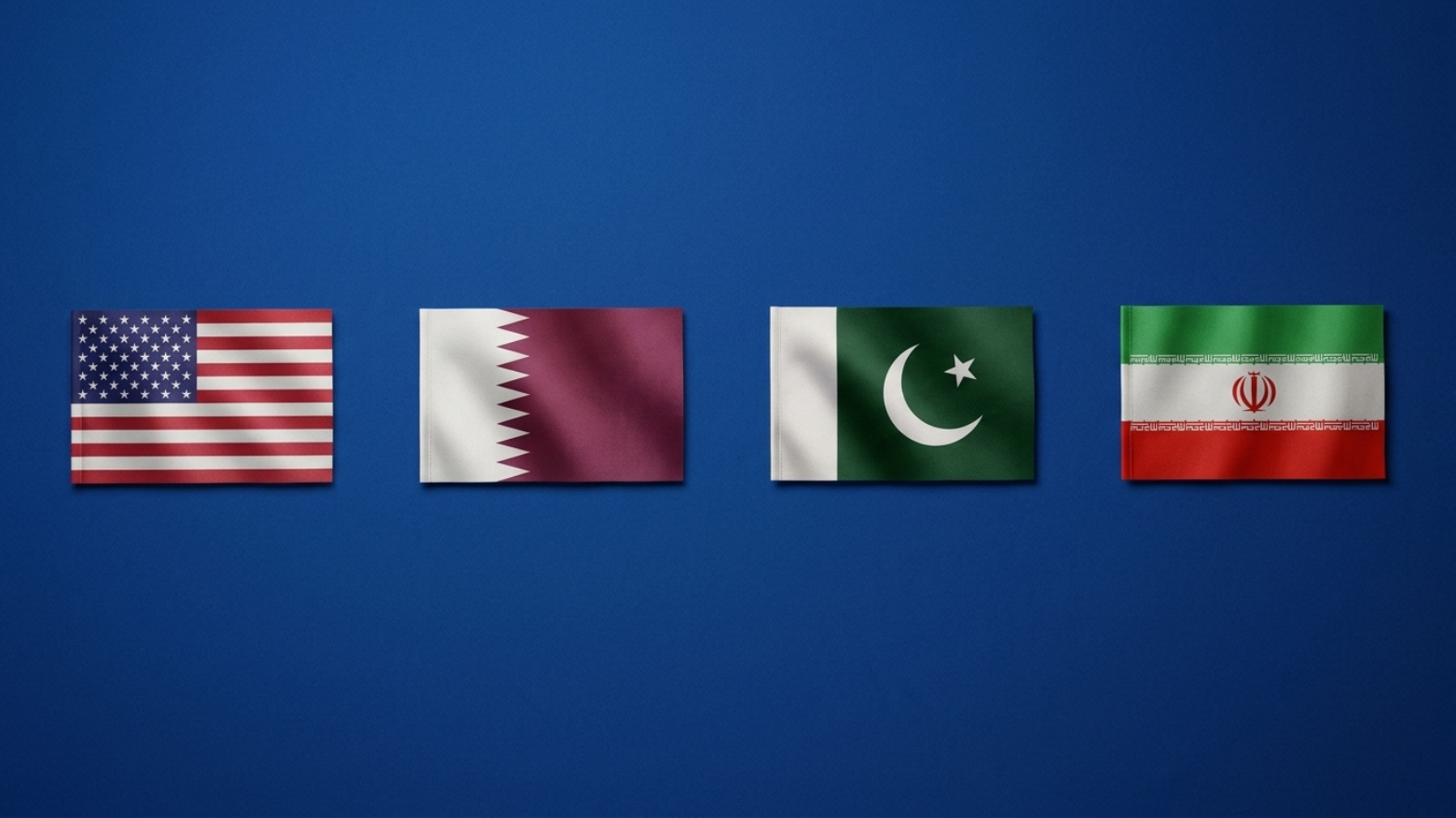
ERBIL (Kurdistan24) - A senior Qatari negotiating team has spent more than 12 hours in intensive talks with senior Iranian officials in Tehran, Axios reported on Friday, in an effort to ease tensions and reach an understanding between Washington and Tehran.
Citing a diplomatic source, the Qatari mediators are in the Iranian capital to discuss the American proposal to resume peace talks. Throughout the day, the delegation has also remained in direct and constant contact with the White House, the source said.
Barak Ravid, Global Affairs Correspondent for Axios, shared the details in a post on X. “The talks are still ongoing in an effort to achieve a breakthrough that will enable reaching an agreement between the US and Iran,” the diplomatic source told him.
The Qatari effort comes as Pakistan’s military says it is “cautiously optimistic” about its own mediation between Iran and the United States.
Speaking to Reuters in Rawalpindi on Friday, in his first interview since a high-level delegation visited Tehran this week, Lt. Gen. Ahmed Sharif Chaudhry, director general of Inter-Services Public Relations, described the outlook in those terms.
Army chief Field Marshal Asim Munir, Pakistan’s chief mediator in its efforts to de-escalate the now eight-month-old Iran war, has visited Tehran twice this month, most recently on Monday alongside Saudi and Turkish officials.
Asked whether the trips were a positive sign, Chaudhry said: “Why would the Field Marshal be going twice if it is not for some positivity? So yes, of course.”
He added that “powerful spoilers and detractors” still believe the conflict serves them, without naming them. Chaudhry declined to say what was discussed in Tehran or whether the United States had backed the trip.
Saudi Defense Minister Prince Khalid bin Salman and Turkish intelligence chief Ibrahim Kalin joined Munir in Tehran on Monday.
Their two countries signed a joint defense pact with Pakistan on Aug. 7, stating that an attack on any signatory will be treated as an attack on all.
The three signatories say the Mecca Joint Defense Agreement is aimed at collective deterrence and regional security, while analysts see its evolution as closely tied to efforts by regional powers to manage the fallout from the Iran-US confrontation.
After Monday’s talks, Mohsen Rezaei, secretary of Iran’s Supreme National Security Council, said regional security should be ensured by regional countries without foreign intervention.
Chaudhry said the wording of the pact does not bar new members when asked whether Iran could join.
“Anyone who has a shared vision of collective deterrence and regional peace, why not? Everyone is most welcome,” he said, adding that the decision rests with the political leadership of the three principal parties.
On whether more Pakistani troops were being sent to Saudi Arabia under the agreement, he said that would depend on the situation and the decision of both countries’ political leadership.
He said Pakistan is committed to defending Saudi Arabia and the holy sites of Mecca and Medina. “We are not part of the Yemeni conflict, which is an intra-Yemen conflict,” he added.
Fighting between Saudi Arabia and Yemen’s Iran-aligned Houthi group has been reignited by the Iran conflict, stoking fears of a wider war.
With Qatari and Pakistani mediators both active, diplomacy remains the focus of efforts to bring the two sides toward an agreement.