Iran's Supreme Leader Warns US, Israel of Unrestricted Response to Renewed Attacks
Mojtaba Khamenei orders military commanders to update target lists as Tehran warns any new confrontation could spread across the region
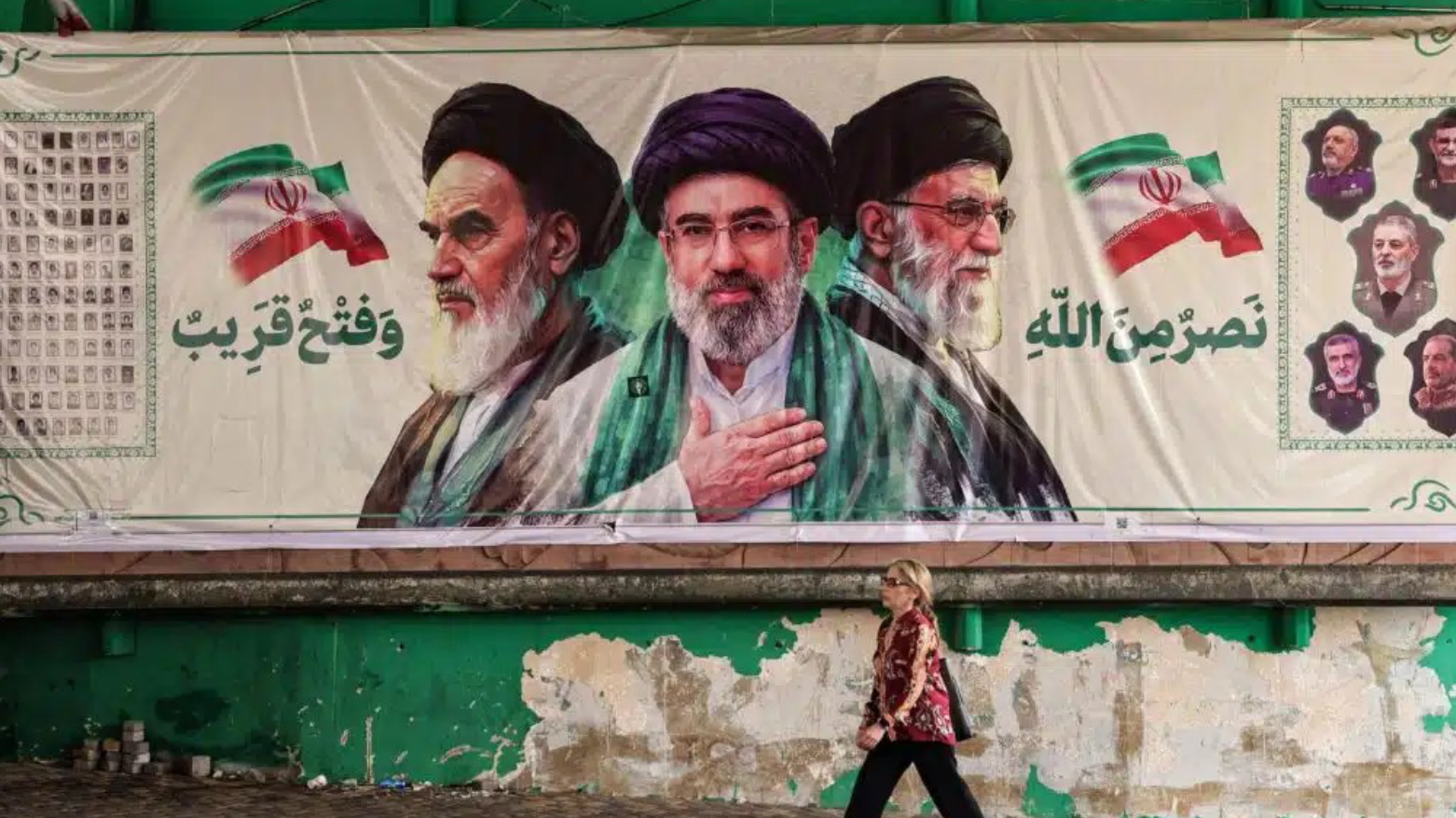
ERBIL (Kurdistan24) — Iran's Supreme Leader Mojtaba Khamenei on Saturday warned the United States and Israel that any renewed military action against the Islamic Republic would trigger an immediate response without geographical restrictions, as tensions rise over the possibility of a new round of fighting following upcoming US midterm elections.
In a statement issued after a meeting with senior military commanders, Khamenei said Iran's armed forces and people would determine the timing and conditions for ending any renewed hostilities.
"Any level or type of threat must be met with an immediate, impactful and geographically unrestricted response," he said, according to the statement.
Khamenei also instructed military commanders to update Iran's target lists to include all types of tangible and intangible assets belonging to what Tehran describes as its American-Israeli adversaries.
The meeting reportedly brought together Iran's top military officials, including Armed Forces Chief of Staff Ali Abdollahi, Army Commander Amir Hatami, and Islamic Revolutionary Guard Corps (IRGC) Commander Ahmad Vahidi.
It was the first publicly reported encounter between Khamenei and the country's senior military leadership since he assumed the supreme leadership in March.
Khamenei has not appeared publicly since taking over following the killing of his father, Ayatollah Ali Khamenei, in US-Israeli strikes that began the war on February 28.
His warning comes amid renewed threats from Washington and Tel Aviv, raising concerns that the conflict could resume after the US midterm elections scheduled for November 3.
US President Donald Trump has indicated that he is considering further military action against Iran, saying last weekend that he was weighing whether to "finish them off."
Israeli Prime Minister Benjamin Netanyahu has also described the confrontation as a "historic, one-time opportunity" to topple Iran's government.
The developments come as both countries face important political contests. Israel's recent legislative elections left Netanyahu's political camp with the largest number of seats but without a parliamentary majority, leaving the formation of the next government uncertain.
In the United States, the November 3 midterm elections could reshape the balance of power in Congress, with potential consequences for Trump's ability to advance his domestic and foreign policy agenda.
Diplomatic efforts amid rising tensions
Despite the increasingly confrontational rhetoric, diplomatic efforts are continuing to prevent a resumption of hostilities.
A Qatari delegation arrived in Tehran on Friday for discussions with senior Iranian officials, as Qatar and Pakistan continue their mediation efforts between Washington and Tehran.
The diplomatic initiative follows reports that US Vice President JD Vance sent a letter to Iran's Supreme National Security Council chief Mohsen Rezaei, proposing renewed negotiations to prevent further escalation.
The reported communication, delivered through Qatari mediators, is part of Washington's efforts to revive diplomatic engagement. The contents of the letter have not been publicly disclosed in full.
However, the negotiations have yet to produce a lasting agreement, with significant disagreements remaining over security arrangements, Iran's nuclear programme, and the Strait of Hormuz.
Iranian Army spokesman Mohammad Akraminia warned on Saturday that any renewed US military action would expand the geographical scope of the conflict.
"If the US president once again embarks on more regional adventurism under pressure from, and in an attempt to appease, the Zionists, the flames of war will undoubtedly engulf a much wider geographical area," he said in a post on X.
Iranian Foreign Minister Abbas Araghchi also issued a warning, saying the country's armed forces would deliver an "Earth-shattering blow" against anyone who dared to harm the Iranian people. He added that there would no longer be any "red lines."
Strait of Hormuz remains a major concern
The confrontation has also raised concerns over maritime security and global energy supplies, particularly around the strategically important Strait of Hormuz.
Since the outbreak of the war, Tehran has restricted shipping traffic through the waterway, through which approximately one-fifth of the world's oil consumption normally passes.
The restrictions have disrupted international energy markets and contributed to rising oil prices, adding economic pressure as the US approaches its midterm elections.
Iran has also previously threatened to target undersea infrastructure in the Strait of Hormuz, raising concerns about potential disruptions to international communications and other critical infrastructure.
The latest warnings from Tehran underscore the risk of a wider regional confrontation if diplomatic efforts fail, particularly as Washington and Israel continue to signal the possibility of renewed military action.