Iraq's Oil Production Exceeds 4 Million bpd as Kurdistan Export Deal Remains in Force
Iraq's Oil Ministry says crude production exceeds four million barrels daily and confirms the Kurdistan Region's tripartite export agreement remains active.
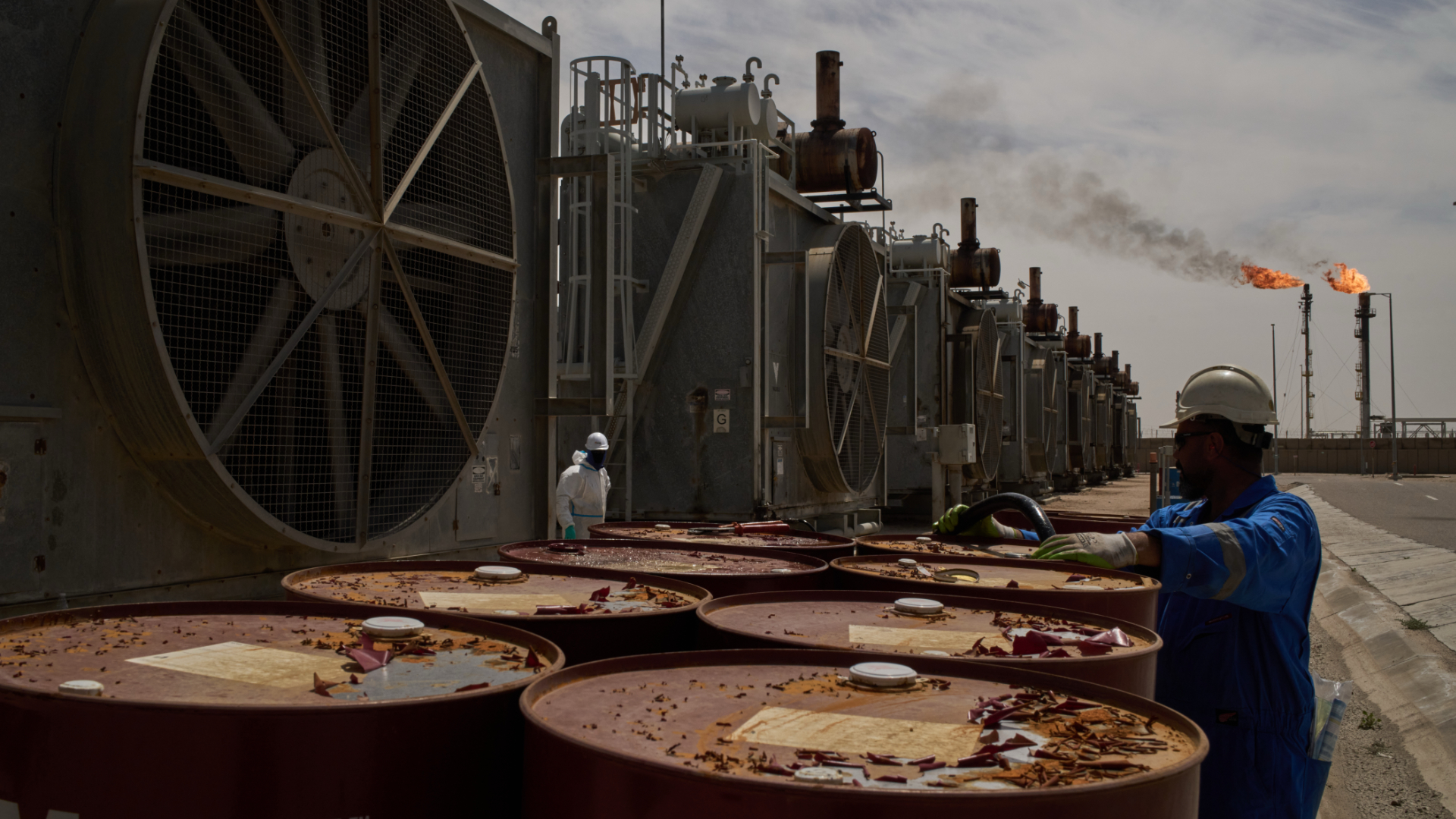
ERBIL (Kurdistan24) - Iraq's crude oil production has exceeded four million barrels per day, while the agreement governing exports from the Kurdistan Region through the federal oil marketing agency remains in force, an Iraqi Oil Ministry spokesman confirmed to Kurdistan24 on Saturday.
Salim Rukabi, spokesperson for the federal Ministry of Oil, said the country's daily crude output had recently risen above the four-million-barrel threshold. He separately confirmed that the tripartite arrangement for transferring Kurdistan Region crude to the State Organization for Marketing of Oil (SOMO) for export had not been suspended.
The two developments concern different aspects of Iraq's oil industry: nationwide crude production and the mechanism through which oil produced in the Kurdistan Region is marketed internationally.
Rukabi did not provide a precise production total beyond four million barrels daily or specify the current volume of crude exported under the regional agreement.
His confirmation is particularly relevant to continuing coordination between the federal government and the Kurdistan Regional Government (KRG), as the arrangement provides an agreed framework for transferring the Region's crude to SOMO for international marketing.
Under the tripartite agreement, the federal authorities, the KRG and participating oil companies coordinate the handover and export of crude produced in the Kurdistan Region.
The framework followed negotiations intended to establish an agreed mechanism for exports and address outstanding technical and financial arrangements involving the participating parties.
In September 2025, the KRG Ministry of Natural Resources said it and participating companies had submitted their formal approvals to the federal Oil Ministry as part of the arrangements for exporting crude through SOMO.
The KRG and federal authorities subsequently continued coordinating oil export arrangements. In March 2026, the KRG negotiating team announced an agreement concerning exports from Kirkuk and Kurdistan Region oilfields through the pipeline to the Turkish port of Ceyhan.
The March announcement also addressed technical coordination, protection of oil infrastructure and the transfer of export revenues to the federal treasury.
Rukabi's latest remarks indicate that Baghdad continues to recognize the tripartite mechanism governing Kurdistan Region exports, with no suspension announced by the ministry.
The confirmation comes against a backdrop of heightened concern over energy transportation elsewhere in the Middle East, particularly the security of shipping through the Strait of Hormuz.
On Friday, Iran's Islamic Revolutionary Guard Corps (IRGC) claimed that four oil tankers had struck naval mines and caught fire while attempting to navigate the strategic waterway.
According to The Associated Press, citing Iranian state media, one of the vessels was described as carrying more than two million barrels of crude oil. The agency said it could not independently verify the Iranian claims.
Oman separately reported evacuating 25 crew members from a tanker that caught fire near its Musandam coast, although the relationship between that incident and the Iranian accounts remained unclear.
For Iraq's oil sector, the ministry's latest announcement provides confirmation on two central issues: national crude production has surpassed four million barrels per day, and the tripartite framework for exporting oil from the Kurdistan Region remains in effect.