Article 140 Committee Declares Demographic Changes in Sinjar Invalid
Iraq's Article 140 Committee says Sinjar and other Nineveh areas remain disputed and orders officials to prevent demographic changes without committee review.
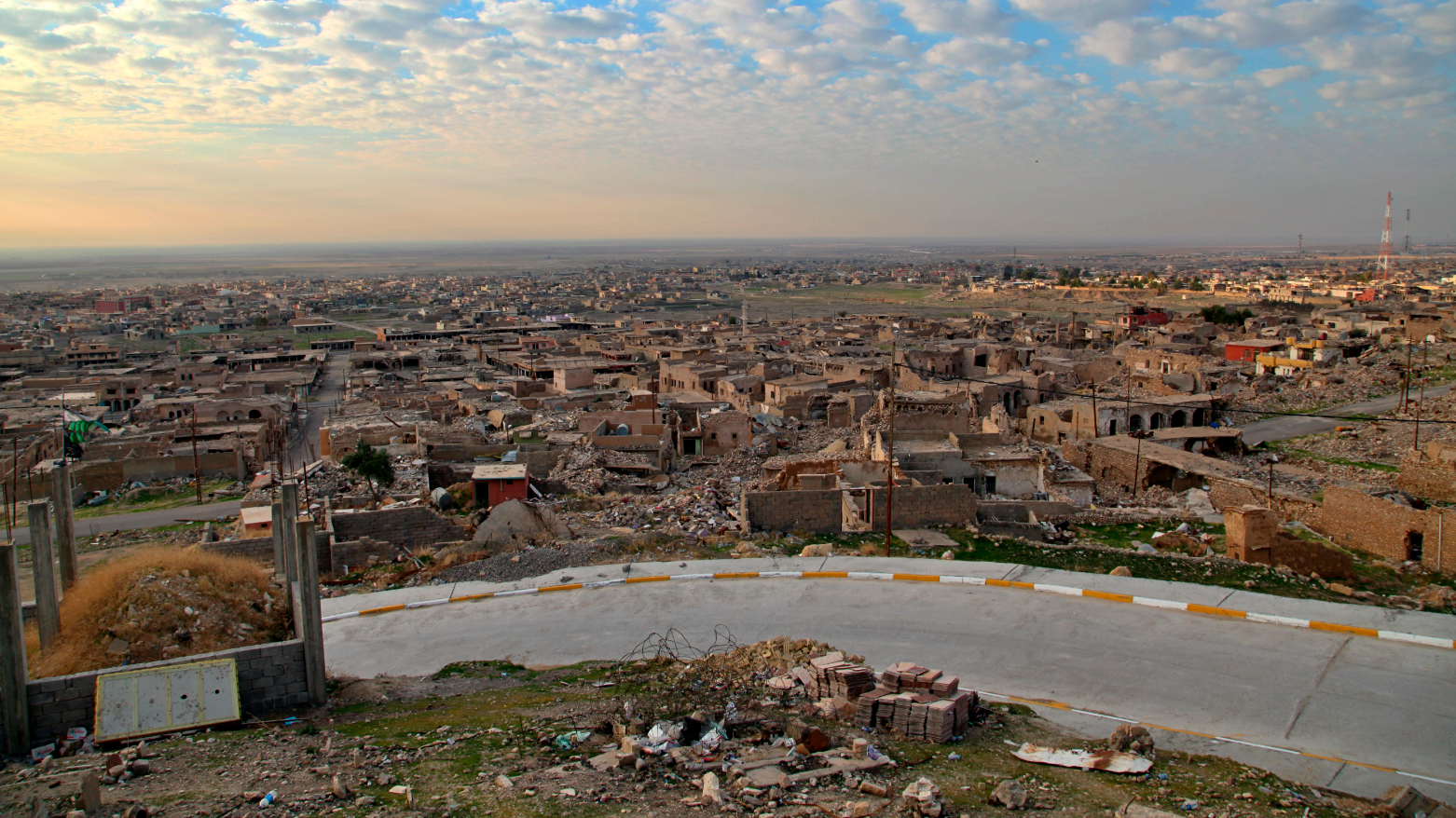
ERBIL (Kurdistan24) - Iraq's Supreme Committee for the Implementation of Article 140 has instructed Nineveh authorities to refrain from administrative measures that could alter the population makeup of Sinjar and other disputed areas, affirming that such decisions must be referred to the committee before they are taken.
The directive, contained in an official letter signed by committee chairman Hadi al-Amiri and addressed to Nineveh Governorate, identifies Sinjar and several other districts and subdistricts as territories whose constitutional status remains unresolved.
It warns that measures conflicting with the committee's procedures and causing demographic changes are invalid.
The letter carries particular importance for the Kurdistan Region because it addresses the administration of Kurdistani territories outside the Region's control, where Kurdish authorities have long expressed concerns that changes to land rights, population records and administrative appointments could affect the constitutional process.
"Any administrative measure that causes demographic change in Nineveh is illegal and invalid," the committee stated, according to the document reported by Kurdistan24.
The correspondence identifies Sinjar district, along with Bashiqa, Qahtaniya/Gir Uzer and Zummar, among the locations covered by its directives. It also names Tel Kaif district and the areas of Alqosh, Wana and Faida, as well as Makhmur district.
Al-Amiri's committee emphasized four requirements.
First, authorities must protect the rights of residents covered by Article 140 decisions.
Second, local officials cannot introduce measures that change demographics contrary to the committee's procedures.
Third, its decisions must be implemented by the relevant authorities.
Finally, Nineveh officials must formally consult the committee before taking administrative action in the listed territories.
The committee presented those instructions as binding under Iraq's Constitution and said no administrative authority could disregard them. Its letter does not announce a referendum, settle Sinjar's final administrative status or identify any particular local decision that has already been overturned.
Copies were sent to the Kurdistan Regional Government (KRG) Representation in Baghdad, its legal department and the committee's Nineveh office, placing the KRG among the institutions formally notified of the directive.
The instructions address a longstanding dispute dating to policies adopted under Saddam Hussein's Ba'athist government.
Those policies displaced Kurdish and other residents, relocated Arab families into contested areas and altered land ownership and administrative arrangements. Reversing their consequences became part of Iraq's constitutional settlement after 2003.
Article 140 of the 2005 Constitution, building on Article 58 of the Transitional Administrative Law, requires normalization, a census and then a referendum to establish residents' wishes concerning the status of Kirkuk and other disputed territories.
The constitutional deadline of Dec. 31, 2007, passed without completion of that process.
Although the deadline expired, the provision did not cease to apply.
Iraq's Federal Supreme Court affirmed in 2019 that Article 140 remained effective until its requirements were fulfilled. Its continued legal force has not translated into the referendum contemplated by the Constitution.
For the Kurdistan Region, the central concern is that demographic or administrative measures taken before those stages are completed could affect residents' rights and the conditions under which a future decision is made.
The committee's letter addresses that concern by requiring prior review rather than allowing local authorities to act unilaterally.
The KRG has repeatedly raised objections to developments in Kurdistani territories outside its administrative control.
In May 2024, its Council of Ministers called for an end to reported violations and for normalization of administrative, military and security conditions. It also established a committee to examine a roadmap addressing land-related disputes.
A February 2026 KRG report alleged renewed Arabization through administrative appointments, agricultural land arrangements and changes to population documentation following the federal government's reassertion of control over Kirkuk and other territories on Oct. 16, 2017.
The report also said more than 53,000 people had been displaced from Khurmatu in the aftermath of those events. Those figures and allegations represent the KRG's account, rather than findings established in al-Amiri's latest letter.
Population records have remained contentious.
Kurdish officials said Iraq's November 2024 national census was conducted for development purposes and did not replace the census required under Article 140. The KRG's Kurdistani Areas Board subsequently criticized what it described as a failure to apply an agreed historical population baseline when census results were released in 2025.
Sinjar also faces separate questions involving security, administration and the rights of its Ezidi residents.
The KRG has called for implementation of the 2020 Sinjar Agreement, while the broader constitutional dispute over the district's status remains unresolved. Neither process is completed by the committee's new instructions.
The document does not set a timetable for Article 140's remaining stages or explain how Nineveh authorities will review existing decisions. It does, however, state the committee's position that local administrative measures must not undermine residents' rights while the constitutional process remains unfinished.
Its immediate significance lies in placing Sinjar and the other named areas explicitly within that framework, while leaving the larger questions of restitution, representation and their eventual administrative status to the procedures prescribed by Article 140.