Fahmi Burhan: Kurdistani Territories Are Central to Kurdish Identity
Fahmi Burhan calls for implementing Article 140, joint Erbil-Baghdad administration and protection of Kurdish rights amid demographic concerns in Kurdistani areas.
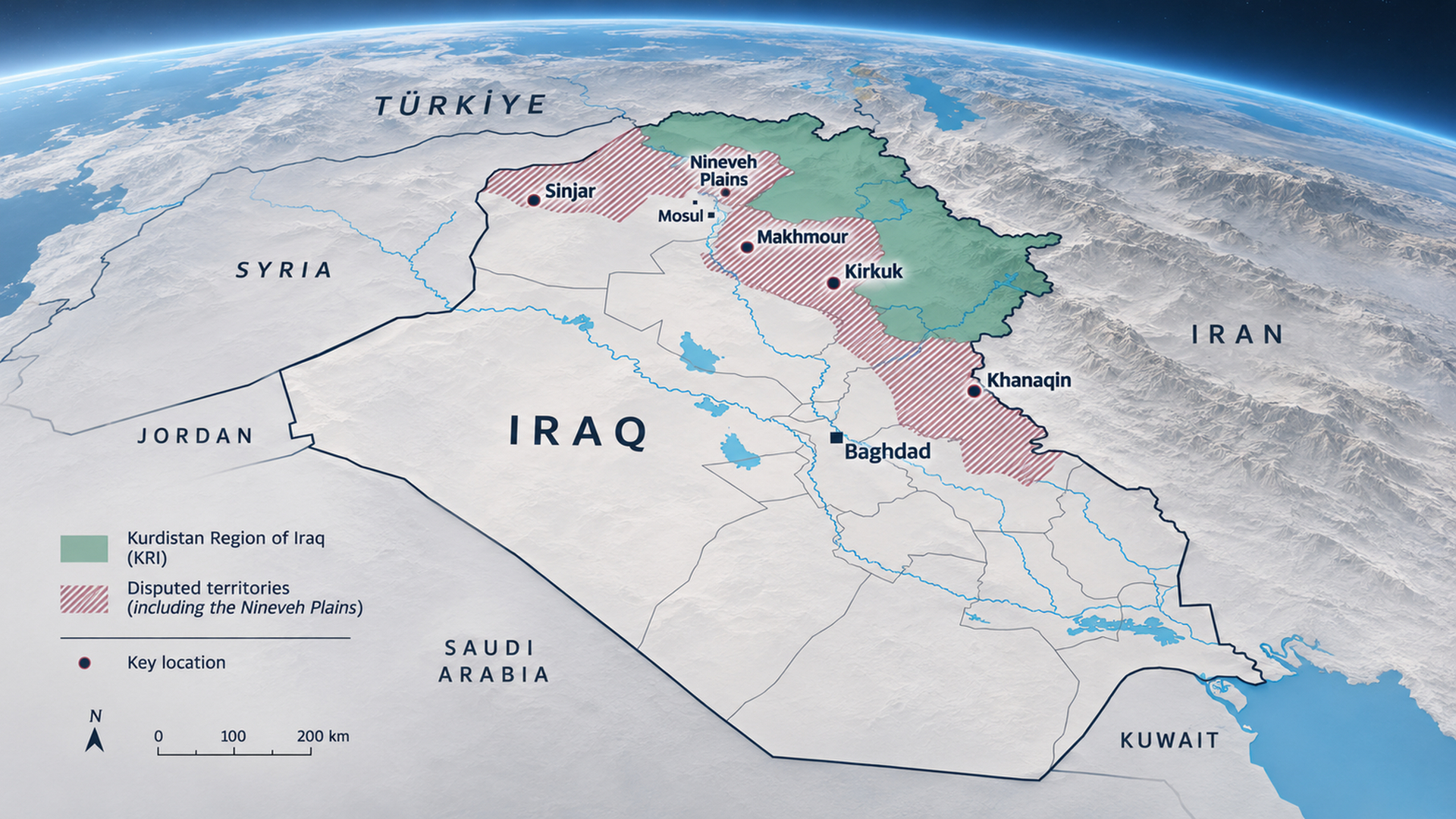
ERBIL (Kurdistan24) - Kirkuk, Khanaqin, Sinjar, Makhmour and the Nineveh Plains represent the strategic depth and national identity of the Kurdish people, Fahmi Burhan, head of the Board for Kurdistani Territories Outside the Kurdistan Region's Administration, said, stressing that their future must be determined through Iraq's Constitution rather than electoral calculations or temporary security arrangements.
Speaking on Kurdistan24's Basi Roj program, Burhan called for the implementation of Article 140 of the Iraqi Constitution and proposed joint administration and security coordination between Erbil and Baghdad.
He also warned that demographic changes and political divisions within the Kurdistan Region had adversely affected the Kurdish position in territories whose final status remains unresolved.
For Burhan, the dispute extends beyond parliamentary representation and involves questions of historical rights, national identity and the constitutional relationship between the Kurdistan Regional Government (KRG) and Iraq's federal authorities.
"Kurdistani areas such as Kirkuk, Khanaqin, Sinjar, Makhmour and the Nineveh Plains are a central cause and constitute the strategic and historical depth of the Kurdish people.
Throughout the past 100 years, all Kurdish revolutions, armed struggles and diplomatic efforts have been aimed at determining the fate of these areas," he said.
Burhan argued that the importance of these territories could not be measured by the number of parliamentary seats secured by individual Kurdish political parties.
"The issue of these areas should not be reduced solely to electoral calculations or to winning four or five parliamentary seats in Kirkuk or Nineveh.
We have a national and historical entitlement. Therefore, whether a political party has a seat in Kirkuk or not cannot diminish this historical and national reality," he said.
He also identified internal political disagreements within the Kurdistan Region as a factor that had negatively affected the territories, suggesting that the issue required attention beyond competition among political parties.
Article 140 as the Basis for Resolution
Burhan emphasized that Article 140 remained the essential framework for resolving disagreements over the territories' administrative status, describing the provision as a political obligation as well as a constitutional one.
"Nothing can serve as a substitute for the constitution.
The basis for resolving these issues is Article 140 of the Iraqi Constitution, which is fundamentally a political article, not merely a legal one. Although security understandings between Erbil and Baghdad are important, such understandings cannot replace Article 140," he said.
Article 140, incorporated into Iraq's 2005 Constitution, establishes a three-stage process involving normalization, a census and a referendum to determine the status of Kurdistani territories outside the Kurdistan Region's administrative control.
The constitutional deadline for completing the process was Dec. 31, 2007, but the referendum was never held. Iraq's Federal Supreme Court affirmed in 2019 that Article 140 remains in force until its requirements are fulfilled.
Burhan proposed establishing joint administration between the KRG and the federal government within Iraq's federal and democratic constitutional system.
He also called for the reactivation of joint security operations rooms extending from Khanaqin to Sinjar, arguing that such arrangements would help prevent Baghdad from making unilateral decisions affecting the territories.
However, he maintained that security coordination, while necessary, could not replace the constitutional procedures intended to resolve their final status.
Concerns Over Demographic Changes
Burhan raised concerns about demographic developments in Kirkuk and other Kurdistani territories, accusing Baghdad of failing to implement constitutional and legal provisions intended to protect residents' rights.
He cited legislation addressing agricultural land disputes, saying that although a law had been enacted, the necessary implementation instructions had not been issued.
The absence of those instructions, he argued, illustrated the difficulties confronting efforts to address longstanding land-related disputes.
Burhan also referred to population changes recorded since 2003 and following Iraq's latest census.
According to his figures, Kirkuk's population has exceeded two million, while Hawija, Abbasi and Zab collectively account for approximately 500,000 residents.
He asserted that some population growth had been deliberately planned and had altered the demographic balance to the disadvantage of Kurdish and Turkmen communities.
His concerns come as Iraq's Supreme Committee for the Implementation of Article 140 has issued instructions intended to prevent administrative decisions that could produce demographic changes in Kurdistani territories.
In a rare political stance, Shiite politician and Popular Mobilization Forces (PMF) figure Hadi al-Amiri formally acknowledged Sinjar and several other districts and subdistricts as "disputed territories."
In a letter addressed to the Nineveh Governorate and signed in his capacity as committee chairman, al-Amiri identified these areas as falling under the committee’s constitutional mandate.
Read More: Article 140 Committee Declares Demographic Changes in Sinjar Invalid
The committee instructed local authorities not to take administrative measures affecting those territories without first referring them for review. It also stated that decisions conflicting with its procedures and resulting in demographic changes would be invalid.
The directive covers Sinjar and other areas of Nineveh, including Bashiqa, Qahtaniya/Gir Uzer, Zummar, Tel Kaif and Makhmur.
Although the committee reaffirmed the constitutional protections applying to those areas, its instructions did not determine their final administrative status or establish a timetable for completing Article 140.
Longstanding Constitutional Dispute
The dispute over the territories has historical roots in Arabization policies implemented under Saddam Hussein's Ba'athist government, which displaced Kurdish and other residents, relocated Arab families and changed land ownership and administrative boundaries.
Following the federal government's reassertion of control over Kirkuk and other territories in October 2017, the KRG repeatedly raised concerns about administrative and demographic changes.
In February 2026, the KRG's Media and Information Office alleged that changes involving administrative appointments, agricultural land and population documentation amounted to renewed Arabization.
These remain allegations advanced by the KRG rather than findings established by the Article 140 Committee's latest directive.
Population records have also generated disagreements, with Kurdish officials maintaining that the 2024 nationwide census, conducted for development planning, did not replace the census specifically required under Article 140.
Burhan's remarks place these disputes within a broader national and constitutional framework, arguing that political representation, administrative arrangements and security agreements cannot substitute for implementing the constitutional process.
His proposed joint administrative and security mechanisms remain proposals, while the normalization, census and referendum required under Article 140 have yet to be completed.