Kirkuk Cuts Generator Electricity Prices to 15,000 Dinars After Protests
Kirkuk cuts private generator electricity to 15,000 dinars per ampere after protests, with inspections ordered and residents still seeking lower prices.
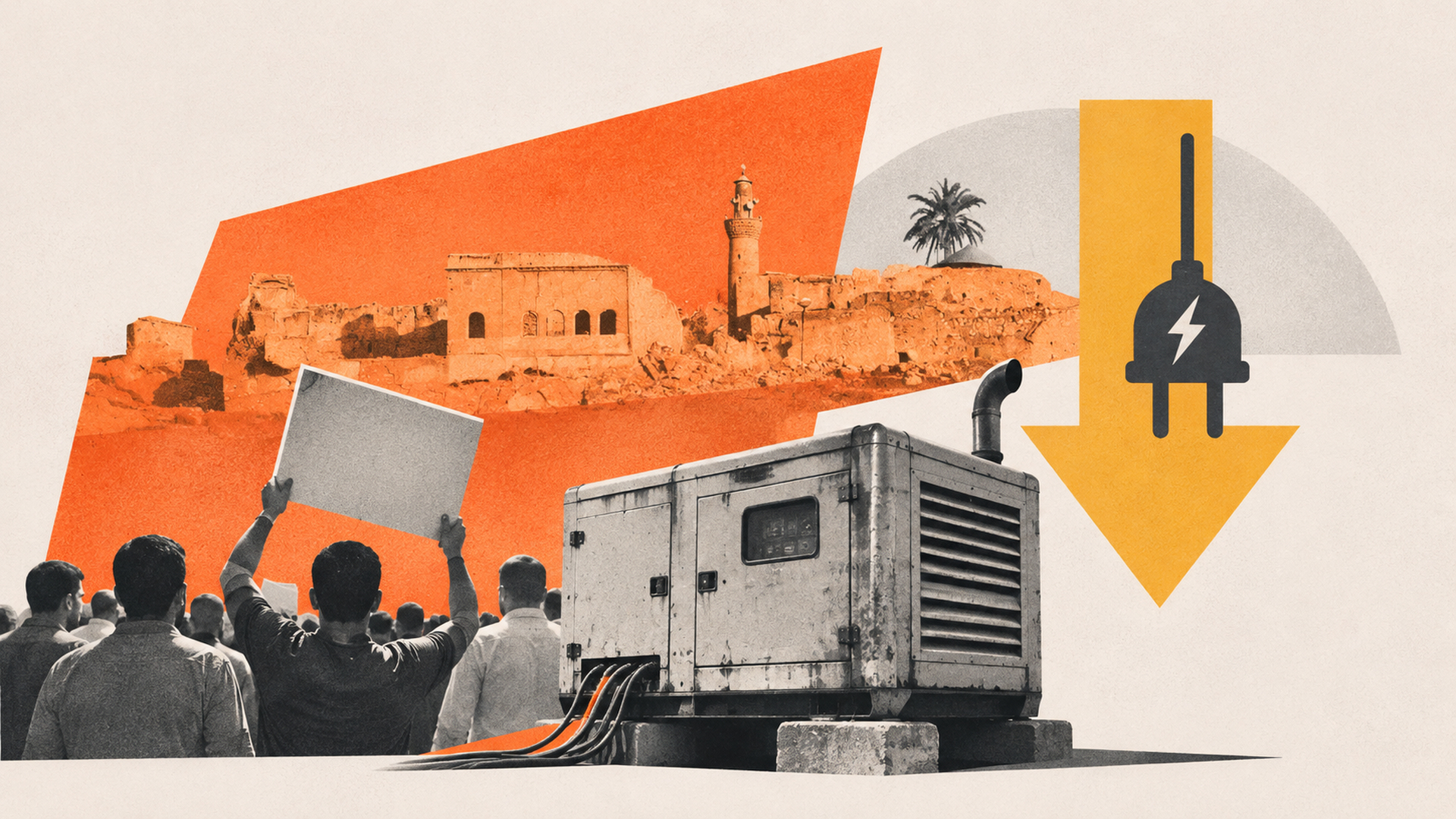
ERBIL (Kurdistan24) - The Kirkuk Central District Administration has reduced the monthly charge for electricity supplied by private generators to 15,000 Iraqi dinars per ampere, revising an earlier rate of 18,000 dinars following demonstrations across the city over rising household expenses.
The new rate, announced in an official document on Monday, Nov. 2, 2026, applies uniformly to all neighborhoods of Kirkuk, according to the directive signed by the district's administrative official (Qaimmaqam).
Generator operators have been instructed not to collect additional fees, and inspection committees have been assigned to monitor compliance.
The decision follows a day of protests in Kirkuk, a Kurdistani territory outside the Kurdistan Regional Government's (KRG) administrative control, where Kurdish, Arab and Turkmen residents challenged the original tariff, saying it placed an unacceptable financial burden on households.
The revised price represents a reduction of 3,000 dinars per ampere, but remains above the 8,000 to 9,000 dinars demanded by some demonstrators.
Explaining its intervention, the district administration cited difficult economic and living conditions and said it sought to ease pressure on residents.
"In view of the difficult economic and living conditions facing citizens, and in order to take the public interest into account and ease the burden on them, it has been decided that the price of one ampere of electricity from private generators in all areas of Kirkuk city will be uniformly set at 15,000 dinars, without exception," the official document stated.
The order requires every private generator owner to observe the fixed rate. Dedicated field committees will check whether operators implement the decision, while those found charging more than the permitted amount face legal and administrative measures.
The announcement did not specify the penalties or provide a timetable for the committees' inspections.
Protests Spread Across Kirkuk Neighborhoods
The reduction comes after residents took to the streets on Sunday, Nov. 1, in several parts of Kirkuk.
Protesters objected to the administration's decision to set the November tariff at 18,000 dinars per ampere, particularly because they believed electricity demand was lower than during the summer.
Kurdistan24's correspondent in Kirkuk Hemn Delo reported demonstrations in Musalla, Asra wa Mafqudin, Shuhada, Uruba and Kurdistan neighborhoods.
In some locations, protesters blocked sections of major roads with burning tires and other fires, disrupting traffic as they pressed for a lower price.
Tensions were particularly acute in the Huzairan neighborhood, where protesters and Civil Activities Police clashed. Around five police officers were injured, according to the correspondent's account. The reporting did not provide a figure for injured protesters.
Residents from Kirkuk's Kurdish, Arab and Turkmen communities joined the demonstrations, making the electricity tariff a shared concern across the city's different communities.
Several participants told Kurdistan24 that many people in the affected neighborhoods lived on limited incomes and could not afford the new charges.
They also challenged the gap between the November tariff and prices they said households had previously paid.
Protesters cited a rate of 7,000 dinars per ampere during the summer and argued that private generator electricity in nearby Mosul did not exceed 9,000 dinars.
Some residents recalled a tariff of 3,000 dinars during the tenure of the late Kirkuk governor Najmadin Karim.
Those comparisons reflect statements made by demonstrators; the reporting did not include independently verified price schedules for those periods or other cities.
Protesters interviewed on Sunday said they would accept no more than 8,000 or 9,000 dinars per ampere. The district's revised price therefore addresses part of their complaint but does not reach the level they requested.
Provincial Council Calls Emergency Meeting
The demonstrations also prompted the Kirkuk Provincial Council to call an emergency meeting to discuss generator prices.
Hassan Majid, head of the Kurdistan Democratic Party (KDP) faction in the council, told Kurdistan24 that council chairman Mohammed Hafiz had written to members calling for an urgent meeting at 10 a.m. Monday.
The council's stated purpose was to review the financial burden on residents and seek a prompt solution.
The announcement of the meeting preceded the district administration's newly reported tariff reduction, but the available accounts do not establish whether the council meeting produced that decision or describe any resolutions adopted.
Although the district directive makes the 15,000-dinar charge uniform across Kirkuk, it does not explain the calculation used to set the revised rate or address the cost concerns of generator operators.
No response from private generator owners was included in the accounts of the decision and protests.
For residents, the immediate question is whether owners will apply the new rate without additional charges. For local authorities, enforcement now rests with the inspection committees and the legal and administrative measures outlined in the district's order.
Kirkuk's revised tariff reduces the amount households will be asked to pay compared with the initial November decision, but the difference between the official rate and the protesters' demands remains unresolved.
Kurdistan24 Correspondent Hemn Delo contributed to this report.