Erbil Exports Over 422,000 Tons of Produce to Iraqi Provinces
Erbil shipped 422,919 tons of local agricultural produce to central and southern Iraqi provinces in 10 months, with potatoes and onions leading the trade.
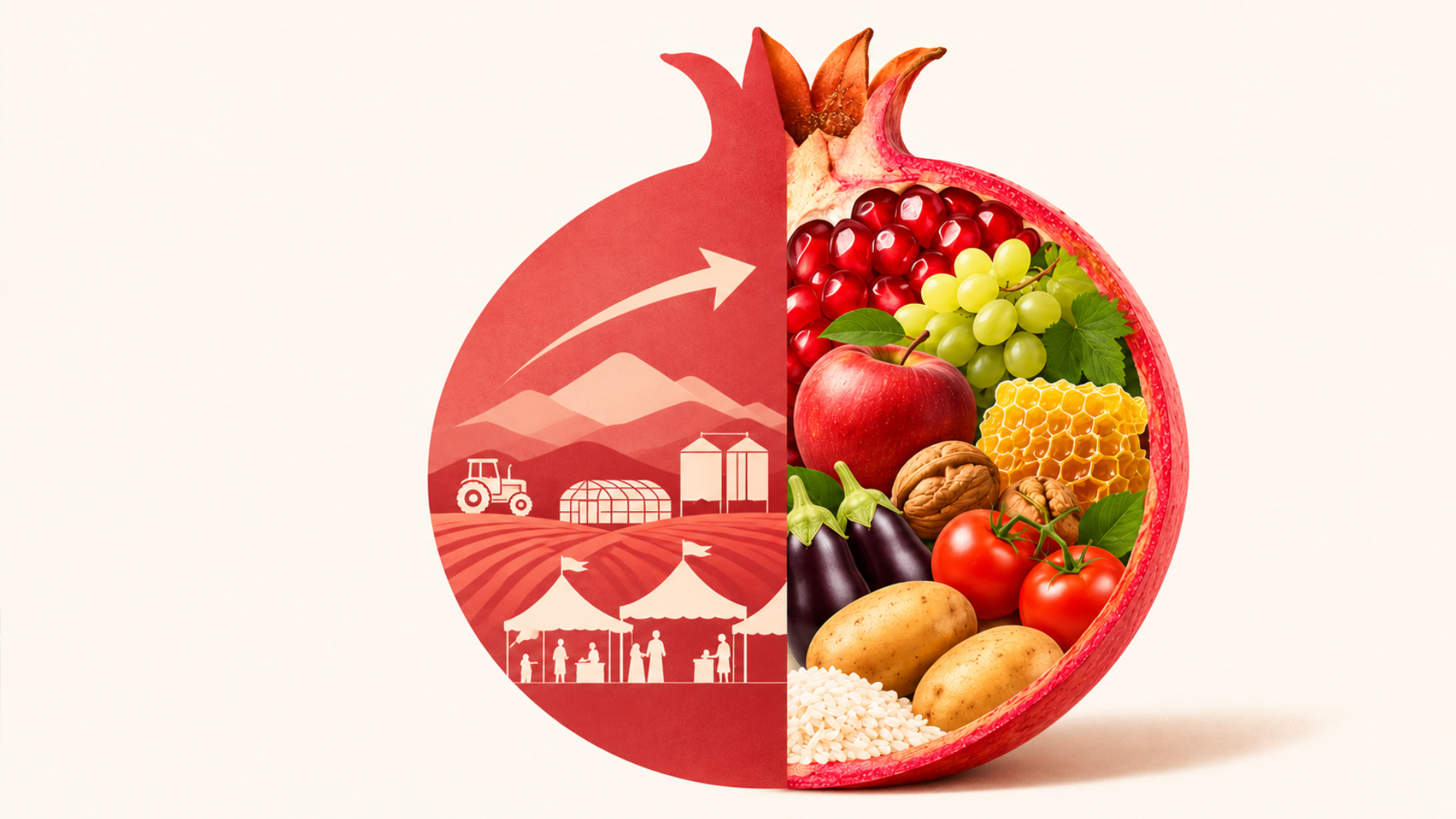
ERBIL (Kurdistan24) - Farmers in the Kurdistan Region shipped 422,919 tons of locally produced fruits and vegetables to central and southern Iraqi provinces through Erbil's wholesale market during the first 10 months of 2026, with potatoes accounting for the largest recorded share, according to new figures from the Erbil Agriculture Directorate.
Hemin Sayed Murad, Erbil's Director General of Agriculture, provided the figures to Kurdistan24 on Monday. He said shipments between the beginning of January and the end of October covered 23 agricultural products, illustrating the range of locally grown crops entering markets elsewhere in Iraq.
Potatoes topped the figures at 100,447 tons, making them the leading commodity in the trade recorded through Erbil. Onions followed with 84,825 tons, while tomatoes accounted for 41,968 tons. Together, these three crops represented more than half of the total reported shipments.
The figures place everyday vegetables at the center of the trade between the Kurdistan Region and the rest of Iraq. They also show the importance of Erbil's wholesale market as a distribution point for farmers seeking buyers beyond their immediate communities.
Murad attributed the higher volumes of potatoes, onions and tomatoes to their regular place in household diets. Because families purchase these foods throughout the year, he said, demand in central and southern Iraqi markets is stronger than for produce consumed less frequently or during particular seasons.
Watermelons were also among the products sent to other provinces, alongside melons and green squash. However, the reported figures for those three crops contain ambiguous number formatting, making their precise individual volumes difficult to establish from the available breakdown.
Other figures are more specific. Cucumber shipments reached 3,400 tons, while green peppers accounted for 408 tons. Cantaloupes and beets each recorded 340 tons, and cabbage and eggplants each accounted for 272 tons.
White mushrooms were the smallest identified category, with 193 tons shipped during the period. The difference between that quantity and the volumes for staple vegetables reflects the uneven demand reported by the Agriculture Directorate, rather than indicating that every crop follows the same production or sales pattern.
Murad explained that some crops are purchased mainly when they are in season, while others are used consistently in everyday cooking. Those differences influence how much of each product finds a market in other Iraqi provinces.
The total covers produce moved through Erbil's wholesale market, not necessarily every agricultural consignment originating anywhere in the Kurdistan Region. It also describes trade to other Iraqi provinces, rather than international exports, an important distinction when assessing the reach of the sector.
The figures do not include sales revenue, farmgate prices, transport costs or a breakdown of destinations by province. Nor was a comparable total for the first 10 months of 2025 provided, making it difficult to establish the year-on-year change in the value or volume of shipments.
For farmers, access to a larger market offers a way to sell produce beyond local demand, although the tonnage alone does not show how much income producers retain after paying for transport, handling and other expenses.
The latest figures fit into a broader agricultural program promoted by the Kurdistan Regional Government (KRG) under Prime Minister Masrour Barzani's Ninth Cabinet.
The government has identified farming, food processing and improved market access as priorities for food security and diversifying economic activity beyond other established sectors.
According to a July 2026 KRG announcement, agriculture's share of investment rose from 1.8 percent to 12 percent during the Ninth Cabinet's tenure. The government also cited 30 strategic agricultural investment projects worth approximately $638 million.
Infrastructure forms another part of that effort. The KRG reported establishing 30,000 greenhouses, 319 cold-storage facilities and four grain silos with a combined capacity of 160,000 tons.
Such facilities are intended to improve production, storage and the handling of crops before they reach buyers.
The government has also restricted imports of some agricultural goods during domestic harvesting periods to support local producers when Kurdistan-grown alternatives are available.
Balancing those protections with market access matters because farmers need customers while households need affordable supplies.
Outside the wholesale trade, agricultural festivals have become another means of presenting local products to consumers. Events in Zakho and Halabja feature pomegranates, while the Barwari festival in Amedi highlights apples, honey and nuts.
Rawanduz has promoted grapes alongside other farm products and handicrafts.
These gatherings offer smaller producers opportunities to meet buyers directly and give regional crops a recognizable identity. They complement, rather than replace, the wholesale distribution channels responsible for much larger quantities of everyday produce.
The KRG is also pursuing markets outside Iraq through its Kurdistan Agriculture Export Initiative, launched in March 2022.
The program supports product testing, logistics, marketing and contact with foreign buyers, with pomegranates among the crops that entered Gulf markets.
Barwari apples subsequently reached Qatar, and Kurdistan24 reported a January 2026 shipment to the United Kingdom containing 13 tons of Kurdish rice and six tons of tahini.
Those international shipments are separate from the 422,919 tons recorded through Erbil's market for distribution within Iraq.
The new figures therefore provide a measure of the Kurdistan Region's role in supplying food to Iraqi consumers, especially through staples such as potatoes, onions and tomatoes. Further data on prices, destinations and farmers' earnings would be needed to determine the financial returns from that trade.
For now, the Agriculture Directorate's figures establish the scale and diversity of shipments during January through October, with 23 product categories reaching central and southern Iraq through Erbil's wholesale market.
Kurdistan24's journalist and news writer Lavin Omer contributed to this report.