Sanandaj Expects 32,000-Tonne Walnut Harvest as Orchards Expand
The province’s walnut cultivation area has expanded from 11,000 hectares last year to 13,000 hectares this year, an increase of approximately 18 percent, according to local agricultural officials.
ERBIL (Kurdistan24) — Sanandaj Province in Eastern Kurdistan (Western Iran) is expecting a walnut harvest of 32,000 tonnes this year, a 15 percent increase from last year, as expanding orchards and favorable growing conditions boost production in one of Iran’s leading walnut-producing regions.
The province’s walnut cultivation area has expanded from 11,000 hectares last year to 13,000 hectares this year, an increase of approximately 18 percent, according to local agricultural officials.
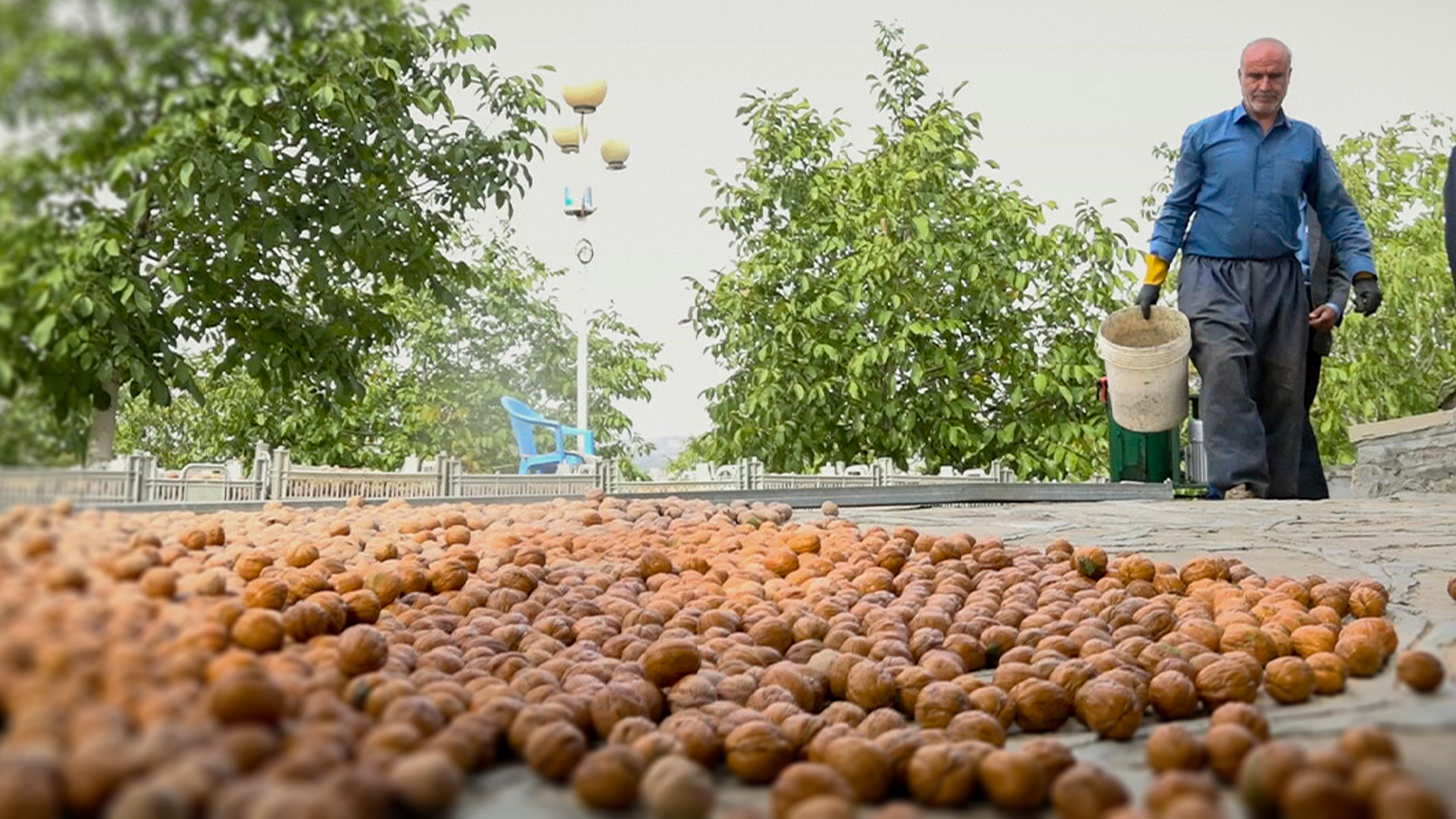
In Baba Riz village, farmers are harvesting walnuts by shaking the trees, a method made easier by the region’s distinctive orchards, where trees rarely exceed two meters in height. The low-growing trees allow farmers to collect walnuts without climbing, reducing the risk of falls and other injuries.
“We work shaking the walnut trees from 8 a.m. until 5 p.m.,” said Adel Latifi, a walnut harvester. “The good thing is that the trees are not very tall, so we do not need to climb them and risk falling, breaking our arms or legs, or suffering other injuries. The yield is also very good and of excellent quality.”
Following the harvest, farmers process the walnuts in their orchards using specialized equipment to remove the green outer husks and clean the nuts. The walnuts are then dried before being cracked, packaged, and prepared for market.
“After the walnut kernels have dried, we arrange them neatly in cartons and send them to market,” said Shaho Kamangar, a walnut farmer in Sanandaj.
Behnou Mansouri, an agricultural and horticultural expert, said approximately 90 percent of the province’s 13,000 hectares of walnut orchards are concentrated in Sarvabad, Sanandaj, Marivan, Kamyaran, and Baneh.
“We expect this year’s production to reach 32,000 tonnes, making Sanandaj Iran’s second-largest walnut-producing province after Hamadan,” Mansouri said.
Favorable weather, sufficient water resources, and improvements in irrigation technology have helped sustain production and encouraged farmers to expand their orchards. Sanandaj’s walnut sector, however, has also faced challenges, including severe frost that damaged crops across much of the province in 2020.
According to the province’s agricultural directorate, Sanandaj produced 29,000 tonnes of walnuts from 11,000 hectares last year. Earlier figures recorded production of 17,900 tonnes from 7,426 hectares, placing the province sixth among Iran’s walnut-producing regions at the time.
Iran is the world’s third-largest walnut producer, after China and the United States, and its walnuts are also exported to international markets.
Last year, Iran exported walnuts to nine countries, generating approximately $5 million in revenue.