US Strikes Qeshm After Iranian Fire
US officials say limited strikes on Iran’s Qeshm Island followed Iranian fire at a US aircraft and are not an expanded campaign, as Trump says Iran is desperate for a deal
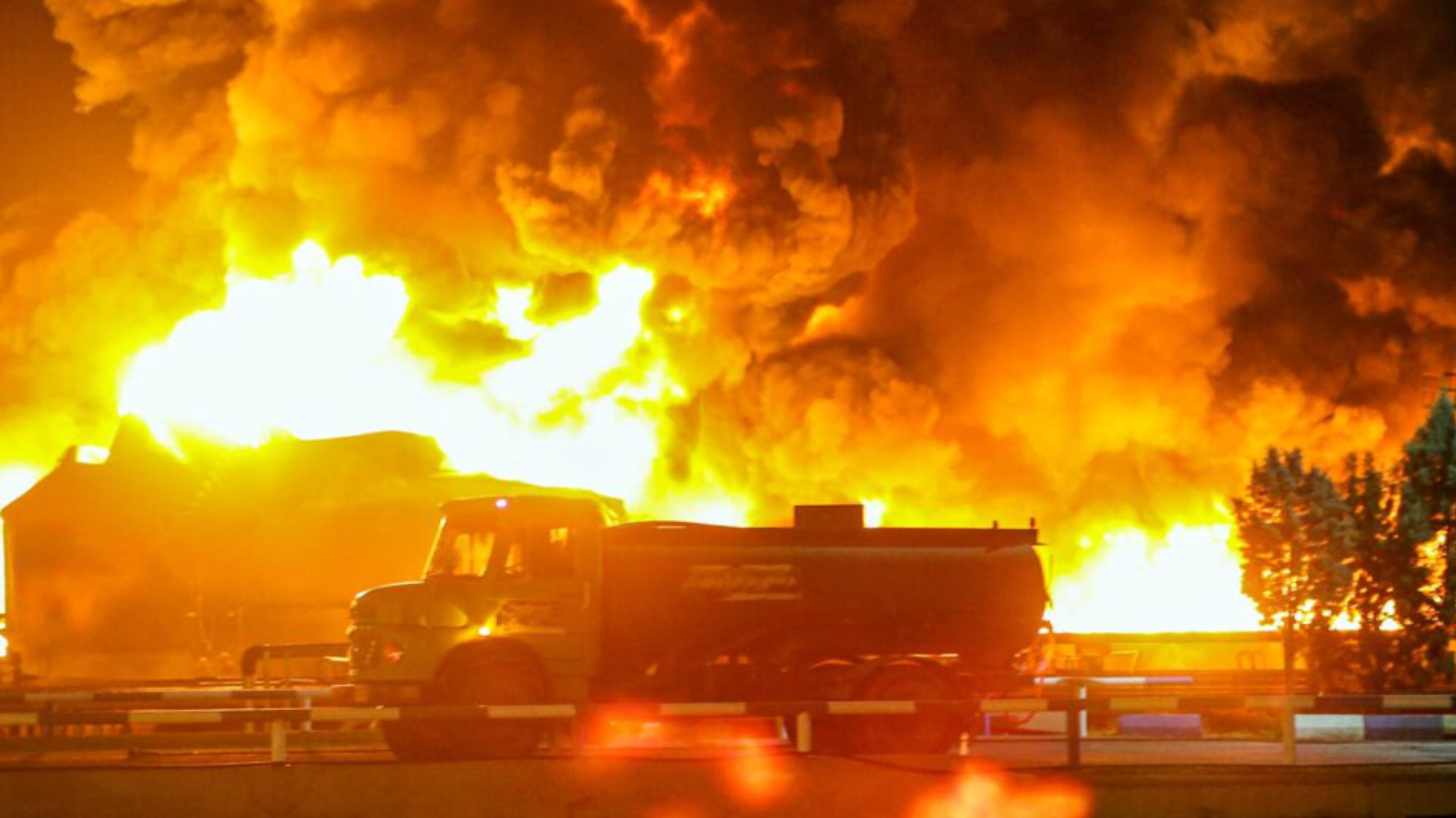
ERBIL (Kurdistan 24) - The US military carried out limited strikes on Iran’s Qeshm Island late Monday after Iran fired at a US aircraft over the Strait of Hormuz, officials told Fox News, a day before US midterm elections. The officials described the strikes as defensive and said they do not mark the start of expanded strikes on Iran.
According to Axios, a US official said the Islamic Revolutionary Guard Corps fired a missile at an American aircraft over the strait, and a US fighter jet destroyed a surface-to-air missile launcher on the island. “This was a defensive measure for Iranians using surface to air missiles against US assets,” a US official told CNN. NBC News reported that officials tied the strike to what they called Iran’s ongoing efforts over recent weeks to target shipping and US manned and unmanned aircraft over the strait, and said Iran tried to target a US aircraft again before the strike. Washington deliberately did not announce the operation to avoid it being read as the start of a renewed campaign, according to Fox News.
Iran’s state news agency IRNA reported five explosions in succession across Qeshm, and residents said they saw two aircraft overhead. The semi-official Fars agency reported explosions from the direction of the sea at the port city of Bandar Lengeh. Iran had not commented on the strike when Al Jazeera reported. The strategically placed island hosts an underground missile installation, a naval base and a major desalination plant.
The two sides give different accounts of what led up to the strike. The US account runs from Monday evening, Washington time: officials said Iran fired the missile at the aircraft and the US responded within hours. The Iranian account runs from Monday night, Tehran time: the IRGC Aerospace Force said it brought down two US MQM-170 reconnaissance drones south of Qeshm with electronic warfare, raising to four the number it says it has captured, and Iranian media reported the explosions on the island and at Bandar Lengeh shortly afterward. The IRGC also claimed it destroyed its 55th US MQ-9 drone east of the strait, in a statement published in the early hours of Tuesday, and said on October 30 that it had downed 68 US drones since hostilities escalated. Iran has not said whether it fired at a manned US aircraft. CENTCOM rejected an earlier Iranian account of an MQM-170 capture on October 29. Those Iranian claims are unverified.
The clash is the latest in a contest over the strait that has run since the war began on February 28. The US blockaded Iranian ports from April 13 after talks in Islamabad failed, lifted the blockade on June 18 under the memorandum of understanding, and reimposed it on July 14. Between those dates, Axios reported on July 6 that Iranian forces fired missiles at two commercial ships, and US strikes followed, including on Qeshm, for consecutive nights through July. On July 29 the US struck dozens of IRGC targets after an Iranian missile attack on a US base in Jordan. Iran says the strait will not reopen until the blockade ends, and the US says Iran keeps attacking shipping and aircraft. The Wall Street Journal reported that Monday’s strike was part of a series of limited strikes the US has secretly carried out in recent weeks while pursuing diplomacy. That sits uneasily with earlier reports that the US had not struck Iran since September 1, and with Trump’s public pledge to refrain from attacks before the midterms. Iranian media also reported explosions on Qeshm on October 30, which Washington did not comment on.
Trump, in an interview aired on Fox News on Monday night, did not directly address the reported strike, but warned the US could hit Iranian nuclear sites again, including Pickaxe Mountain. he said Iran has some missiles and drones but a very limited capacity to produce more, that the US could strike the “Kuh-e Kolang” facilities whenever it chooses and might have to target the “Kuh-e Kolang” site, which it could do within an hour.
He added Iran is not in a strong negotiating position, its economy is collapsing and Tehran is desperate for a deal, and that there is a very good chance of one.
He said he would prefer an agreement to save more lives, that the US is negotiating from “absolute strength,” and that it can bring matters to a conclusion at any time.
On social media earlier on Monday, he wrote that a deal “could happen.”
Diplomacy continues in parallel. Iran’s Foreign Ministry said on Monday that “the ball is in the US court,” and Fox News reported that Qatari mediators are pushing a confidence-building plan to revive direct negotiations, with Tehran saying the fate of talks depends on Washington’s “political rationality.” Gulf officials have said Washington warned them that larger strikes could come as early as November 4.