US Midterms Decide Trump’s Congress
Democrats need three House seats and a net four in the Senate to take both chambers, with forecasters favoring them in the House and leaning their way in the Senate
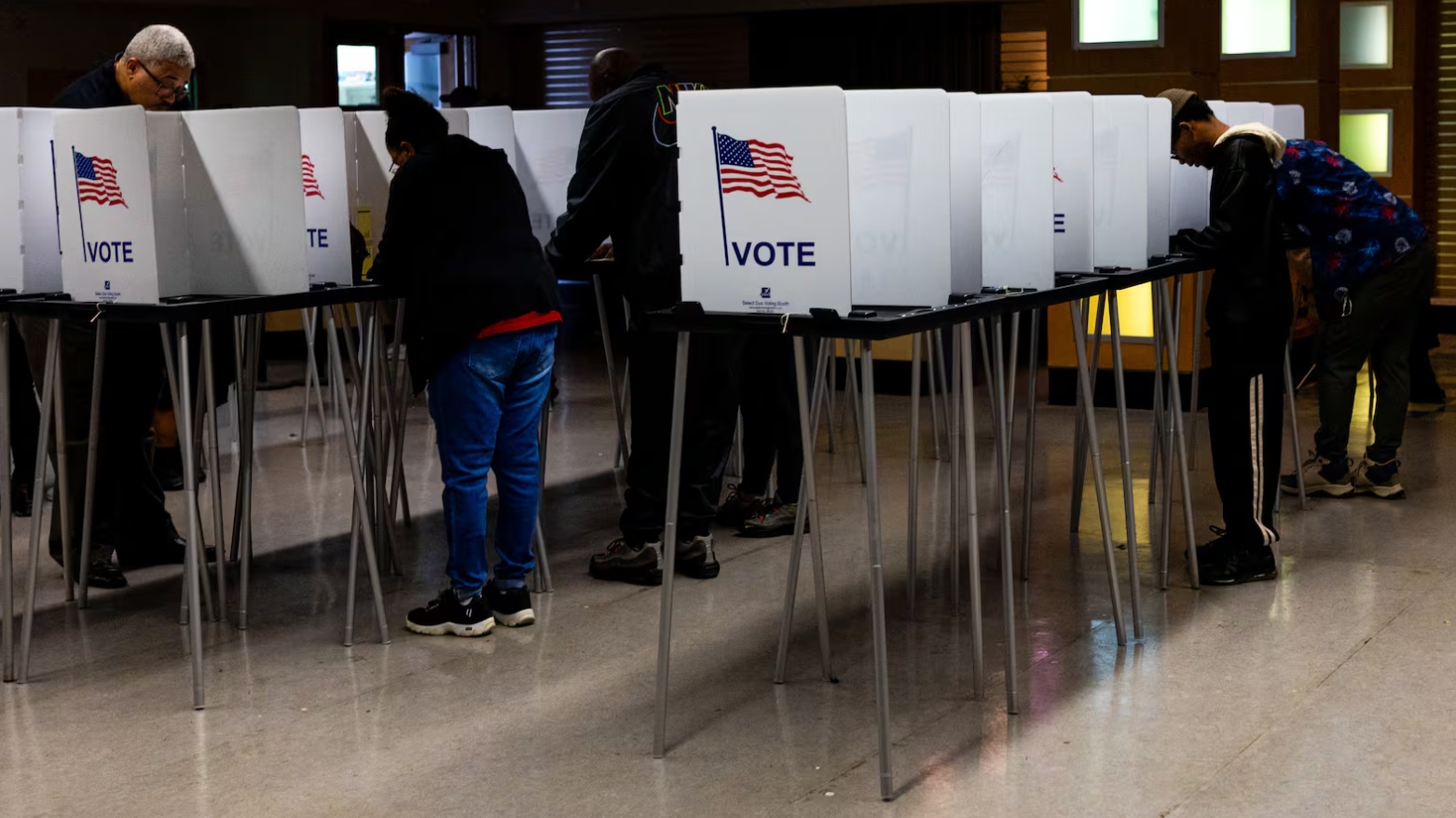
ERBIL (Kurdistan 24) - Americans vote on Tuesday in midterm elections that serve as a national verdict on President Donald Trump’s second term, with signs that Democrats could win one chamber of Congress or both. Control of the House alone would give Democrats the upper hand over the federal budget, and a Republican loss of either chamber would complicate Trump’s legislative agenda for the final two years of his term.
All 435 House seats, 35 of the Senate’s 100 seats and 36 governorships are on the ballot.
Democrats need only three House gains and a net four Senate seats to take both chambers.
Republicans hold the Senate 53-47, but the contest has spread to conservative states including Kansas, Texas, Iowa, Ohio and Alaska, AFP reported.
Decision Desk HQ’s final forecast, updated on Monday, gives Democrats an 84 percent chance of winning the House with 241 seats to Republicans’ 194, and a 65 percent chance of a 52-48 Senate majority.
Republicans hope their supporters turn out in force, since polls can sometimes underestimate one party’s real support.
More than 57 million Americans voted early, AFP said, a sign of high energy.
Trump promised on his return to office to bring down prices, but inflation, tariffs and fuel costs pushed up by the conflict in the Middle East have squeezed Americans, and his approval rating has hovered near the low 30s.
Republicans say Trump’s tax cuts and tougher immigration enforcement will help Americans and portray Democratic candidates as radically left-wing. According to the text provided to Kurdistan 24, Trump hardly mentioned the economy at his last campaign appearance, calling this “the most important midterm of our lifetimes” while spending most of his speech on a restoration of the Reflecting Pool in Washington and ignoring inflation and the war with Iran. Senate Democratic leader Chuck Schumer called it a “pathetic closing message.”
Democrats are counting on Talarico in Texas and Hamilton in Kansas for a Senate majority, but must also defend close seats, including in Michigan. There, Democratic Congresswoman Haley Stevens, who lost the primary to Abdul El-Sayed, endorsed Republican Mike Rogers on Sunday, a move Trump welcomed, and most polls give El-Sayed a slight edge.
The election has been surrounded by legal fights. The Justice Department sued Alaska on October 22 to stop it from certifying its Senate race if incumbent Republican Dan Sullivan loses narrowly because of a second candidate with the same name, which election-law experts called very weak.
It also tried to stop California from counting about 20,000 ballots it says belong to likely noncitizens. A federal judge denied that request on October 28 and the Ninth Circuit rejected it again 2-1 on October 30, Democracy Docket reported, with the Justice Department expected to go to the Supreme Court. Trump, who tried to overturn his 2020 defeat, has repeatedly alleged widespread fraud without evidence. He said he will accept the results “if they’re honest” and, asked how he would deal with a Democratic Congress, said he has a “strong veto.” “You veto, veto, veto,” he told reporters, “and then they come and say, how do we get it done.”
The first polls close at 6 p.m. Eastern time in parts of Indiana and Kentucky, or 2 a.m. Wednesday in Baghdad, and the last in Alaska early Wednesday. Control of Congress could take days to confirm, since California and Washington count mail ballots slowly.