Kirkuk Protesters Arrested as Generator Electricity Dispute Escalates
Several protesters were arrested in Kirkuk as electricity protests continued despite a price cut to 13,000 dinars per ampere, prompting Iraqi Army intervention.
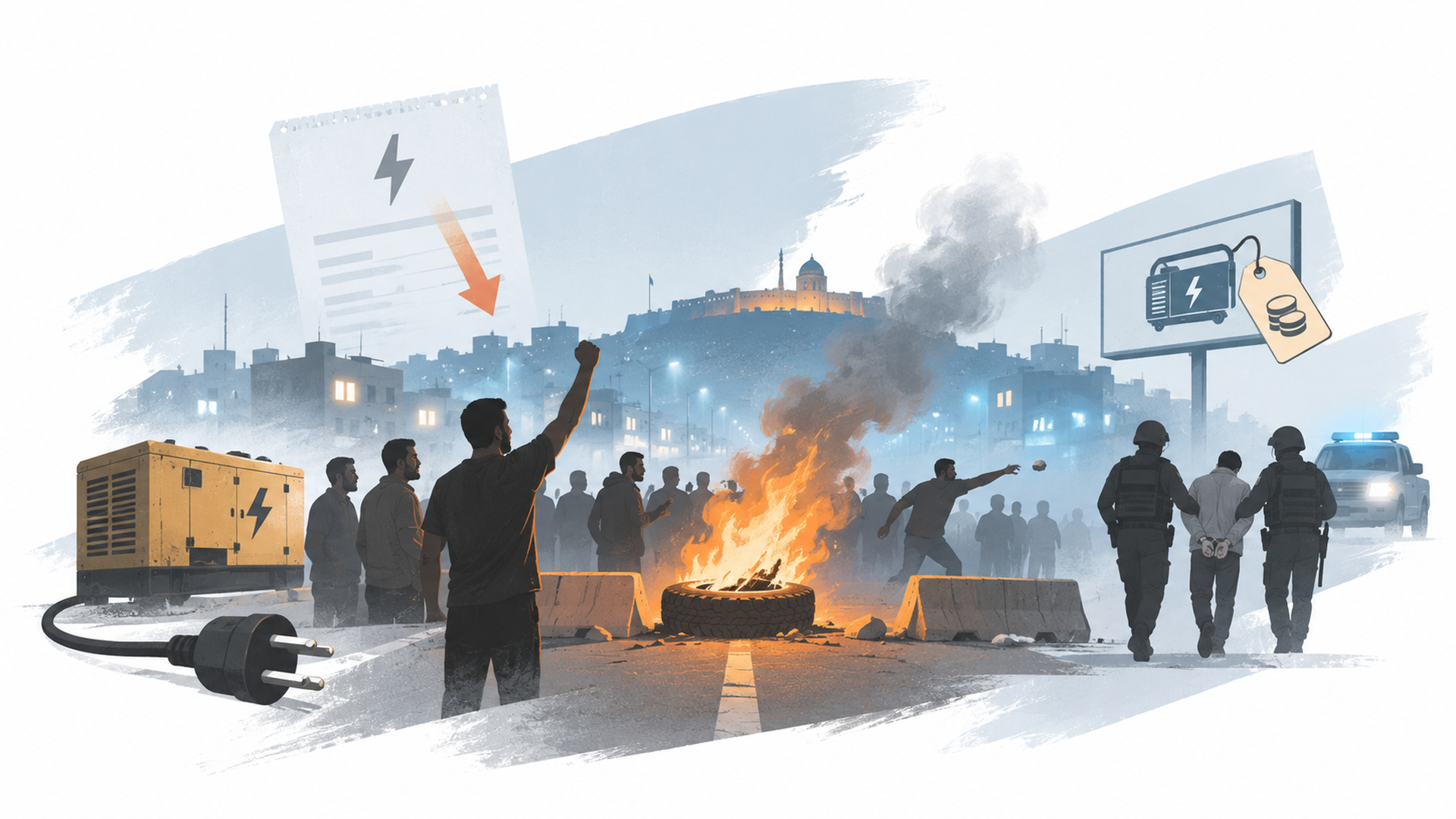
ERBIL (Kurdistan24) - Several residents were arrested in Kirkuk early Tuesday, Nov. 3, following two nights of protests over private generator electricity prices, as demonstrators continued to reject a newly reduced tariff of 13,000 Iraqi dinars per ampere.
Kurdistan24 correspondent Hemn Delo reported that nearly 25 demonstrations had taken place across 10 neighborhoods over the previous two days. Protesters blocked roads and burned tires, while confrontations with security forces prompted the Iraqi Army to intervene in several locations late Monday.
Police said those detained had been arrested over acts of disorder. The number of people taken into custody, their identities and whether any formal charges had been filed were not specified.
The protests began after the Kirkuk Central District Administration set November's private generator rate at 18,000 dinars per ampere.
Faced with widespread complaints, the district's administrative official (kaymakam) reduced it to 15,000 dinars on Monday, before an extraordinary meeting of the Kirkuk Provincial Council resulted in a further reduction to 13,000 dinars.
The council meeting was called by chairman Mohammed Hafiz, according to Hassan Majid, head of the Kurdistan Democratic Party faction on the council. Members were summoned to review the tariff after demonstrations spread, with the aim of finding a prompt solution to the burden on residents.
Neither adjustment satisfied residents who said the cost remained too high for households already facing rising expenses. Earlier protesters had demanded a tariff of no more than 8,000 to 9,000 dinars per ampere.
"Since yesterday, several measures have been taken to reduce the price charged by private generators," Delo reported. He said the first reduction came from the district administration, while the council authorized the second, but "people are not satisfied with 13,000 either."
Clashes and Arrests After Overnight Demonstrations
The demonstrations spread through Kirkuk, a Kurdistani territory outside the Kurdistan Regional Government's (KRG) administrative control, and brought Kurdish, Arab and Turkmen residents into the streets.
Earlier reporting identified Musalla, Asra wa Mafqudin, Shuhada, Uruba, Kurdistan and Huzairan among the affected neighborhoods.
Read More: Kirkuk Cuts Generator Electricity Prices to 15,000 Dinars After Protests
Delo said gatherings continued late into Monday night, with many roads obstructed and some situations moving beyond the police's capacity to control. The Iraqi Army dispersed crowds at several locations, while Civil Activities Police moved to clear demonstrations elsewhere.
Clashes between protesters and police left several officers injured. Earlier Kurdistan24 reporting put the number of injured police personnel at approximately five; no updated injury toll for either police or protesters was provided.
Protesters also described disruption to their electricity supply. Some said generator owners had switched off their equipment amid the dispute, compounding their complaints about prices and the pressure on household budgets.
A resident questioned the repeated changes in tariff, asking, "In the morning, the kaymakam sets the price at 15,000 dinars; by noon it becomes 13,000. On what basis are these prices being set?"
Other residents argued that the dispute reflected wider problems with local administration.
Speaking to Kurdistan24's Soran Kamaran, one resident complained about charges at checkpoints and difficulties moving goods into the city, including furniture purchased in Sulaimani.
Another objected to being asked to make payments through FIB rather than in cash. These complaints were not independently verified in the reporting.
The same resident also complained about the cost of installing solar panels, estimating that a household system could cost $10,000 and saying such alternatives were beyond the reach of poorer families. That estimate was not independently substantiated.
One resident claimed that generator electricity cost 6,000 dinars per ampere in Hawija and Karbala, questioning why Kirkuk's rate was higher. The comparison was a protester's account, not a verified tariff comparison.
Read More: Kirkuk Residents Continue Protests Over Rising Private Generator Electricity Prices
Generator Owners Cite Operating Costs
Generator operators, meanwhile, have objected to the reduced prices, saying high gas costs would leave them operating at a loss. Their concerns present another obstacle to finding a rate acceptable to both households and suppliers.
Members of parliament have been in contact with the Iraqi prime minister about possible solutions, according to the reporting.
One proposal under discussion would provide private generator owners with subsidized or free gas to reduce their running costs. No agreement or implementation date was announced.
Not everyone supported the manner in which demonstrations unfolded.
A Kirkuk taxi driver told Kurdistan24 that people had a right to demand cheaper electricity but criticized fires and damage to trees and the environment.
He urged lawmakers and provincial council members to travel to Baghdad to advocate for residents and warned against theft or looting under the cover of protest.
The administration's successive tariff reductions show an attempt to respond to public pressure, but the overnight arrests, continued demonstrations and generator owners' objections indicate that the dispute remains unresolved. Authorities have not announced whether the 13,000-dinar rate will be reconsidered or how any proposed fuel assistance would be financed.
Kurdistan24 correspondents Hemn Delo and Soran Kamaran contributed to this report.