Koya Restores Historic House of Kurdish Scholar Muhammad Jalizada
The House of Mulla Muhammad Jalizada (1876–1943), widely known as Malay Gawray Koya, was restored in three phases by the Koya Directorate of Antiquities and Heritage.
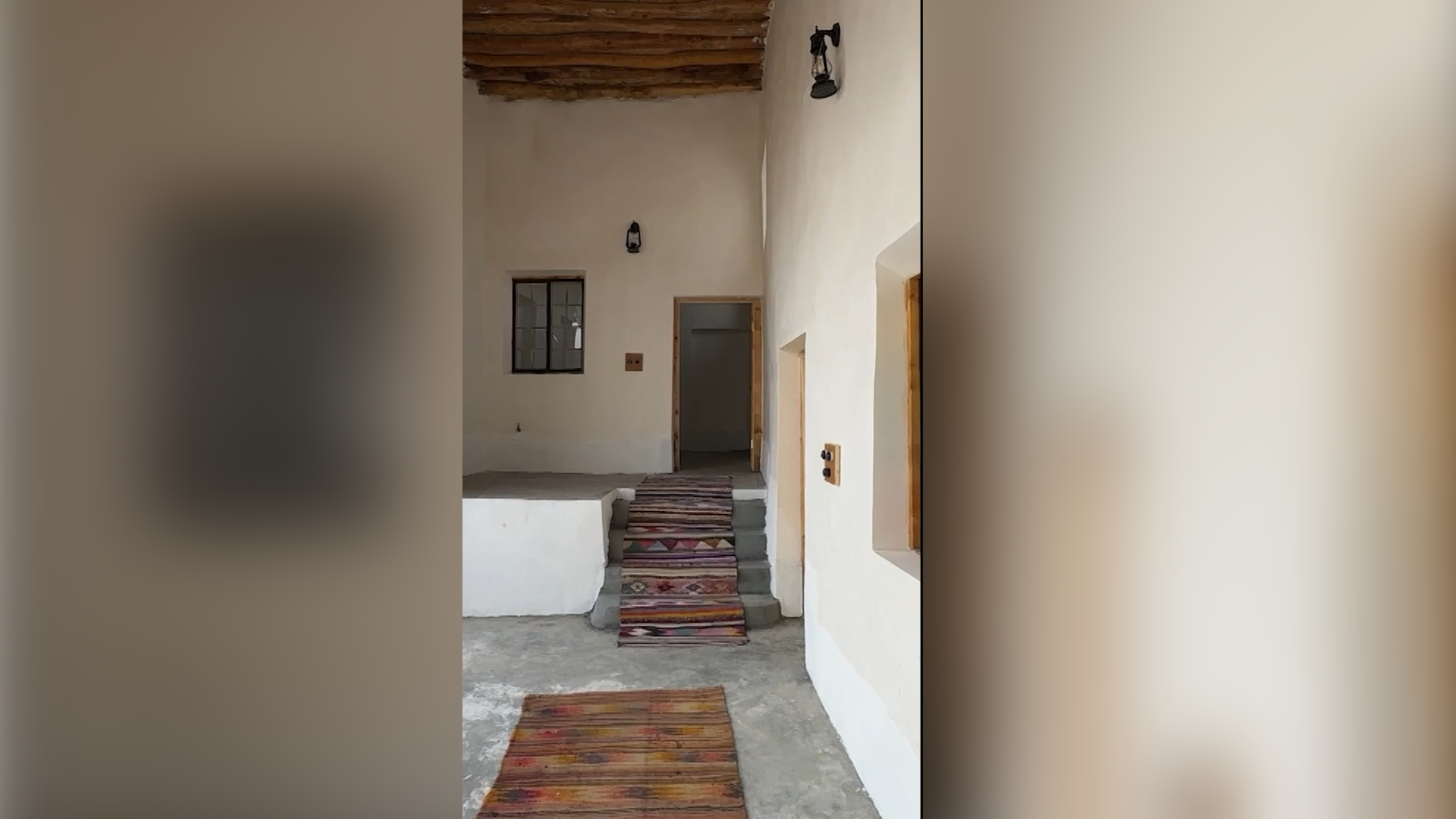
ERBIL (Kurdistan24) – A historic house in Koya that once served as a center of intellectual development and religious coexistence has been restored after years of neglect and deterioration, preserving an important part of the city's Kurdish cultural heritage.
The House of Mulla Muhammad Jalizada (1876–1943), widely known as Malay Gawray Koya, was restored in three phases by the Koya Directorate of Antiquities and Heritage. The project was completed a year ago with approval from the Kurdistan Regional Government Ministry of Municipalities and Tourism and other relevant authorities.
Born into the distinguished Jalizada family, a lineage with more than 500 years of history of producing scholars, cultural leaders, and influential social figures in Koya, Jalizada was the son of Mulla Abdullah Jali, a renowned religious scholar and poet.
He began his education under his father's guidance at an early age, studying the Quran, Islamic jurisprudence (Fiqh), Arabic logic, astronomy, and classical literature. His early education helped shape his intellectual and scholarly contributions to Kurdish society.
The house later became a center of learning and intellectual activity, where the renowned Kurdish scholar studied, taught, and developed his ideas.
Tariq Haidari, mayor of Koya district, recalled his first visit to the deteriorating building, saying he was struck by its condition and initially questioned whether it was actually the house of Muhammad Jalizada.
He said he walked through the building room by room until he reached a small room measuring just two by three meters, which local residents identified as the room of Masoud Mohammed, Jalizada’s son who is a renowned Kurdish writer.
"I thought to myself: How could such a great personality have worked in a room measuring only two by three meters?" Haidari said. "This was where he studied, taught, and laid the foundations of knowledge and learning."
He added that preserving such places was essential because of their historical and cultural significance.
Beyond its role as a residence and center of learning, the house was also a gathering place that reflected Koya's tradition of religious and social coexistence, welcoming people of different faiths.
Yekiti Wahid, director of the Koya Directorate of Antiquities and Heritage, said the directorate considered even the smallest remaining elements of historic buildings valuable from an archaeological and heritage perspective.
He warned that several other heritage houses and sites in Koya were at risk of collapse and urgently needed restoration to prevent their disappearance.
Wahid said the family and relatives of the late Muhammad Jalizada and Masoud Mohammed donated the house to the directorate in 2024.
"Through the Koya district commissioner, and after obtaining approval from our General Directorate and the Ministry of Municipalities, we restored this heritage site in three phases, protecting it from destruction and collapse," he said.
Dilshad Ismail, a descendant of Muhammad Jalizada, told Kurdistan24 that his father frequently recounted stories about the family's visits to the historic house.
"My father used to tell me: 'Son, the entire Jalizada family would prepare food in the evenings and go to Muhammad Jalizada's house. Each family would bring its own food in dishes and containers, and we would all eat together,'" Ismail recalled.
He said the tradition reflected the influence and respect Jalizada enjoyed among the people of Koya.
Ismail also shared an account illustrating the Kurdish intellectual's commitment to religious tolerance.
According to the story, a Christian man once entered Koya's Grand Mosque and greeted those present, but none of the people sitting there returned his greeting.
Muhammad Jalizada noticed their reaction and asked why they had not welcomed the visitor. When they replied that the man was Christian, he challenged their reasoning.
"So what if he is a Christian? Let me ask you something: Who created him? Wasn't he created by God? And didn't God send the religion of Jesus to Jesus?" he told them.
He then instructed everyone present to approach the visitor, welcome him, and shake his hand.
"When we speak of the heavenly religions, we must remember that there is not just one religion. Those people are human beings just like us, and they have the right to live and enjoy freedom," he told them.
Koya's heritage houses, many of which were built using traditional materials, have become increasingly vulnerable to deterioration and collapse because of their age. Preserving these historic buildings is therefore considered a national responsibility, requiring the cooperation of relevant authorities to protect an important part of Kurdish cultural and national history.
The restoration of Jalizada's house preserves not only the physical legacy of a prominent Kurdish scholar but also the values associated with his life and teachings, particularly intellectual development, religious tolerance, and peaceful coexistence.