Canadian Poplar: The Trees Sustaining a Generations-Old Trade in Kurdistan
Discover Kurdistan's Canadian poplar timber industry in Khalifan, where generations of woodcutters grow, harvest and supply timber to factories across Iraq.
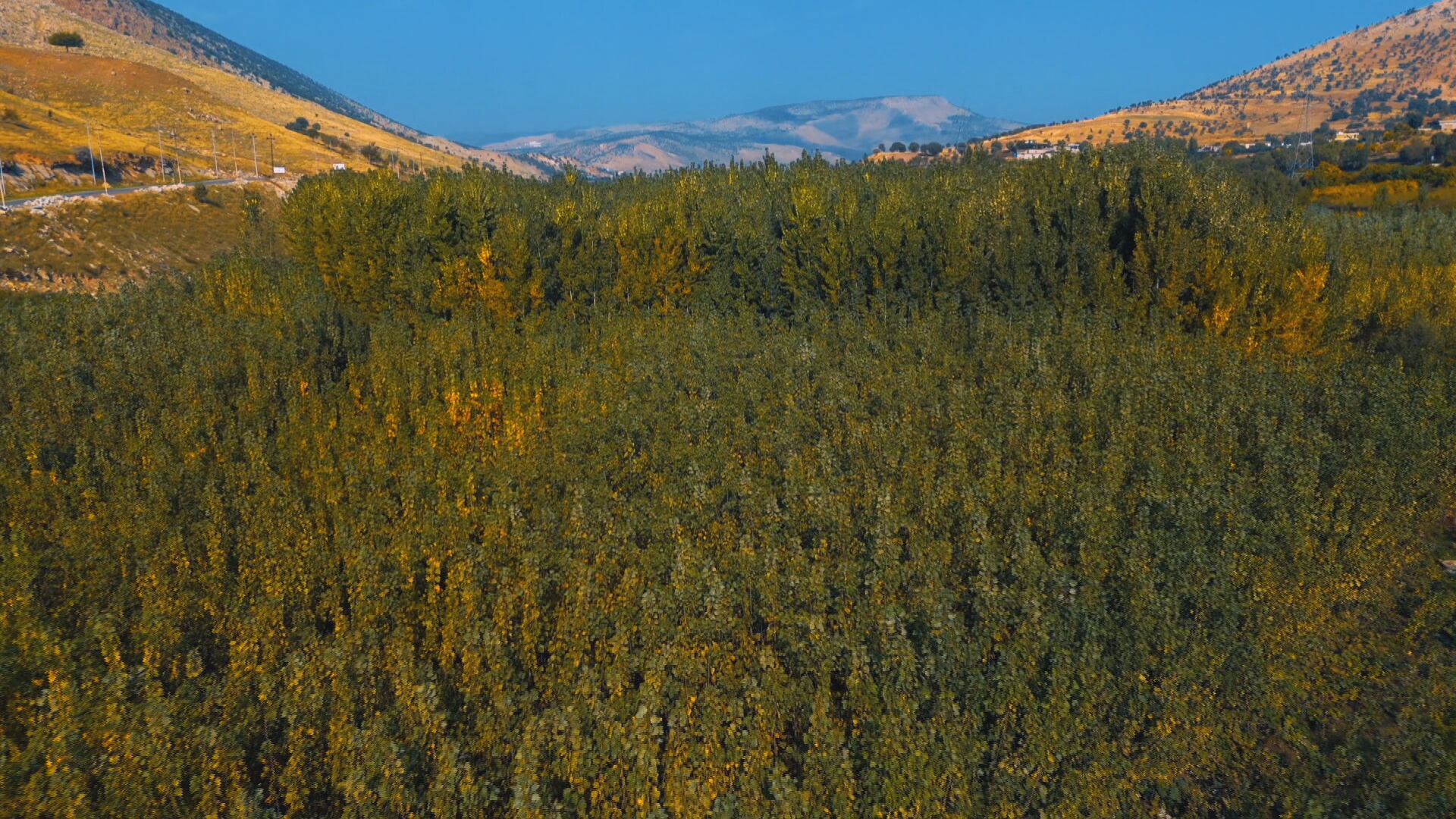
ERBIL (Kurdistan24) - At six in the morning, before the first tree falls, Diyari Hassan is already preparing for another day in Khalifan's Alana Valley. He must bring the workers to the grove, organize the cutting and ensure the timber reaches the road before trucks carry it to buyers across Iraq.
"I wake up at six in the morning," the timberland owner tells Kurdistan24. "I get up before all the workers because bringing them to work is up to me."
Between instructions to woodcutters and calls to tractor drivers, the work moves at a demanding pace. A wrong cut can cause injury, an overloaded tractor can break down, and every tree needs to be handled differently.

Five Years to Grow, a Day to Harvest
Hassan's business begins long before anyone picks up a saw. Around Khalifan, growers cultivate poplar trees for commercial timber, preparing the ground with tractors, making furrows and planting cuttings around February or March.
"We water 1-2 times a week," he explains. Fertilizer is applied once or twice annually to encourage growth, and the trees take approximately five years to mature.
He identifies three varieties found in Kurdistan: Canadian, Khumari and Shatana. His preferred choice is Canadian poplar, which he says performs better locally and attracts greater demand from buyers.
The plantations, he emphasizes, are not wild mountain forests. They are cultivated stands grown on privately owned plots and harvested for timber.
"It doesn't mean harming nature," Hassan says. "Legally, there's no issue with cutting them. It's selective cutting. It's not wild oak from the mountains."
For Hassan, the distinction between cultivated timber and naturally growing mountain trees is fundamental to understanding the trade.

A Skill Passed Down Through Generations
For woodcutter Sardar Saleh, the work continues a family tradition.
"Our forefathers did this work in the past, and we are continuing their path," he says.
The physical demands have not disappeared with modern equipment. Saleh spends his days measuring and cutting trunks, judging where to place the saw and how to handle trees of different sizes.
He recalls injuring his leg with a saw, a reminder of the dangers accompanying the profession.
"You must be skilled; not just anyone can do it," he explains. "Because each tree has its own size, and type; you must cut each separately."
Hassan, too, grew up around the trade. He began working at 12, following a father who had been cutting timber since 1974.
Back then, workers relied on axes and hand saws rather than chainsaws. Without tractors, animals transported felled timber to the roadside before it was loaded onto trucks. Machinery has since accelerated the process, although the work remains physically demanding.

More Than Just Colleagues
The crew moves between cutting, loading and occasional mechanical problems. At one point, someone warns against overloading a tractor after its front axle breaks. Elsewhere, workers call for tea and encourage one another to finish the day's tasks.
Saleh says there are usually 10 to 15 workers together, and years of shared labor have created relationships resembling family bonds.
"If we don't meet for a week, we keep calling; we can't be apart," he says. "We've been together so long, like brothers."
Hassan shares that attachment. The workers can carry on when he is absent, he explains, because they know their responsibilities.
"A day apart, and we miss each other," he says. "Two days without a call, we can't rest."

From Khalifan to Factories Across Iraq
The timber is purchased from landowners who cultivate their own plots. Hassan's team cuts the trees, uses tractors to transport the logs to the roadside, cleans them and loads them onto trucks.
Shipments travel to Baghdad, Mosul, Kirkuk and Sulaimani, where buyers operate factories using the wood for different products.
Canadian poplar is used to manufacture cooling pads for air coolers and bedding material for poultry sheds.

Other varieties have different uses. Hassan describes Zakho wood as suitable for beams and roofing, while poplar timber has also been used in chairs, tables, shovel handles and broom handles.
Each shipment represents the end of a growing cycle that took years and a working day shaped by coordination, experience and physical effort.
For Hassan and Saleh, woodcutting is more than a source of income. It is an inherited profession sustained by familiar hands, shared responsibilities and friendships built over years in the groves.
As another trunk falls, the day's familiar calls resume: where to cut, what to load and when to move on.

