Türkiye Peace Law Could Benefit 2,800 PKK, KCK Prisoners: MHP
An MHP official says 2,800 PKK and KCK prisoners could benefit from Türkiye's peace law, subject to verified disarmament and National Security Council approval.
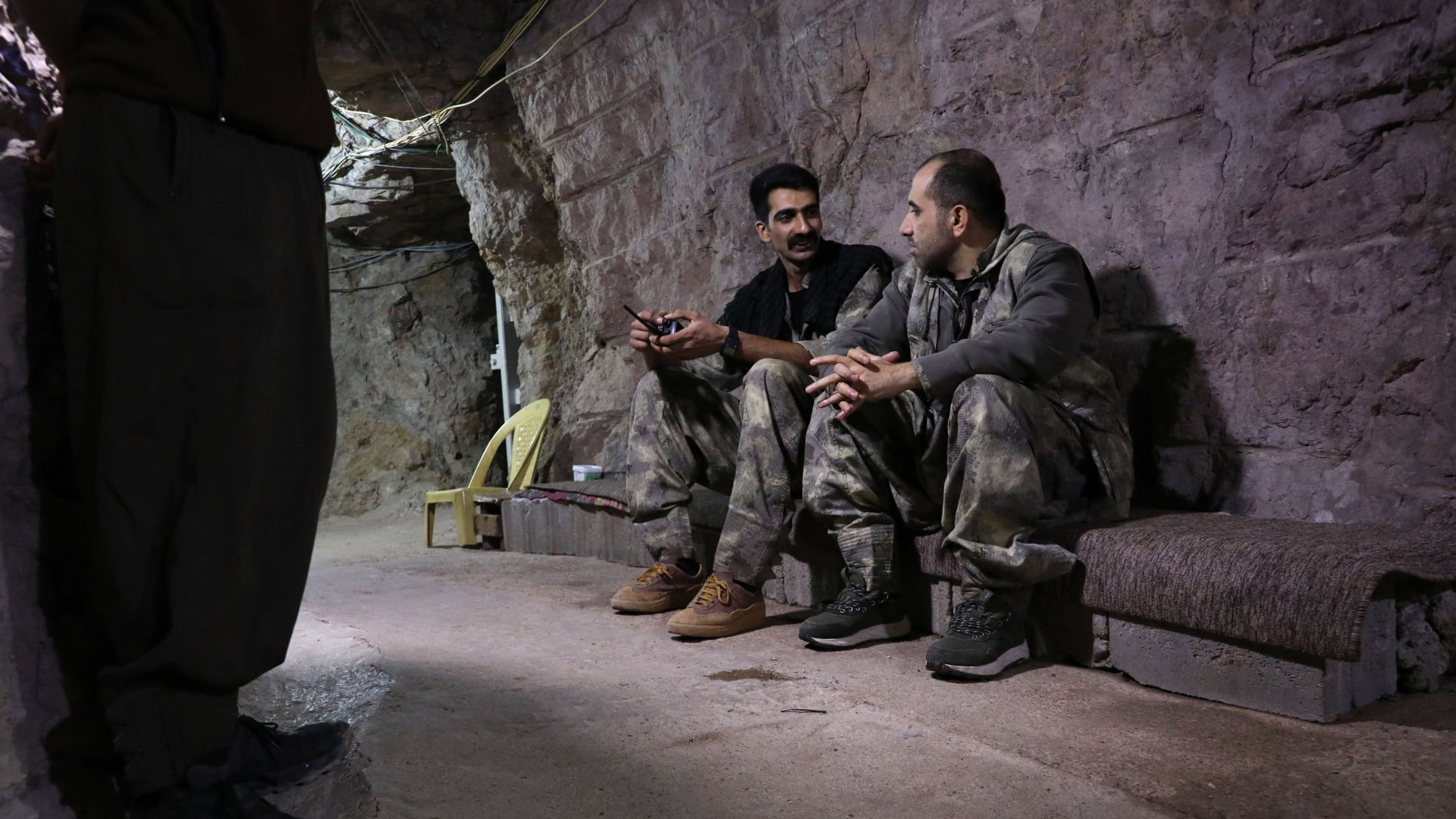
ERBIL (Kurdistan24) - Nearly 2,800 people imprisoned in Türkiye over alleged or established links to the Kurdistan Workers' Party (PKK) and Kurdistan Communities Union (KCK) could benefit from legislation tied to the country's renewed peace process, according to a senior official of the Nationalist Movement Party (MHP).
Feti Yildiz, the MHP's deputy chair, said the proposed relief would depend on the complete dissolution of the organizations, the surrender of weapons and a formal security assessment. His remarks on Saturday, Nov. 21, outlined both the potential reach of the legislation and the restrictions that would prevent some prisoners from benefiting.
Speaking at an event in Istanbul's Uskudar district, Yildiz said 4,897 PKK and KCK convicts and detainees were currently held in Turkish prisons. Of those, he identified 2,800 as potentially eligible under the legal framework associated with the "Terror-Free Türkiye" initiative.
The figure does not represent an immediate release order. Yildiz described a process under which eligibility and the law's implementation would be subject to specific legal and security conditions.
Who Would Qualify?
According to Yildiz, people implicated in murder, attacks involving gunfire against soldiers or bombings targeting civilians would be excluded. He also said the provisions would not cover those facing life imprisonment.
The exclusions would extend beyond cases ending in a conviction, he explained. An existing investigation or prosecution concerning the specified offenses would be sufficient to prevent a person from benefiting, even without a final court judgment.
For those covered by the law, the duration of a sentence would determine the length of a suspension. A sentence of up to 15 years, along with the associated investigation or prosecution, would be suspended for five years. For sentences exceeding 15 years, the suspension would last 10 years.
The suspension would be conditional on the individual's conduct during that period. If another offense were committed, Yildiz said, the proceedings and sentence would resume from where they had been halted.
These distinctions suggest that the measure is not intended as a general amnesty for every PKK or KCK prisoner. Rather, Yildiz's account sets out a differentiated system in which the nature of the offense and the length of the sentence determine whether relief is available and how it operates.
Disarmament Before Implementation
Yildiz said that although the law had been approved in August, its implementation remained dependent on developments outside the prison system.
He identified the complete termination of the PKK and KCK's operational activities, including those of affiliated components, as a central requirement. The organizations would have to dissolve, vacate caves and hand over weapons and ammunition to security forces.
A designated body would then verify the weapons handover and prepare a report confirming the end of the organizations' operational existence. The National Security Council would have to endorse that finding through a formal decision.
Only after the council's decision was published in the Official Gazette would the legislation become operational, according to Yildiz. He did not provide a date for when those remaining steps might be completed.
A Peace Initiative Spanning Two Years
The current peace initiative began after MHP leader Devlet Bahceli issued a call on Oct. 22, 2024, opening the political sequence that led to renewed efforts to end the PKK's armed campaign.
On Feb. 27, 2025, imprisoned PKK leader Abdullah Ocalan called on the organization to disarm and dissolve. The PKK subsequently held its 12th congress from May 5 to 7, 2025, deciding to end its armed struggle and dissolve. It publicly announced that decision on May 12 and took an initial symbolic disarmament step in July 2025.
The parliamentary component followed the next year. On Aug. 10, 2026, Türkiye's Parliament approved the 12-article "Strengthening National Consensus and Social Unity" law, numbered 7595. It was published in the Official Gazette on Aug. 18.
Yildiz's latest explanation places the possible benefit for thousands of prisoners within that broader sequence, while making clear that the practical application of the law still hinges on verified disarmament and a National Security Council decision.
Kurdistan24 correspondent Ebidulselam Tûtincî contributed to this report.