How an Ancient Kurdish Melody Shaped Neighboring Musical Traditions
Discover Alla Waisi, the Kurdish maqam rooted in Germiyan whose Ajam, Nahawand and Rast melodies influenced Turkmen qoryat and other Iraqi musical traditions.
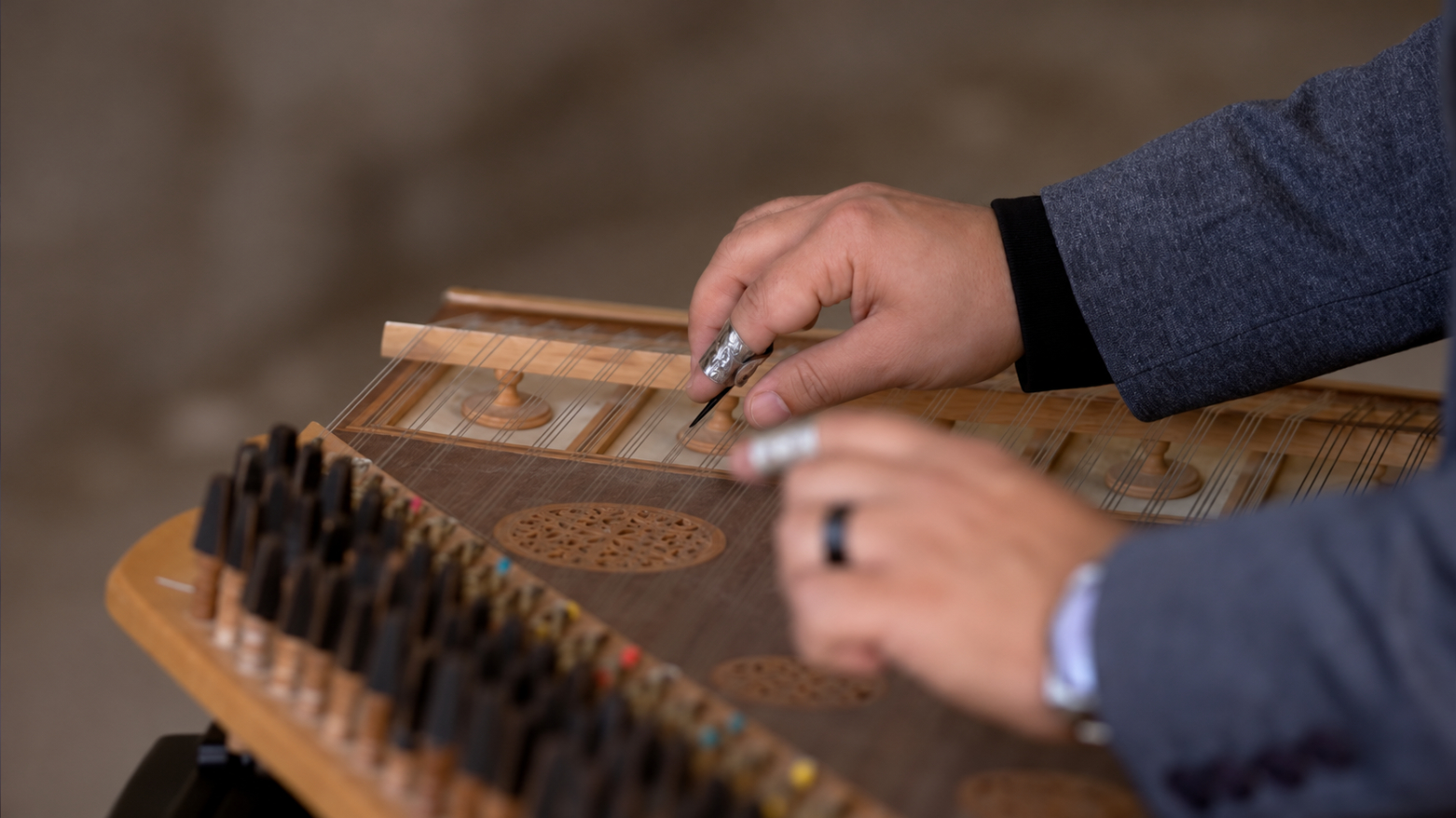
ERBIL (Kurdistan24) - A Kurdish vocal tradition rooted in the plains of Garmiyan has traveled across communities, leaving its mark on Turkmen melodies and musical forms farther south in Iraq. Known as 'Alla Waisi', the maqam is more than an old song: it is an elaborate musical form whose distinctive movements have been passed between generations of singers.
Musician Ahmad Najib traces its development through Garmiyan and Kirkuk, describing a tradition that has retained its rules even as performers and audiences changed.
"Even after 500 years, this maqam keeps its rules," he said, emphasizing the durability of its established musical structure rather than fixing an exact date for its origin.
The name itself survives through oral history. According to Najib, an exceptionally gifted singer named Wais performed the maqam with such beauty that listeners exclaimed, "Alla, Alla Waisi!" The expression eventually became the name by which the music was known.
The historical identity of Wais remains uncertain. In Kurdish oral tradition, the melody is also associated with longing, separation and exile, themes that have long shaped the region's vocal repertoire.
Its geographical roots lie in Garmiyan, a culturally interconnected area encompassing places such as Kifri, Khurmatu and Daquq, with Kirkuk becoming a particularly important center for its transmission. Unlike the urban Iraqi maqam tradition associated with Baghdad, Alla Waisi developed within a local Kurdish musical setting.
Najib explains that the maqam draws on three melodic components: Ajam, Nahawand and Rast. He places it within the Nahawand family, but stresses that its identity comes from the way these components unfold in performance.
"With these three maqams, Alla Waisi was created," he said.
A performance begins with an introduction and moves through pauses and heightened vocal passages known as mayanas. Najib identifies two mayanas before a third movement turns toward Rast. The form also includes a taslim, or returning passage, and what he calls qit'a and awsal, where material from another maqam enters the performance.
These are not arbitrary ornaments. Najib says a complete maqam must satisfy five structural requirements, and Alla Waisi meets them. Its unmetered delivery allows a singer to sustain phrases, shift between low and high registers and give emotional weight to each passage.
Traditionally heard in gatherings and Kurdish diwakhans, or guesthouses, the music could be accompanied by tanbur or shimshal. Later performances incorporated instruments including the oud, violin, santur and qanun.
The maqam's movement beyond Kurdish performance is particularly evident in Turkmen music. Najib points to Khurmatu, between Garmiyan and Kirkuk, where Turkmen musicians developed the Qizil Qoryat vocal form using Alla Waisi's melodic material.
He says its first and second mayanas were adopted into Qizil Qoryat, illustrating how musicians could retain recognizable musical phrases while shaping them within another community's tradition.
"The Alla Waisi maqam also has an impact on Turkmen brothers too," Najib said. He also identifies a southern adaptation known as Tawr al-Subbi.
Its wider musical relationships include similarities noted between the Kurdish maqam tradition and the sacred tanbur repertoire of the Yarsan community, particularly Hijrani, although such parallels do not establish a single documented line of origin.
Among the musicians associated with preserving Alla Waisi was Khidir Baram Chawish, a master performer heard in the dîwaxan - a traditional Kurdish guesthouse or reception hall historically maintained by tribal leaders (aghas), chieftains (begs), or village elders to host guests and conduct community affairs - of Sheikh Hasib Talabani.
He taught the maqam to Kirkuk-born singer Ali Mardan (1904-1981), who helped introduce Kurdish maqams to wider audiences through Baghdad Kurdish Radio recordings in the 1940s.
Later performers, including Shkur Khayat, Husen Ali and Salah Dawood, continued that inheritance.
For Najib, the significance of Alla Waisi lies in both its carefully preserved form and its capacity to travel. Its melodic language remains identifiable in Kurdish performance, even where neighboring traditions have made parts of it their own.