Erbil's Autumn Festival Showcases Kurdish Food and Local Produce
Erbil's autumn produce festival brings around 300 Kurdish farmers and producers together to sell local honey, gezo and other foods at free stalls for a week.
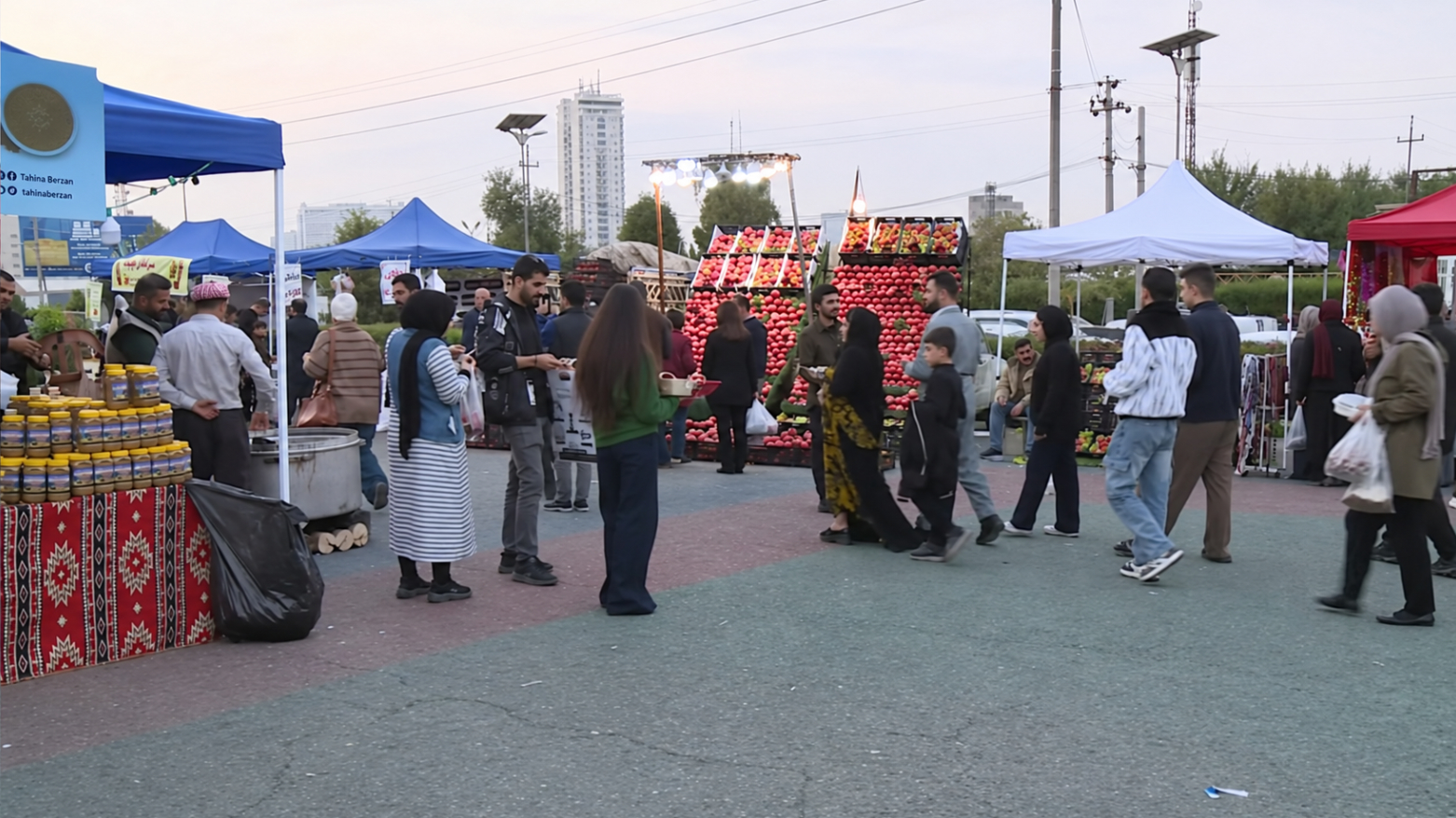
ERBIL (Kurdistan24) - From honey still in the comb to homemade gezo sweets, an autumn food festival in Erbil is giving farmers and small producers from across the Kurdistan Region a chance to sell directly to customers, while introducing younger visitors to traditional foods they may know little about.
Around 300 farmers, entrepreneurs and producers are taking part, displaying locally made foods and agricultural products at affordable prices. The Erbil Governorate and agricultural authorities have provided free stalls, removing one of the costs of bringing products to market.
For some participants, the festival is as much about passing down food traditions as making sales.
"Now our people learn about local goods," one farmer told Kurdistan24 correspondent Azar Farooq. The farmer pointed to foods such as traditional pastes and curd cheese, saying that festivals help younger generations discover what goes into them and how they taste.
The farmer described the initiative as beneficial not only for producers but also for young people and the future of local food culture.
'Taste of Local Production'
At one stall, a beekeeper displayed different forms of locally produced honey, including honeycomb and strained honey.
"Our goods are honey products, plus honeycomb and strained honey; I have 3 types of honey," the producer said, describing the selection as distinctive.
A producer who traveled from Sulaimani brought gezo, a traditional sweet also known as manna, under the Sulaimani Gezo brand. The producer emphasized that it was made at home without white sugar or preservatives.
"The special thing about my manna (Gezo) is that it's homemade; I make it myself and never use any white sugar or preservatives," the producer said.
For customers, the stalls offer an opportunity to discover regional specialties in one place. For vendors, they provide a chance to explain their products, meet buyers and sell goods without having to pay for a stall.
'Extended'
Hemin Sayed Murad, Erbil's director general of agriculture, said organizers made a point of giving products made within the Kurdistan Region a place at the festival.
He said nearly 300 farmers, entrepreneurs and producers had joined the event, which was originally planned for three days.
"Initially, this festival was for three days, but in coordination with the Erbil Governor, it was extended to seven days," Murad told Kurdistan24.
The festival will operate for a week, from 9 a.m. into the evening, allowing participants more time to connect with customers and sell their autumn produce. Farooq reported that demand for the displayed goods was strong.
The free stalls are intended to help local producers participate without the expense of renting commercial space for the event, while the extended schedule gives residents additional opportunities to visit.
Agricultural Market
The festival comes as the Kurdistan Regional Government (KRG) seeks to expand markets for local production and make agriculture a larger contributor to the Region's economy.
In a July interview with Kurdistan24, Murad said nearly two-thirds of the Kurdistan Region's agricultural production was being exported to central and southern Iraq or abroad, with the remaining third consumed locally.
He attributed the shift to agricultural policies including temporary restrictions on imports during local harvest seasons, subsidized agricultural inputs and measures designed to help farmers market their produce.
Read More: KRG Agricultural Reforms Turn Kurdistan into Major Export Hub, Erbil Agriculture Chief Says
Those broader policies are distinct from the festival, which concentrates on direct sales and raising awareness of locally made goods.
For participating farmers, however, finding customers remains essential to sustaining production. As Farooq reported from Erbil, every purchase contributes to local producers' livelihoods while giving visitors a chance to discover the foods, flavors and skills preserved within Kurdish communities.