Live

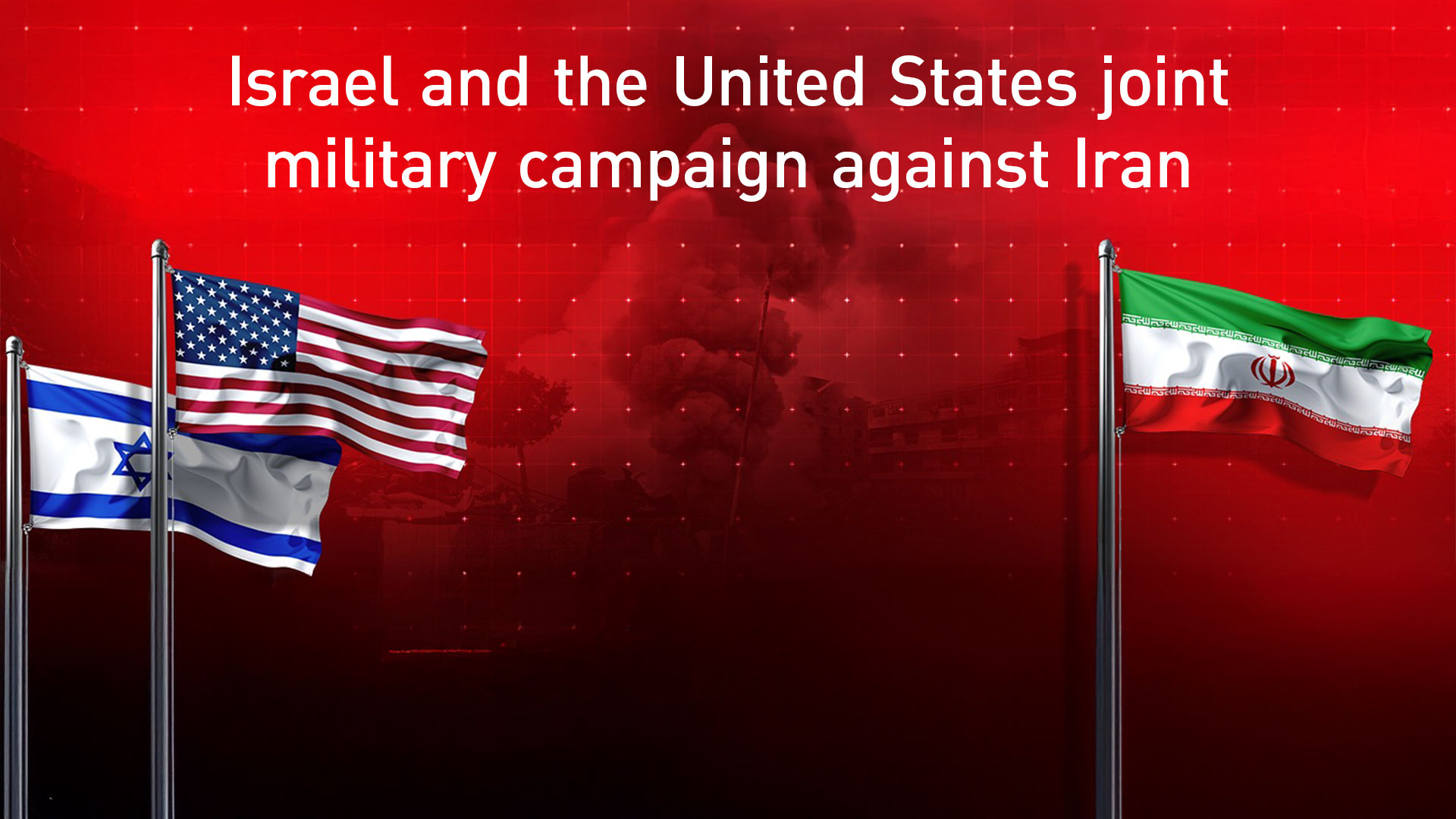
Israel and the United States joint military campaign against Iran

A coordinated offensive by Israel and the United States targets strategic military sites across Iran, marking a dramatic escalation in regional tensions.

Iran
Graphic Designed by Kurdistan24
Shared

US Says More Than 30,000 Targets Struck Across Iran During Military Campaign

Kurdistan24
Kurdistan24
Kurdistan24

The United States on Wednesday said more than 30,000 targets were struck across Iran during its recent military campaign, as the White House pressed Tehran to immediately reopen the Strait of Hormuz following reports of its closure despite a ceasefire agreement.

Speaking during a press briefing, White House Press Secretary Karoline Leavitt described any disruption to the vital shipping lane as “completely unacceptable.”

 
Click to Read More

Key Points

Trump Extends Iran Ceasefire Deadline, Maintains Naval Blockade as Talks Hang in Balance Read More

Trump Accuses Iran of Ceasefire Violations as Strait of Hormuz Crisis Deepens Read More

US, Iran Envoys to Arrive in Islamabad for Talks as Ceasefire Deadline Nears: AP Read More

Netanyahu Warns Conflict With Iran far From Over, Says New Developments Possible 'at any Moment' Read More

Iran Conditions Strait of Hormuz Reopening on End to U.S. Naval Blockade Read More

Iran Reviews New U.S. Proposals as Strait of Hormuz Tensions Escalate Read More

US ramps up pressure on Iran with troop deployment and blockade as talks edge toward restart Read More

Trump Criticizes Italy’s Meloni Over Refusal to Back Iran War Read More

First Cross-Border Aid Shipments Reach Iran as Humanitarian Needs Mount Read More

Trump Says Iran Has Contacted U.S. Seeking Deal ‘Very Badly,’ After Weekend Talks Collapse Read More

Auto updates

Trump Extends Iran Ceasefire Deadline, Maintains Naval Blockade as Talks Hang in Balance

Kurdistan24
Kurdistan24
Kurdistan24

U.S. President Donald Trump said Tuesday he would extend the ceasefire with Iran to allow more time for negotiations, while ordering the continuation of a U.S. naval blockade on Iranian ports.

In a post on Truth Social, Trump announced he would “extend the Ceasefire” until Iran presents a proposal to end the conflict, adding that he had “directed our Military to continue the Blockade.”

 
Click to Read More

US-Iran Peace Talks Stall Over Blockade

Dr. Kamaran Aziz
Dr. Kamaran Aziz
Dr. Kamaran Aziz

Diplomatic efforts to initiate a second round of peace talks between the United States and Iran in Pakistan remain stalled.

Axios reports that Vice President JD Vance, Steve Witkoff, and Jared Kushner remain in the United States, with a Department of Homeland Security plane rerouted to Washington for policy meetings.

Meanwhile, Iranian lawmaker Ahmad Naderi stated Tehran will not negotiate until the naval blockade is resolved, calling reports of an Iranian delegation in Pakistan a "complete lie."

Pakistani Information Minister Attaullah Tarar confirmed his government is still awaiting a formal response from Iran. 

The delays occur as the two-week ceasefire approaches its expiration, prompting Pakistan’s Foreign Minister Mohammad Ishaq Dar to publicly urge both Washington and Tehran to consider an extension to give diplomacy a chance.

 
Click to Read More

Trump Signals Strong U.S. Position Ahead of Iran Talks

Dr. Kamaran Aziz
Dr. Kamaran Aziz
Dr. Kamaran Aziz

President Donald Trump, in a CNBC Squawk Box interview, framed upcoming U.S.–Iran negotiations in Pakistan as occurring under decisive American military and strategic advantage. He said Iran “has no choice” but to engage and predicted a “great deal,” asserting that U.S. forces have already significantly degraded Iranian military capabilities. Trump linked the diplomatic process to a broader coercive posture, referencing strikes on naval and air assets and suggesting leadership losses in Iran—claims that remain unverified independently and are presented as presidential assertions.

He also indicated that the United States retains readiness to resume military action if negotiations fail to produce a near-term agreement. The interview underscores a compressed diplomatic timeline tied to a ceasefire window and reflects a negotiation strategy grounded in escalation signaling.

The remarks come as U.S. and Iranian delegations prepare for renewed talks, with uncertainty over whether diplomatic engagement will stabilize or intensify regional tensions.

 
Click to Read More

Trump Accuses Iran of Ceasefire Violations as Strait of Hormuz Crisis Deepens

Dler Mohammed
Dler Mohammed
Dler Mohammed

Donald Trump on Tuesday accused Iran of repeatedly violating a fragile ceasefire, warning that the Middle East could soon slide back into open conflict as the truce nears its expiration.

“Iran has violated the ceasefire numerous times!” Trump wrote on his Truth Social platform, referring to the two-week pause in hostilities set to expire by Wednesday. His remarks come as both sides weigh the possibility of resuming negotiations aimed at ending a war Trump describes as necessary for preventing Iran from making a nuclear bomb.

Trump also cast doubt on the feasibility of securing Iran’s enriched uranium stockpile, describing the process as “long” and “difficult” following U.S. strikes on Tehran’s nuclear facilities last year.

He reiterated that “Operation Midnight Hammer” had obliterated what he called Iran’s “nuclear dust” sites—a term he uses to describe enriched uranium or remnants of nuclear infrastructure.

 
Click to Read More

Anxiety Returns to Iran as Ceasefire Deadline Approaches

Dr. Kamaran Aziz
Dr. Kamaran Aziz
Dr. Kamaran Aziz

Public anxiety is rising across Iran as a 14-day ceasefire with the United States approaches its deadline.

While delegations from both sides are expected to meet in Pakistan, uncertainty remains over whether talks will proceed or yield results. 

Citizens report mixed expectations, with some anticipating renewed conflict and others dismissing the likelihood of war despite rejecting U.S. demands.

The ceasefire, brokered on April 8 after nearly two months of fighting, had allowed limited economic recovery.

However, U.S. President Donald Trump has warned of renewed strikes targeting Iran’s energy infrastructure if no agreement is reached on its nuclear program.

Iranian officials have not indicated readiness to accept these terms, fueling concerns that hostilities could resume.

 
Click to Read More

Qaani in Baghdad: Why Was He There?

Dr. Kamaran Aziz
Dr. Kamaran Aziz
Dr. Kamaran Aziz

Rival mediators from Tehran and Washington descend on Baghdad amid a deepening leadership deadlock.

On Monday, April 20, 2026, IRGC-Quds Force Commander Esmail Qaani issued a statement in Baghdad asserting that the selection of Iraq’s prime minister is a "solely Iraqi" decision, warning against external interference.

This follows the April 17 designation by the U.S. Treasury of seven high-ranking commanders from Kata’ib Hizballah, Asa’ib Ahl al-Haqq, and other groups for attacks on U.S. personnel.

Domestically, a rift has widened within the Shiite Coordination Framework.

While the Sudani camp claims Nouri al-Maliki has withdrawn from the premiership race, Maliki’s camp has issued a sharp denial, labeling the reports as misinformation.

With the constitutional deadline for government formation set for late April, both Qaani and U.S. envoy Tom Barrack are reportedly in the Green Zone to mediate.

The outcome remains uncertain as the bloc struggles to reconcile U.S. financial pressure with internal power-sharing demands.

 
Click to Read More

Iraqi Central Bank Denies Reports of U.S. Dollar Halt

Dr. Kamaran Aziz
Dr. Kamaran Aziz
Dr. Kamaran Aziz

Conflicting reports of a currency freeze highlight Washington’s financial leverage over Baghdad.

On Monday, April 20, 2026, the Central Bank of Iraq (CBI) officially rejected reports that the United States had suspended shipments of physical U.S. dollars to Baghdad.

The denial followed claims by regional media, including Al-Hadath, that Washington had halted currency transfers and security coordination as part of a crackdown on Iran-aligned militias.

These reports come on the heels of April 17 U.S. State Department sanctions against seven militia commanders from groups like Kata’ib Hizballah and Asa’ib Ahl al-Haqq.

While the CBI insists the flow of cash is normal, the U.S. Embassy in Baghdad remains under a Level 4 "Do Not Travel" alert, citing ongoing militia threats in federal Iraq. 

The conflicting signals underscore the high-pressure environment as Iraqi leaders attempt to form a new government under the shadow of potential U.S. economic sanctions and demands for militia disarmament.

 
Click to Read More

Netanyahu Warns Conflict With Iran far From Over, Says New Developments Possible 'at any Moment'

Kurdistan 24 Digital Media

Israeli Prime Minister Benjamin Netanyahu said the confrontation with Iran remains ongoing and could escalate further at any time, underscoring the fragile state of the conflict.

Speaking alongside Argentine President Javier Milei on Sunday, Netanyahu said the US-Israeli effort against Iran is "not over yet."

"Any moment could bring us new developments," he said. "Who knows what tomorrow or the day after tomorrow will bring?"

He added that the United States and Israel "shall achieve our objectives and achieve more hope, more light for the free peoples of the world."

During a separate meeting with Milei in Jerusalem, Netanyahu reiterated the message, stating, "We are at war with Iran. The issue is not over, and at any moment new developments could occur."

 
Click to Read More

Iran Halts Decision on Diplomatic Talks Over U.S. Hostilities

Dr. Kamaran Aziz
Dr. Kamaran Aziz
Dr. Kamaran Aziz

On Monday, April 20, Iranian Foreign Ministry spokesperson Esmail Baghaei announced that Tehran has not yet decided whether to participate in a second round of negotiations with the U.S. and international mediators. Baghaei accused Washington of continuously violating existing ceasefire clauses, citing alleged U.S. non-compliance with Lebanon agreements, an attempted maritime blockade, and an attack on an Iranian commercial vessel. He blamed U.S. and Israeli military activities for rising tensions in the Persian Gulf and Strait of Hormuz.

Additionally, Baghaei revealed that recent diplomatic efforts in Islamabad and Tehran involved a 15-point U.S. plan and a 10-point Iranian counter-proposal, resulting in a specific, consolidated package. However, citing past U.S. strikes on Iranian territory during negotiations, Baghaei emphasized that Iran will proceed based strictly on its national interests. U.S. and Israeli officials have not yet responded to the allegations.

 
Click to Read More

Iran Executes Two Accused of Espionage Amid Regional Ceasefire

Dr. Kamaran Aziz
Dr. Kamaran Aziz
Dr. Kamaran Aziz

Iranian authorities executed two men at dawn on Monday after convicting them of espionage for Mossad, Israel's intelligence agency. The executions of Mohammad Masoom-shahi and Hamed Validi were confirmed by Mizan Online, the Iranian judiciary's official news agency. The men were convicted of "moharebeh" (waging war against God) and collaboration with Israel.

These executions are the latest in a series of capital punishments carried out by Tehran since the outbreak of direct conflict with Israel and the United States on February 28. Notably, the executions took place while a fragile, two-week ceasefire—implemented on April 8—remains in effect. International rights groups note that Iran is the world's second most prolific executioner, following China. The executions underscore Tehran’s ongoing internal security crackdown, which continues to operate independently of the temporary pause in regional military hostilities.