EU Calls for Expanded Talks on Iran Beyond Nuclear Issue Following Ceasefire
EU foreign policy chief Kaja Kallas identified several areas that the EU considers essential to any future negotiations with Iran, including its ballistic missile program, cyber activities, and what she described as "hybrid threats."
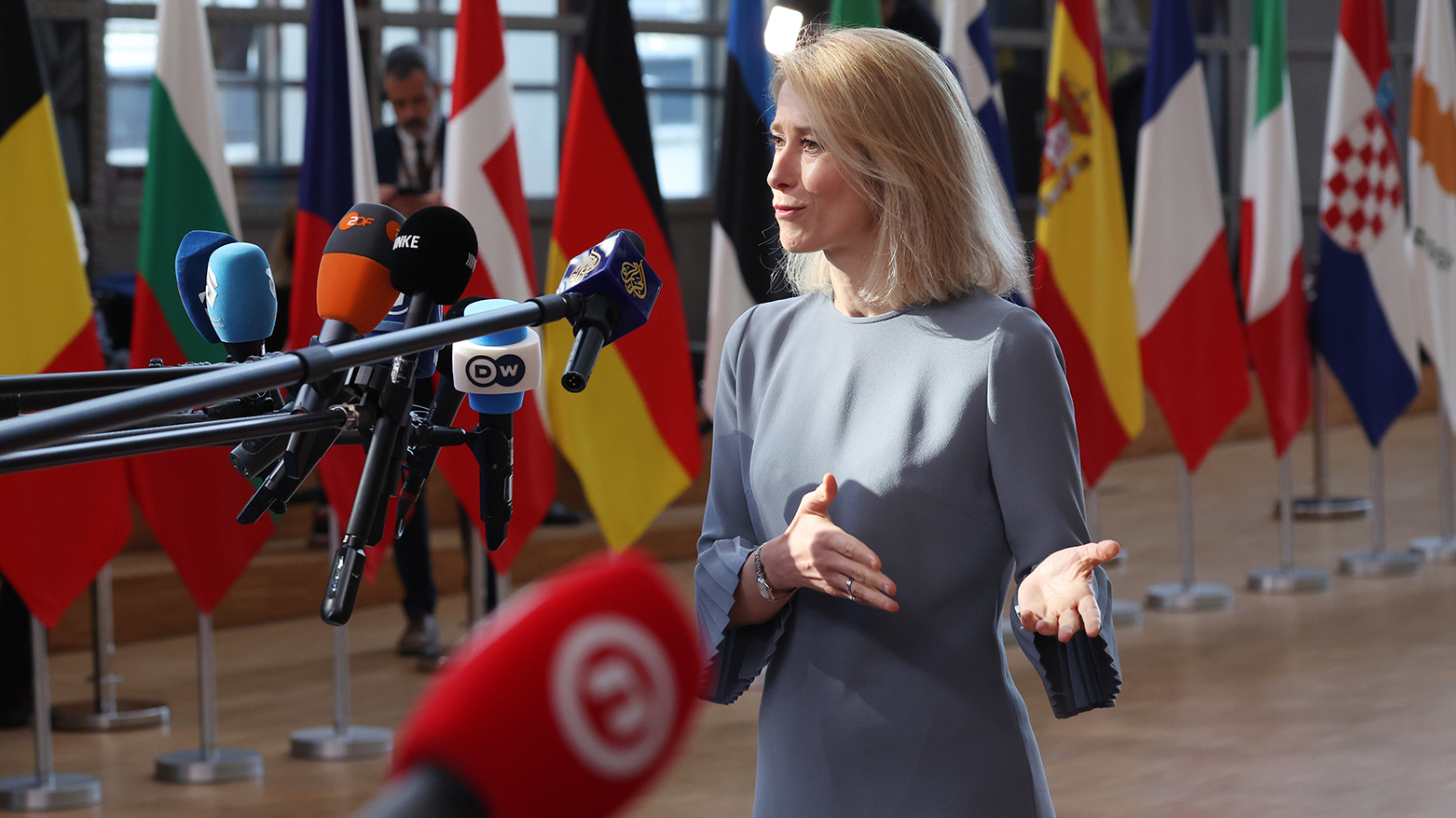
ERBIL (Kurdistan24) - European Union foreign policy chief Kaja Kallas said in an interview aired by Sky News Arabia on Friday, that while sanctions have been used to limit Iran’s capabilities, the current ceasefire presents an opportunity to initiate broader negotiations addressing multiple areas of concern beyond the nuclear issue.
Kallas, the High Representative of the European Union for Foreign Affairs and Security Policy, said the EU has long relied on restrictive measures targeting Iran but indicated that the present moment requires a shift toward comprehensive dialogue. “We have had a lot of sanctions also on Iran so that they couldn’t develop their capabilities,” she said, adding that the focus should now move toward direct engagement on a wider set of security concerns.
Her remarks came as she assessed the implications of a newly reached ceasefire, which she described as an opening for discussions aimed at achieving long-term regional stability. While acknowledging that the agreement remains unclear in parts and that divisions between the parties persist, Kallas said the truce creates conditions conducive to negotiations.
“But I think now is the time to really sit down and talk about all the worries we have,” she said, emphasizing that the European Union seeks discussions that extend beyond earlier frameworks focused primarily on nuclear activity.
Kallas identified several areas that the EU considers essential to any future negotiations with Iran, including its ballistic missile program, cyber activities, and what she described as hybrid threats. She also pointed to Iran’s relationships with regional groups, stating that these issues form part of the broader concerns that need to be addressed.
“Not only the nuclear issue but also the ballistic missile program, their cyber and hybrid threats to our countries, also their proxies operating,” she said, referencing groups including Hamas, Hezbollah, and the Houthis.
According to Kallas, addressing these issues collectively is necessary to establish what she described as a durable peace. “We need to see how we can actually have a long-term peace,” she said, indicating that a narrow focus on a single issue would be insufficient.
Her comments reflect the European Union’s stated position that the scope of negotiations with Iran should be expanded beyond the parameters of the 2015 nuclear agreement. Kallas said that while the earlier deal addressed nuclear concerns, it did not incorporate other areas that the EU now views as critical to regional security.
The ceasefire, she said, offers an opportunity to revisit these issues within a broader negotiating framework. She reiterated that although ambiguity surrounds the current agreement, it provides a basis for initiating discussions that could lead to a more comprehensive settlement.
Kallas also noted that the parties involved in the conflict remain significantly divided. “The parties are very far from each other,” she said, adding that external actors, including the European Union, should support efforts to facilitate dialogue.
In outlining the EU’s approach, Kallas said the bloc is working with regional partners and international stakeholders to encourage negotiations. She indicated that the EU is in contact with mediators, including Pakistan, and is coordinating with Gulf countries and Türkiye on messaging aimed at promoting an end to hostilities.
She also addressed broader security concerns in the region, including maritime navigation. Kallas reiterated that freedom of navigation remains a key principle for the European Union and warned against actions that could restrict access to international waterways, particularly in the Strait of Hormuz.
“This is a very dangerous road because freedom of navigation is one of the principles of international law,” she said, referring to potential measures affecting shipping routes. She added that maintaining open and secure maritime passage is essential for regional stability.
Kallas further stated that a cessation of hostilities is necessary to ensure safe navigation, noting that commercial shipping depends on confidence among vessel operators. Without adequate security conditions, she said, normal transit through critical waterways cannot be guaranteed.
“If the crews of the ships… do not feel secure that they can pass and that there is a risk to their ships, then nobody can force them,” she said.
In addition to maritime concerns, Kallas addressed the European Union’s ongoing activities in the region, including support for air defense systems and maritime operations. She cited EU involvement in maintaining trade routes and providing assistance to regional partners as part of broader stabilization efforts.
She also reiterated that the EU has condemned attacks attributed to Iran on Gulf countries and has called for the protection of civilians and infrastructure. “The European countries have really very strongly condemned the Iran attacks on Gulf countries,” she said, describing them as “totally unsolicited.”
Kallas said that safeguarding civilian infrastructure, including energy and water facilities, remains a priority for the EU. She emphasized the importance of protecting essential services such as power plants and desalination facilities.
On Lebanon, Kallas said the European Union wants the ceasefire to extend to the country, citing recent violence that resulted in civilian casualties. “There has to be a ceasefire also covering Lebanon,” she said.
She added that discussions are ongoing within the EU regarding potential future involvement following the current United Nations Interim Force in Lebanon (UNIFIL) mission, though she did not provide further details.
Kallas also addressed questions regarding coordination with the United States, stating that while differences exist, there is agreement on key objectives. “Where we agree is that Iran should not pose a threat to its neighbors, and there has to be freedom of navigation,” she said.
Her remarks underscore the EU’s position that resolving the conflict requires addressing multiple interconnected issues. By emphasizing areas such as missile development, cyber capabilities, and regional activities, Kallas indicated that the European Union seeks a broader negotiating agenda than in previous diplomatic efforts.
She said that including regional actors in the negotiation process would be essential, noting that their perspectives were not fully incorporated in earlier agreements. This, she suggested, is a factor the EU intends to address in any future framework.
The ceasefire, Kallas said, should serve as a starting point for such discussions, even as uncertainties remain regarding its implementation and scope. She reiterated that the ultimate objective is to move beyond temporary measures toward a comprehensive and lasting resolution.
The European Union, she added, will continue to engage with partners and support diplomatic efforts aimed at achieving stability in the region through expanded negotiations addressing a full range of security concerns.