Iran Conflict: IRCS Details Civilian Destruction, Amnesty Flags Digital Blackout
The IRCS reported extensive civilian infrastructure damage after 39 days of war, while Amnesty International cited 1000 hours of internet disruption in Iran.
ERBIL (Kurdistan24) - The Iranian Red Crescent Society (IRCS) has reported extensive material damage across Iran following 39 days of conflict involving U.S. and Israeli air operations, while Amnesty International said people in Iran have endured “1000 hours” of internet disruption during the period, urging authorities to restore access immediately.
The developments come as preparations continue for Iran–U.S. negotiations scheduled in Islamabad under Pakistani mediation following a temporary ceasefire announced after weeks of fighting.
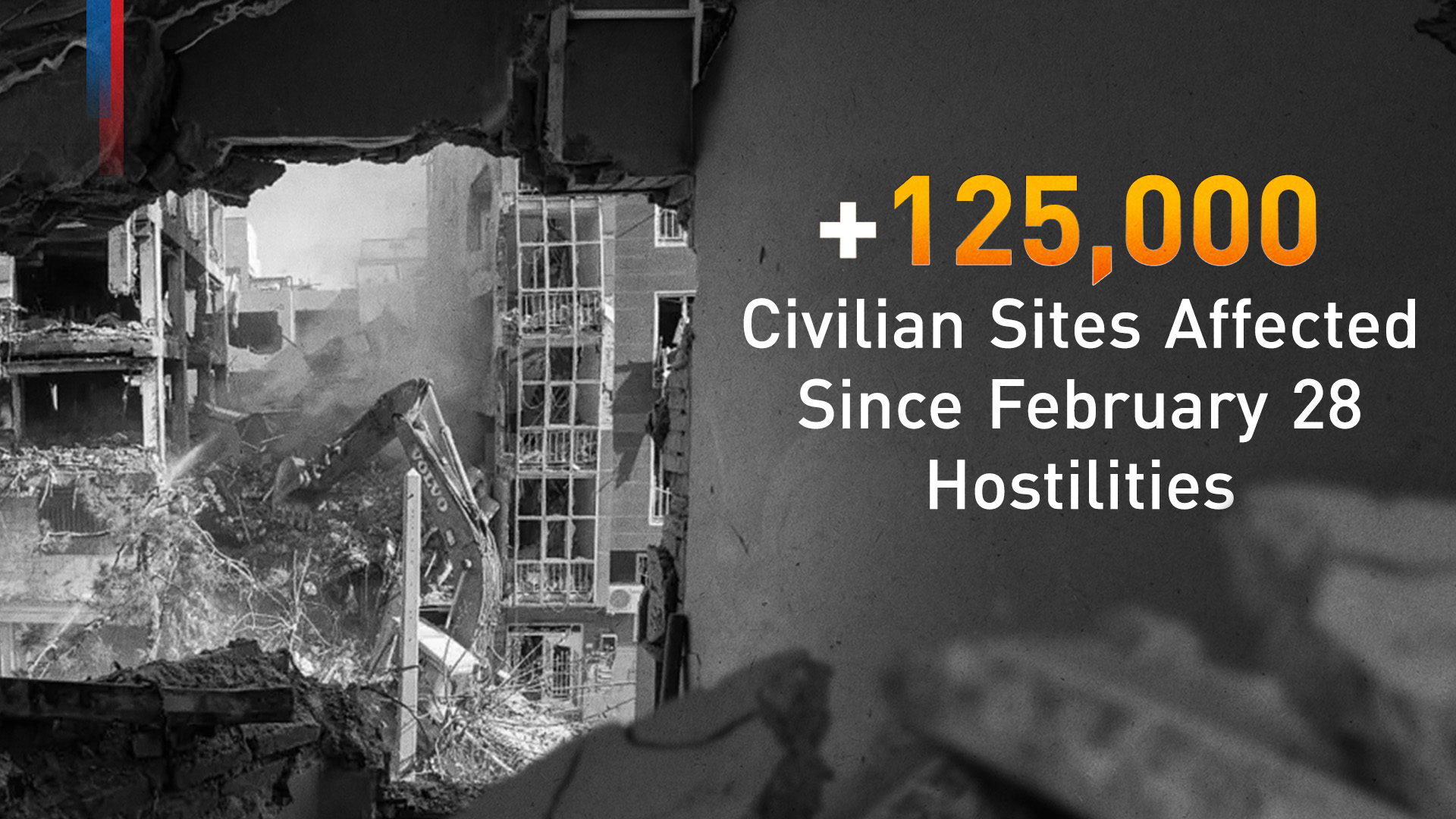
In a statement, IRCS President Pir-Hossein Koulivand said more than 125,000 civilian sites across Iran were damaged during what he described as an “imposed war,” according to the Iranian Red Crescent Society.
He stated that 125,630 civilian sites were affected, including approximately 100,000 residential units, some of which were completely destroyed. The IRCS added that 23,500 commercial sites were also damaged, alongside 339 health facilities including clinics and pharmacies.
Koulivand further reported that 32 universities and 857 schools sustained damage during the 39-day period.
He also said 20 Red Crescent centers were impacted, as well as 15 infrastructure sites including fuel depots, airports, and civilian aircraft, according to the same statement. The IRCS did not provide casualty figures or financial estimates related to the destruction.
The report attributed the damage to sustained military operations following the outbreak of hostilities on February 28, 2026, when, according to IRCS accounts, U.S. and Israeli forces carried out coordinated airstrikes against Iranian military and security installations.
The statement said the conflict involved fighter jets, drones, and missile strikes before a temporary two-week ceasefire was reached through Pakistani mediation.
The IRCS said the ceasefire followed 39 days of fighting and led to the announcement of planned negotiations between Iran and the United States in Islamabad. No additional operational details regarding the talks were included in the statement.
Separately, Amnesty International said in a post on X on April 10, 2026, that “people in Iran have lived under digital darkness for 1000 hours,” calling access to the internet “a basic human right and indispensable in times of conflict.” The organization urged Iranian authorities to “immediately restore internet access.”
Amnesty’s statement added to previous concerns raised during earlier phases of unrest, when the group accused authorities of using internet shutdowns to restrict information flows during periods of violence and instability.
Amnesty International has previously described extended internet blackouts in Iran as a method that limits communication and documentation of human rights violations during periods of unrest, according to earlier statements issued by the organization in 2026. The group has repeatedly called for the restoration of full connectivity during crises, arguing that access to digital communication is essential for civilians.
People in Iran have lived under digital darkness for 1000 hours. Access to the internet is a basic human right and indispensable in times of conflict. Authorities must immediately restore internet access. pic.twitter.com/li643jocxb
— Amnesty International (@amnesty) April 10, 2026
The Iranian Red Crescent report and Amnesty International’s remarks come amid ongoing uncertainty surrounding the stability of the ceasefire and the prospects for upcoming diplomatic talks in Islamabad.
While the IRCS focused on physical destruction across civilian infrastructure, Amnesty highlighted the parallel disruption of digital communications affecting civilians during the same broader conflict period.
The IRCS reiterated that hostilities began on February 28, 2026, and continued for 39 days before the ceasefire was declared. It said the damage assessment covers residential, educational, healthcare, commercial, and transport-related infrastructure across multiple provinces.
Amnesty’s statement did not provide additional details on the technical nature of the internet disruption but described it as a prolonged period of restricted access affecting the population during conflict conditions.
Negotiations between Iran and the United States are expected to proceed in Islamabad following the ceasefire arrangement, according to the Iranian Red Crescent account of post-conflict developments. No further official details on the agenda of the talks were included in the cited materials.
The combined reports underscore both the scale of reported physical destruction during the 39-day conflict and continued concerns over communication access in Iran during the ceasefire period, as diplomatic efforts move forward in Pakistan.