Peshmerga to liberate village Shia militia failed
Shia militia Hashd al-Shaabi conducted almost 20 attacks on the village of Bashir, but were unable to liberate it from Islamic State.
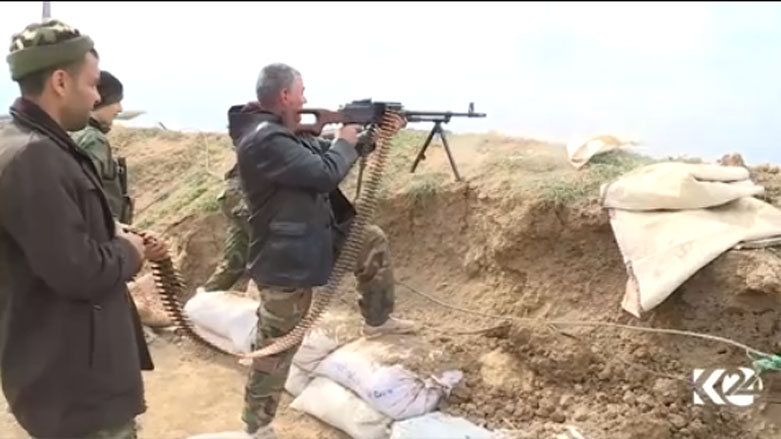
ERBIL, Kurdistan Region (Kurdistan24) – Shia militia Hashd al-Shaabi conducted almost 20 attacks on the village of Bashir, but were unable to liberate it from Islamic State (IS) control, said a senior Peshmerga Commander on Monday.
Kamal Kirkuki, Peshmerga Commander on the west frontline of Kirkuk Province in northern Iraq, told Kurdistan24 that Hashd al-Shaabi has failed to free the mostly Shia and Turkmen village of Bashir, located in southern Kirkuk.
“They [Hashd al-Shaabi] have been unable to free the village despite multiple attacks,” Kirkuki continued. “Now, they have asked Peshmerga forces to help them liberate the village.”
In the past week, Hashd al-Shaabi leaders met Peshmerga officials and Kirkuk Governor Najmaddin Karim where they discussed the current security situation in the southern part of the province.
Furthermore, Kirkuki stated that the international coalition jets will not participate in liberating the village if Hashd al-Shaabi insists on contributing to the operation. Although the militia has not officially announced their withdrawal from southern Kirkuk, Kirkuki believes that the militia has reached the conclusion that they cannot clear the village from IS extremists.
Hashd al-Shaabi is one of the largest Iraqi militias in the country, consisting of over 51 militant groups. The army was created after the Iranian top Shia cleric in Iraq Ayatollah Ali al-Sistani decided to protect the Shia shrines from IS threats.
The militia has often been reported by Amnesty, an international human rights organization, for committing war crimes in different parts of Iraq.
The representative of al-Sistani in Tuz Khurmatu town in southern Kirkuk, Qahtan Yaaqub, told Kurdistan24 that the deployment of the militia near Bashir is due to the decision of al-Sistani, and only he can order Hashd al-Shaabi to withdraw, not an Iraqi official.
Reporting by Soran Kamaran and Mewan Dolamari
Editing by Karzan Sulaivany and Ava Homa