Senator says US should stay in Syria to prevent Iran from controlling the region
“Our presence in northeastern Syria is an insurance policy against Assad taking over Syria, and [IS] coming back and the Iranians owning the whole region.”
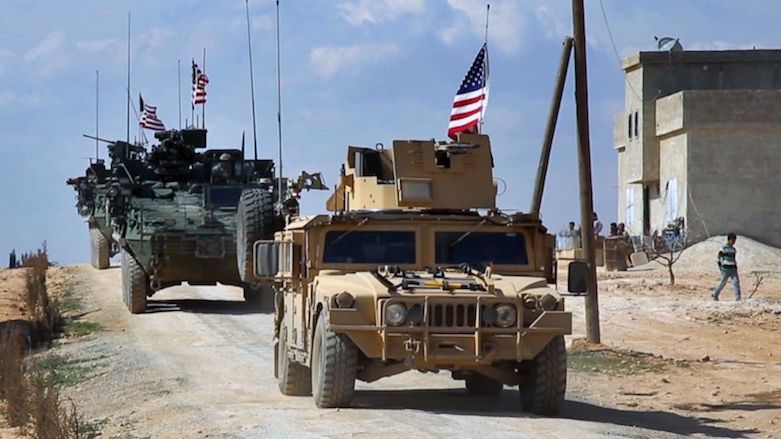
ERBIL (Kurdistan 24) – Sen. Lindsey Graham (R, South Carolina), in an interview with Fox News on Sunday, said the US should stay in northeastern Syria to prevent Iran from dominating the region. His interview follows a trip through the area that included stops in Turkey, Erbil, Baghdad, and northern Syria.
“Our troops in northeastern Syria, working with the Syrian Democratic Forces (SDF), Arabs and Kurds, have demolished [the Islamic State (IS)], Graham said. “If we stay there—we have about 2,000 troops—[IS] won’t come back.”
“If we stay in northeastern Syria, Iran can't march from Tehran to Beirut,” he affirmed.
The Senator explained that he did not trust that Russia would really block Iran—unless the US gained leverage over Moscow, by keeping troops in the region.
“There's a way to get Russia pulled away from Iran, but we've got to have a presence in Iraq and Syria to be successful,” he said.
“Iran has a weak economy. They’ve got problems in their own backyard,” Graham added. “What we need to do is partner with Turkey and Russia and break Iran away.”
“Our presence in northeastern Syria is an insurance policy against Assad taking over Syria, and [IS] coming back and the Iranians owning the whole region,” he said.
“President Trump has done a good job of destroying [IS] and countering Iran. Our soldiers in Iraq and Syria are insurance policies against Iranian domination and the rise of [IS,]” Graham stressed.
If we keep this configuration in place, we've got some leverage regarding Russia and Iran,” he said.
However, the US needs to assure Ankara that the "Kurdish forces we are partnered with in Syria will not present a threat to Turkey,” he added.
This is especially true now, after Turkish president Recep Tayyip Erdoğan won the June 24 elections and assumed office as Turkey’s first executive president.
“Erdogan won big and he's going to have a long time to serve in Turkey, and we need to come to grips with that,” the Senator stated.
On 30 June, Graham and Sen. Jeanne Shaheen (D, New Hampshire), met in Ankara with Erdogan.
"I came away from my meeting somewhat encouraged that we can start over with President Erdogan in a win-win fashion, securing the northeastern part of Syria in a fashion acceptable to Turkey, and they can be a better ally when it comes to pushing back against Iran and [IS],” he said.
After their visit to Turkey, they made a surprise visit to the northern Syrian city of Manbij on 2 July, accompanied by Maj. Gen. Jamie Jarrad, Commander of SOJTF-OIR (Special Operations Joint Task Force—Operation Inherent Resolve), which has primary responsibility for coalition forces in Syria.
After touring Manbij and its bustling market, Graham told local leaders, “I will tell President Trump that it is important that we stay here to help you.”
Senior Syrian Kurdish officials believe that US troops will most likely not leave Syria, due to the fact that Washington wants to prevent Iran from gaining more influence in the region.
“Senator Graham is providing the public with a sneak peek into the argument that is raging within the Trump administration as President Trump prepares for his historic meeting with Putin,” Nicholas Heras, a researcher at the Center for a New American Security in Washington, told Kurdistan 24.
“The debate is burning on the question of whether or not Syria is the best arena for the United States to diminish Iran in the Middle East,” he said.
“There are two broad factions in this debate: one faction wants the United States to leave Syria to the Israelis and other US partners like the Turks to handle, and for the administration to focus on the Gulf and Iran itself to weaken and defeat the Iranian regime.”
“This faction wants the SDF to cut a deal with Assad and wants President Trump to tell Putin at the Helsinki meeting that Russia is responsible for getting Iran out of Syria,” he added.
However, Salih Muslim, former co-chairman of the political wing of the People’s Protections Units (YPG), the leading force within the SDF, tweeted on Monday that the Syrian regime “is not serious” about reaching a deal, as it equates peace with surrender.
The other faction in the US debate, Heras explained, wants US forces to remain in Syria to diminish Iran and to do so by striking a grand bargain that creates a type of economic union between Turkey and the SDF.
“This would prevent Assad from getting essential resources such as oil, water, and wheat from SDF areas. This faction wants to use Manbij as the first in a series of confidence building measures to get Turkey and the SDF on the same page to create a large NATO zone in northern Syria and use this zone to pressure Assad and Iran,” he stated.
“This faction wants President Trump to tell Putin at Helsinki that the Russians are going to have to deal with the Americans for a while longer and that Moscow better start changing its behavior. The outcome of this debate within the administration will have big ramifications on Syria and the wider region,” Heras concluded.
Editing by Laurie Mylroie